The budget is our most important state policy, laying out the investments in our communities that our collective tax dollars will make. Before it adjourned last week, the 2021 Hawaiʻi State Legislature approved a state budget for the next fiscal biennium. The legislature’s proposed budget for the 2021–23 Fiscal Biennium totals $31.2 billion.
Key Takeaways
Contrary to recession-induced spending cut worries, the overall proposed budget is 2 percent larger than the budget for the current, 2019–2021 biennium ($30.7 billion).
The final budget is also 1 percent higher than Governor Ige’s original proposed version ($30.8 billion).
Crucial federal funds from the 2020 CARES Act and 2021 American Rescue Plan Act (ARPA) will allow the state to maintain spending without economy-damaging cuts. As a result, the new budget is less reliant on state revenues from taxes and fees.
Budget decisions affected departments and programs unevenly. The Department of Business Economic Development and Tourism (DBEDT), especially, took a hit due to a significant reduction in funding to its attached agency the Hawaiʻi Tourism Authority.
Extra appropriations bills were passed, which isn’t unusual; however, this year, a lot of the added spending is for the current fiscal year.
Funding the Budget
While the size of the executive budget increased by a modest amount, the way it’s funded also changed. Typically, general funds—which come from most of our taxes—pay for about half the budget. An additional quarter of the budget is supported by “special funds.” Special funds are largely made up of fees, such as University of Hawaiʻi tuition, insurance payments collected by the public hospitals that make up the Hawaiʻi Health Systems Corporation, or taxes on fuel that pay for road work at the Department of Transportation.
Figure 1. Funding Sources for State Executive Budgets, Fiscal Year 2021 vs Fiscal Year 2022 ($ Billions)
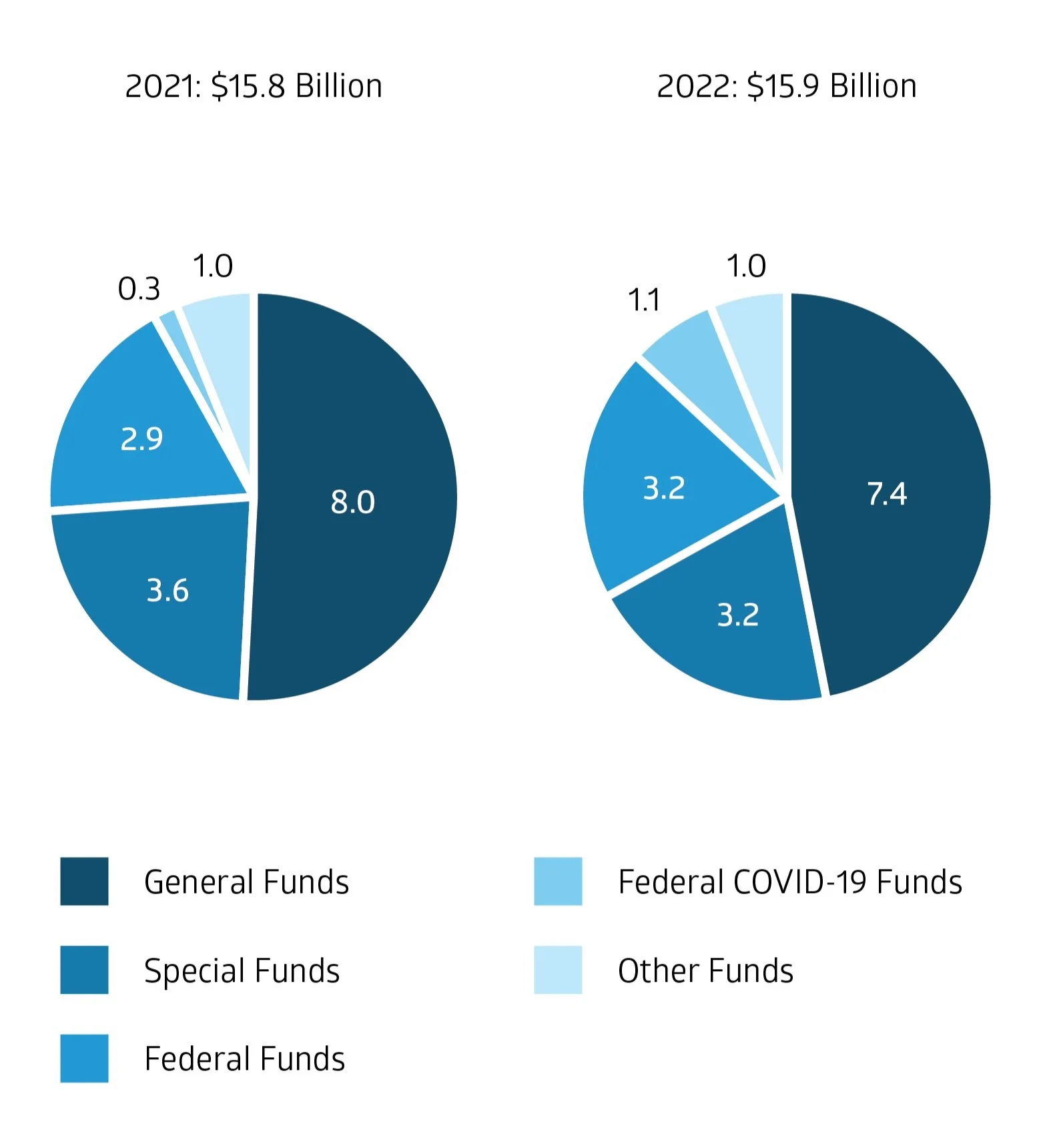
Figure 1. Our current budget gets nearly three quarters of its support from a combination of general and special funds. In contrast, the budget for the next fiscal year cuts funding from those sources by a combined $1 billion. What makes up the difference? Federal COVID-19 Funds from the American Rescue Plan Act (ARPA).
Some of the ways ARPA money will be spent in the FY2022 executive operating budget include:
$774 million for the Unemployment Insurance (UI) Trust and UI Division;
$160 million to pay off debt obligations;
$34 million for the hospitals that are part of the Hawaiʻi Health Systems Corporation; and
$23 million to maintain funding for general assistance, serving people who are homeless, and providing community-based youth services.
The state’s obligated costs, sometimes called “fixed costs,” are made up of the interest we pay on money borrowed for capital improvements, the state’s share of Medicaid costs, public worker retiree pension and health costs, and health premiums for active employees.
In the new budget, all obligated costs increased, except healthcare costs for retirees (payments for which were delayed to balance the budget). Even without making the full payment for retiree health premiums, obligated costs take up half of all general funds and account for a full quarter of the total budget.
Program Changes
The budget bill lays out changes the legislature made to various programs, including the following:
Department of Business, Economic, Development and Tourism
The Hawaiʻi Tourism Authority, which had been budgeted to receive $141 million in special funds, was reduced to $11 million and funded by temporary ARPA dollars.
The Land Use Commission was moved to the DBEDT Office of Planning.
The Office of Aerospace was moved to the Imiloa Astronomy Center at UH Hilo.
The Strategic Development Corporation, originally budgeted for just $2,000, was eliminated.
Department of Labor and Industrial Relations
The Workforce Development Program added both the Workforce Development Council (previously a separate budget ID) and the Research and Statistics Division to its program.
The Employment Security Appeals Referee was moved to the Unemployment Insurance Office.
Department of Health
The Office of Environmental Quality Control was moved to the Office of Planning in DBEDT
University of Hawaiʻi (UH) System
The Cancer Center, previously included in the UH Mānoa budget, was funded as a separate program.
Appropriations Spending
Besides the executive budget bill, the legislature passed nearly 30 appropriation bills that added $2 billion for short-term program spending. Typically, appropriations bills add funding for the upcoming fiscal years. However, this year $830 million (42 percent of all appropriations) will pay for current fiscal year expenditures.
About $12.5 million covered emergency shortfalls. These ensured that the Department of Human Services didn’t have to cut already meagre general assistance payments, and made $9 million available for health and safety needs for the Department of Public Safety.
The biggest appropriations for the current year went to make up some of the payment for retiree health premiums and for putting away savings into the Emergency Budget Reserve Fund (EBRF). Both of these appropriations, which will come from general funds, are possible only because ARPA and CARES Act funds freed general funds up to cover them. The Department of Education got $98 million in funds from the CARES Act. CARES Act funds also went to the Department of Defense for personal protective equipment.
Appropriations for the coming fiscal biennium totaled $1.2 billion with two-thirds coming from ARPA and CARES funds. These funds will go to:
A variety of needs at the Department of Education ($459 million in combined ARPA/CARES funding);
Paying down interest on debts ($104 million from ARPA);
Emergency medical services (EMS) and the Hawaiʻi Health Systems Corporation ($131 million and $16 million, respectively, from ARPA);
Landlord-tenant mediation and rent assistance appropriated to the counties ($4 million from ARPA); and
The newly established affordable home ownership revolving fund ($1 million from ARPA).
Other appropriations for the fiscal biennium will pay for collective bargaining and hospital and nursing home sustainability programs.
There’s a lot more in the executive budget bill (HB200), including money for capital improvements. There are also budgets for the other branches of government—legislative, judiciary and the Office of Hawaiian Affairs.