

The surveillance grocery store: How algorithms target Hawaiʻi consumers
In an isolated state like Hawaiʻi, where shipping costs are already high and consumers have limited store alternatives, replacing fair market pricing with individual data extraction turns everyday necessities into variable-cost traps.

One step forward, a few meals short
While the passage of Act 139 was a meaningful step toward free school meals, it was just that—a step. The work is not finished.

Can Hawaiʻi afford to cut the grocery tax?
Any proposal to reduce or remove the GET on food must be paired with a credible plan for replacing the revenue. It’s a challenge, but also an opportunity to build a fairer and more sustainable system.
Incoming federal tax cuts will heavily favor Hawaiʻi’s wealthiest residents
The State of Hawaiʻi has an obligation to shore up its revenue through tax policies that make the wealthiest among us pay their fair share.

Hawaiʻi should close tax loopholes for multinational corporations
Multinational corporations make huge profits from the business activity they conduct in Hawaiʻi, while dodging the taxes they should be paying to support our state.

How Hawaiʻi’s hardworking undocumented immigrants support our economy and communities
A new report from the Institute on Taxation and Economic Policy lifts up the significant tax contributions that undocumented immigrants make to our federal, state and local governments through the taxes they pay each year.

Hawaiʻi’s elected leaders buy-in to costly “trickle-down” myth
Passing an “historic” tax cut that mostly benefits the wealthiest Hawaiʻi residents is not the path to a healthy economy that works for working people.
Trickle-down estate tax break bills are bad policy for Hawaiʻi
After decades of evidence, we know “trickle-down” economics is a smokescreen to aid the wealthy in creating preferential tax policies.

Hawaiʻi is even less affordable after the pandemic
How have jobs, wages and costs changed from before the COVID pandemic compared to after? These charts show changes from 2019 to 2022 that have affected livability for Hawaiʻi residents.

Keiki poverty more than doubled last year without the expanded Child Tax Credit
Hawaiʻi lawmakers have an obvious solution at their disposal, if they are willing to act on it.

Lawmakers still need to equitably raise revenue to meet Hawaiʻi’s needs
On tax policy, state legislators made progress in 2023 with tax relief, but left smart, revenue-raising policy initiatives on the table for next session.

Legislative agenda 2023: tax reforms to boost incomes and fund investments in our future
Top of the list of immediate challenges for Hawaiʻi is to find a way to prevent our people from being overwhelmed by the high and rising cost of living in the islands.
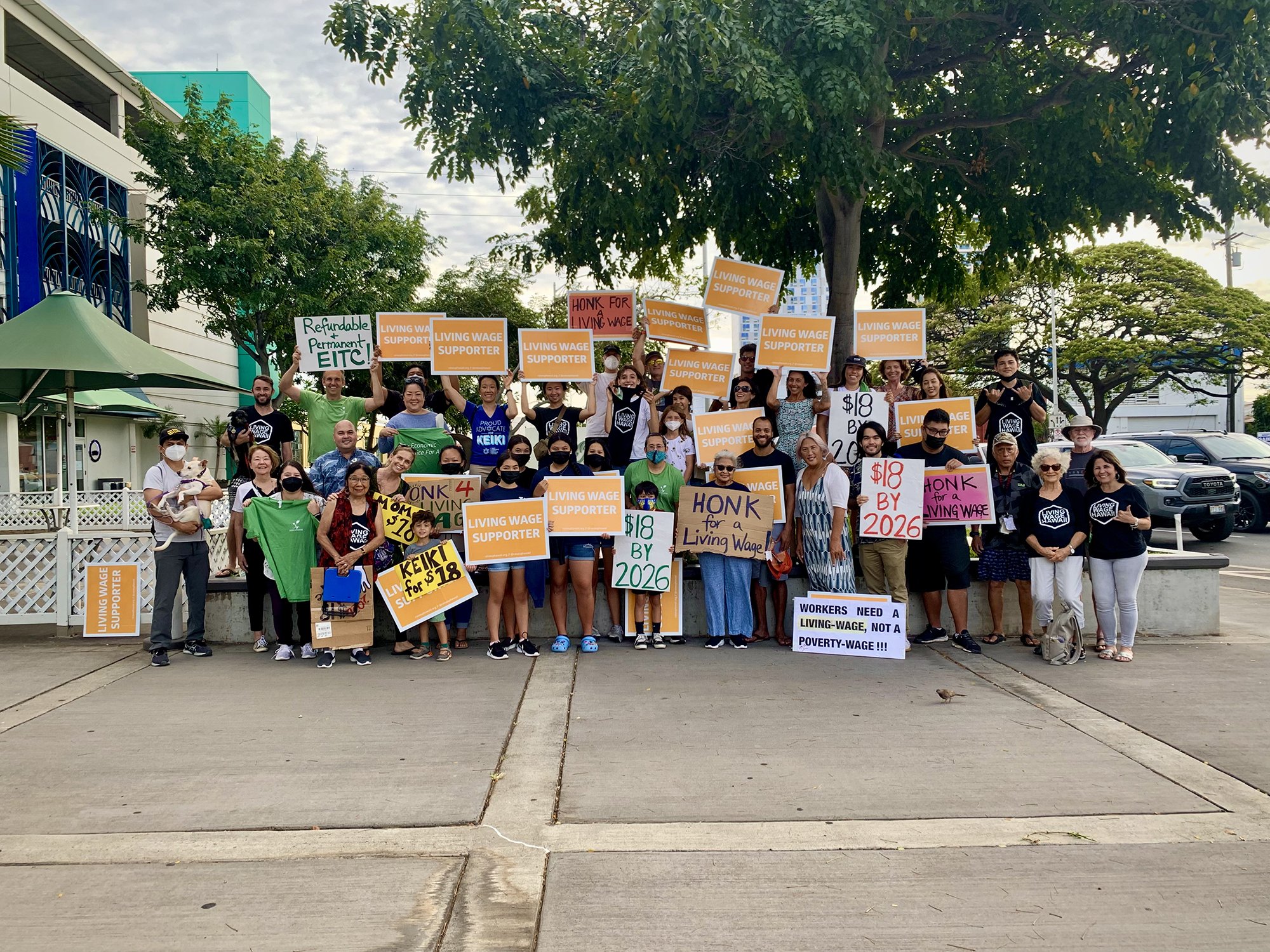
What made the 2022 Hawaiʻi legislative session a win for working families?
After multiple years with little progress on policy to help working families survive Hawaiʻi’s highest-in-the-nation cost of living, several factors came together to deliver a banner year in 2022.

Honolulu County’s eviction mediation program was a resounding success
Act 57’s pre-litigation eviction mediation program shows a promising pathway forward to greater housing security by preventing evictions and keeping families housed.

A Hawaiʻi Child Tax Credit would keep thousands of keiki out of poverty
After the expiration of the expanded federal Child Tax Credit, poverty rates spiked—it’s time for Hawaiʻi lawmakers to step up and fill the gap.

Opportunities for Hawaiʻi to maximize its budget investments
Maintaining government spending on public programs, Hawaiʻi’s workforce, and contractors for the state keeps money circulating throughout the economy as people pay for housing, food and other services.

How Hawaiʻi is funding its $24 billion FY23 budget
The legislature not only decides where money is spent, but also makes many of the decisions about who pays how much to support the budget.

Highlights of the Hawaiʻi 2023 Supplemental Budget
After two pandemic-constrained years, surprisingly strong finances have enabled legislators to make unprecedented investments in long-underfunded areas.
Hawaiʻi’s missed opportunity to invest in working families
The legislature chose to prioritize protecting businesses from tax increases, rather than investing in working families who were struggling long before the onset of the pandemic.
The House’s budget proposal for the coming year
Buoyed by increasing tax collections and continued federal relief funds, the state House sent the Senate an amended budget that proposes to increase the executive budget by $1.3 billion.