How to plug Hawaiʻi’s budget gap while preserving critical services like education
By the end of the month, Governor Ige will be releasing his budget for the fiscal biennium (FB) that starts July 2021 and ends June 2023. The budget is our most important public policy. It sets out where we get our money and what and who we spend it on. It dictates the investments we make in our schools, our environment, our health, and our economy. Before we get there, here’s a review of the basics for the current budget, as well as a reminder of the challenges the state will face to support vital functions with diminished resources.
The operating budget for the state government this fiscal year (July 1, 2020–June 30, 2021) amounts to $15.8 billion (Figure 1). The vast majority of the funding—$15.6 billion—is spent by the departments in the Executive Branch.
Figure 1. State Operating Budget, FY21: $15.8 Billion
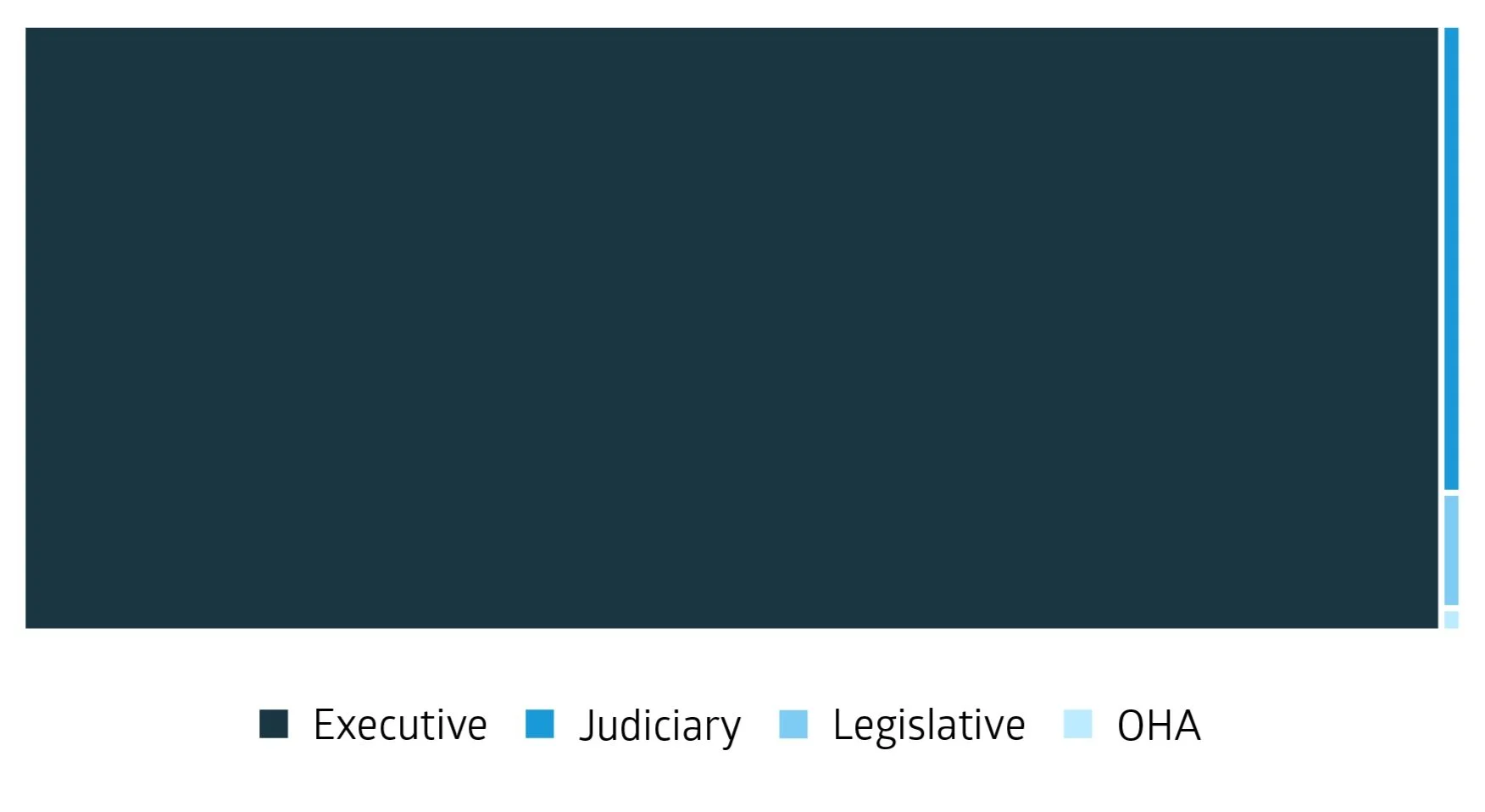
Figure 1. The state operating budget for the current fiscal year includes $15.6 billion for the Executive Branch, $178 million for the Judiciary Branch, $44 million for the Legislative Branch, and $9 million for the Office of Hawaiian Affairs.
Where the Money Comes From
Typically, general funds pay for about half of all state spending. The other half comes from special funds (for instance, University of Hawaiʻi tuition payments), federal funds (the federal match for Medicaid spending is the largest source), and other funds like trust funds and revolving funds (Figure 2).
General funds are especially important because they are the only source of money that can be used flexibly to meet new needs, such as expanding public preschool programs. All the rest are restricted to supporting the specific purposes for which they’re provided.
Figure 2. Hawaiʻi State Operating Funds, FY21
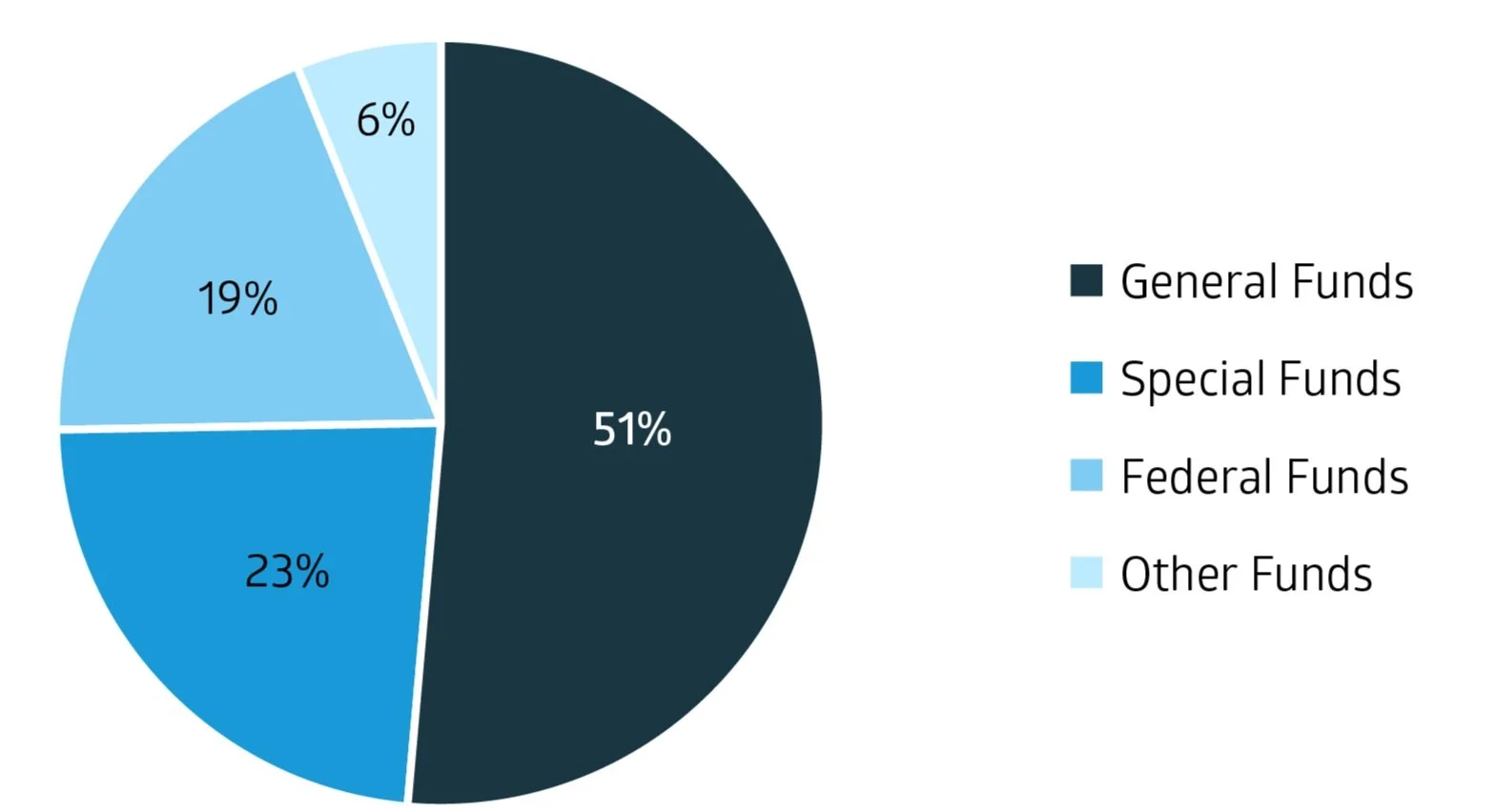
Figure 2. Hawaiʻi’s operating budget depends largely on three funds. The largest of these is the general fund. Special funds are revenues that are related to expenses they support such as UH tuition that supports the operating budget of the university. Most federal funds are allocated to the state based on a need and population formula. Federal matching funds for the Med-QUEST program is the largest source of federal funds in Hawaiʻi’s budget.
The state’s general fund collected $7.9 billion in fiscal year 2019. The Council on Revenues, a body that weighs local economic activity and provides the financial forecasts that determine the size of the state budget, is anticipating that overall general fund collections in the current fiscal year (2021) will be $1.25 billion less than in 2019 (Figure 3). This is a 16 percent decline in revenue.
The reduction is due to the fact that more than 90 percent of general funds come from the taxes we pay. The general excise tax (GET) makes up 50 percent of general funds. Unfortunately, due to less shopping and fewer visitors, GET collections in 2021 are projected to be $470 million dollars less than they were in 2019.
Figure 3. General Revenue Forecast Compared to FY19, in $ Millions
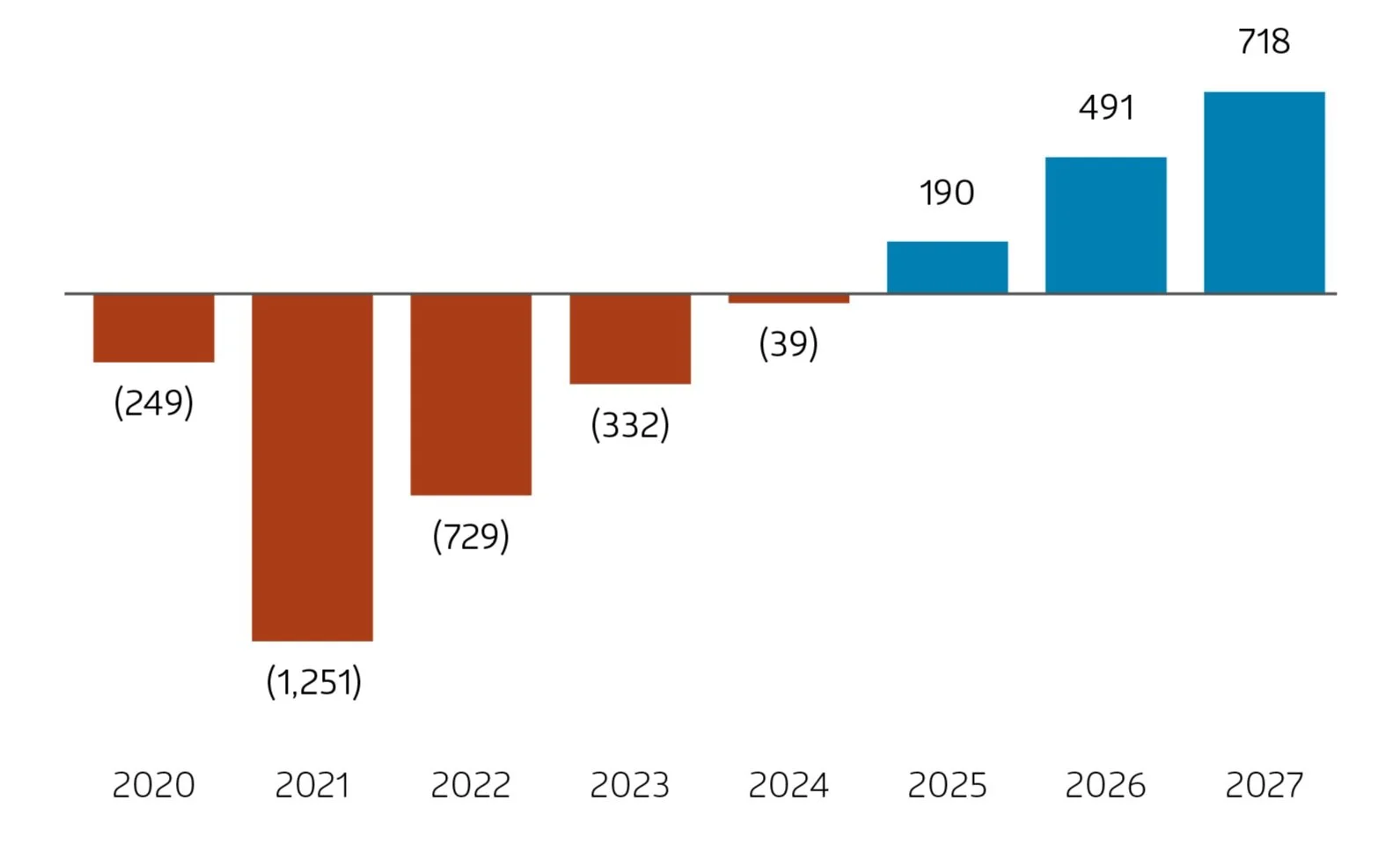
Figure 3. The forecast for total general fund receipts (taxes and other revenues) is a drop of $1.25 billion for the current fiscal year (FY21) plus $729 for next fiscal year as compared to fiscal year 2019 performance. That adds up to a budget hole of nearly $2 billion for the two-year fiscal biennium.
Individual income taxes contribute another 35 percent of general funds, and those taxes were projected to decline by $399 million in 2021 compared to 2019. (This forecast may be more dire than necessary, since the personal income estimates noted by the Council on Revenues in October were considerably higher than expected.) The remaining 15 percent of tax revenues come from transient accommodations taxes and corporate income taxes, both expected to shrink significantly (Figure 4).
Figure 4. General Revenue Tax Collection Trends Compared to FY19, in $ Millions
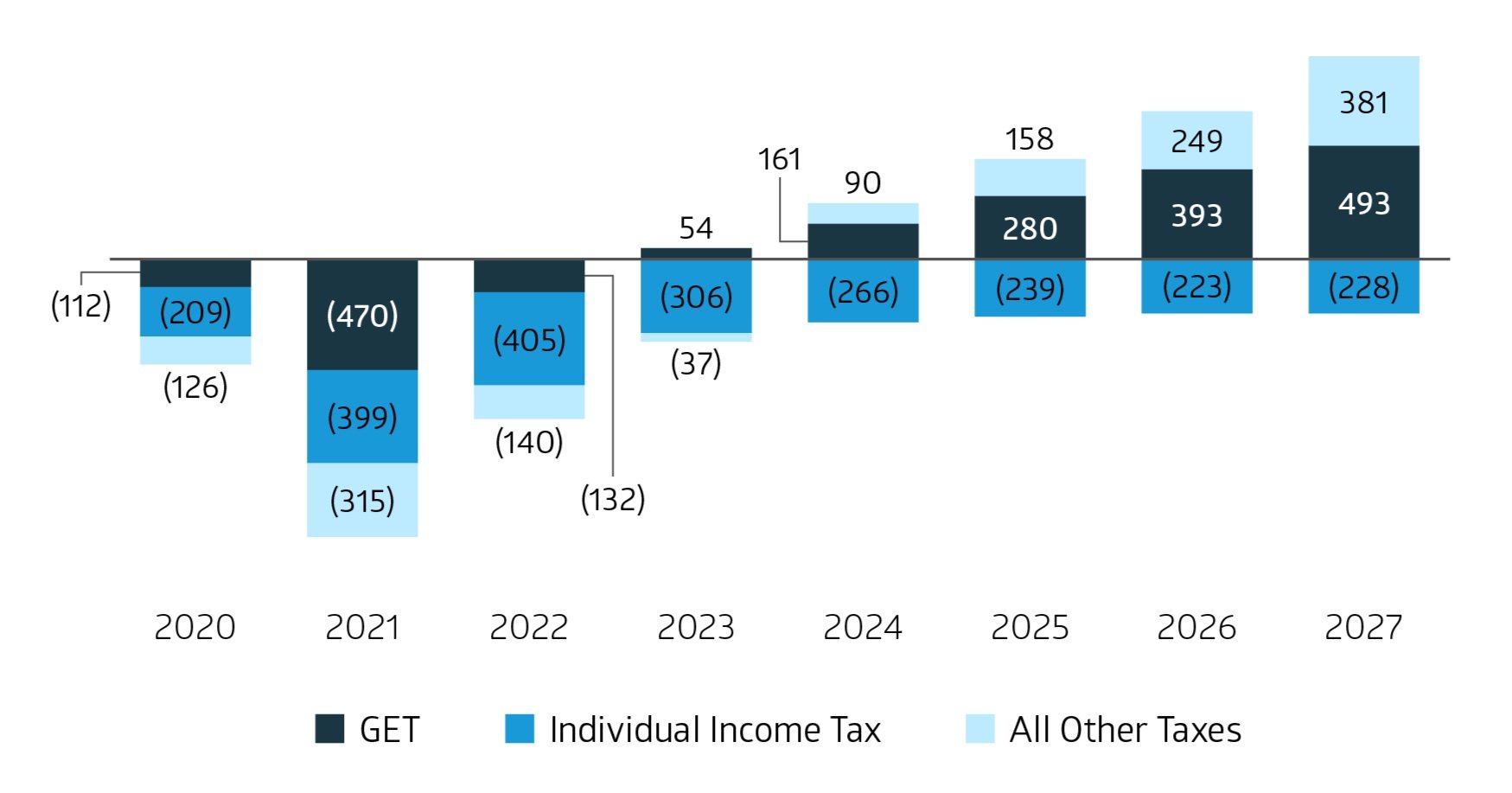
Figure 4. Most of Hawaiʻi’s general funds come from taxes. The largest of these are general excise tax and individual income tax. Because of reduction in visitor and local spending and lost wages, these taxes are expected to decline considerably from revenues collected in fiscal year 2019, the last full year unaffected by the pandemic recession.
The governor has asked all state departments to restrict spending of the part of their budgets supported by general funds. Such restrictions would affect departments unevenly since the budgets of some are largely dependent on general funds while others have more diversified funding sources. For instance, the Department of Public Safety is 90 percent general-funded but the Department Commerce and Consumer Affairs and Department of Transportation have no general funds in their operating budgets.
Based on Executive Memorandum 20-10, it appears that restrictions of general fund spending will not be the same for every department, but will range from 0 to 7 percent. Per the memo, general funds for Human Services and Education are each facing a 1 percent cut. These departments provide mission-critical services for the state, especially now. Their budgets and staffing levels are substantial, so even a 1 percent cut adds up to more than $15 million for the two combined.
Looking Toward the Fiscal Biennium Budget
While the governor is required to submit the FB budget in December, his submission will be just a starting point for the legislature. For one thing, a couple of unknowns will shape the budget, including the updated forecast from the Council on Revenues on January 7, 2021. Another is whether and how much Congress may provide to states for deficit relief.
One thing is clear: although revenues are down, cutting the money that our state government pours into the economy would be a mistake. The Great Recession provided ample evidence that government austerity deepens and prolongs an economic downturn. Economists estimate that the multiplier effect of government spending is $1.50 for $1 spent. Likewise, every $1 cut from the budget reduces economic activity by $1.50.
Table 1. State Actions Taken So Far to Shore Up Budget Shortfalls
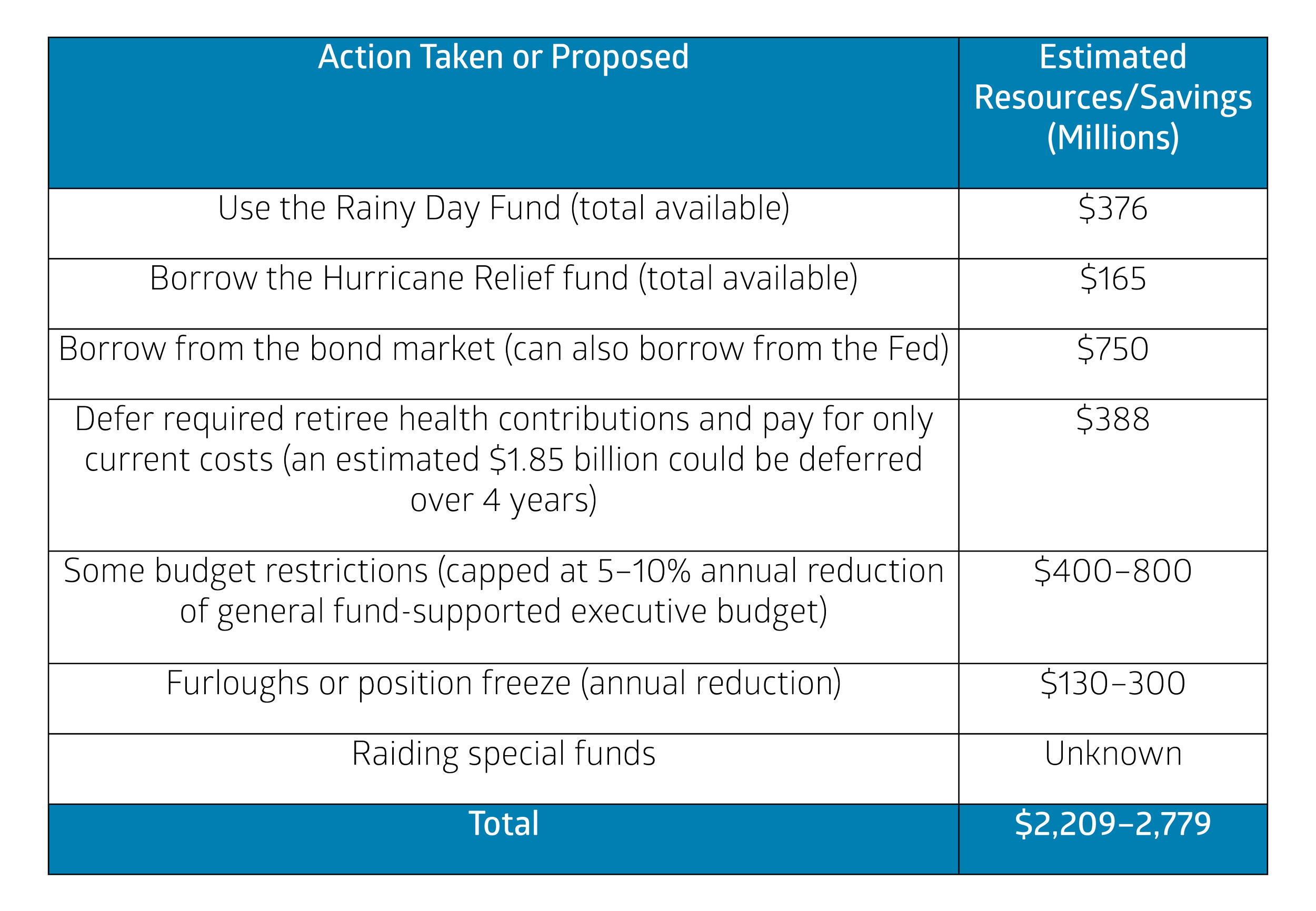
The legislature will have to weigh all options to keep budget cuts to a minimum. Certainly, cutting public worker jobs and hours during a recession would only end in more human misery and economic shrinkage. Reducing contracts that provide state services through local nonprofits would be just as harmful, reducing both services and jobs in vulnerable communities.
Projected general fund revenue declines (compared to fiscal year 2019) are $1.25 billion this year, $728 million next year, and $331 million in FY2023. The 3-year total budget hole, then, is $2.3 billion dollars. As reported in the media, actions that have been taken so far are shown in Table 1.
These alternatives don’t even include strategically raising taxes and reducing tax expenditures such as tax credits for business incentives. These additional options should also be on the table in 2021.
While most of us are looking forward to getting 2020 behind us, one thing is clear: Hawaiʻi’s budget challenge will continue in 2021.