Incoming federal tax cuts will heavily favor Hawaiʻi’s wealthiest residents
Recently-signed federal legislation will cut taxes for the wealthy. The Institute on Taxation and Economic Policy (ITEP) analysis of the Senate Reconciliation Bill—promoted as the One Big Beautiful Bill Act—has found that its tax provisions overwhelmingly benefit the wealthiest Americans, while offering less relief to working families.
Nationally:
72 percent of the tax cuts will go to people earning at least $153,000 each year. Lower-income people who make less than $53,000 will receive just 4 percent of the total tax cuts.
The wealthiest 1 percent will get an average of $66,000 in tax cuts. Middle-class families (earning between $53,300–92,100) will only get $1,510 on average.
Tariffs will likely cancel out most of the tax benefits for the bottom 80 percent percent of earners. In fact, the bottom 40 percent will end up losing money due to higher prices caused by these tariffs.
Figure 1. Average Tax Change for Hawaiʻi Residents from the One Big Beautiful Bill, by Income Group
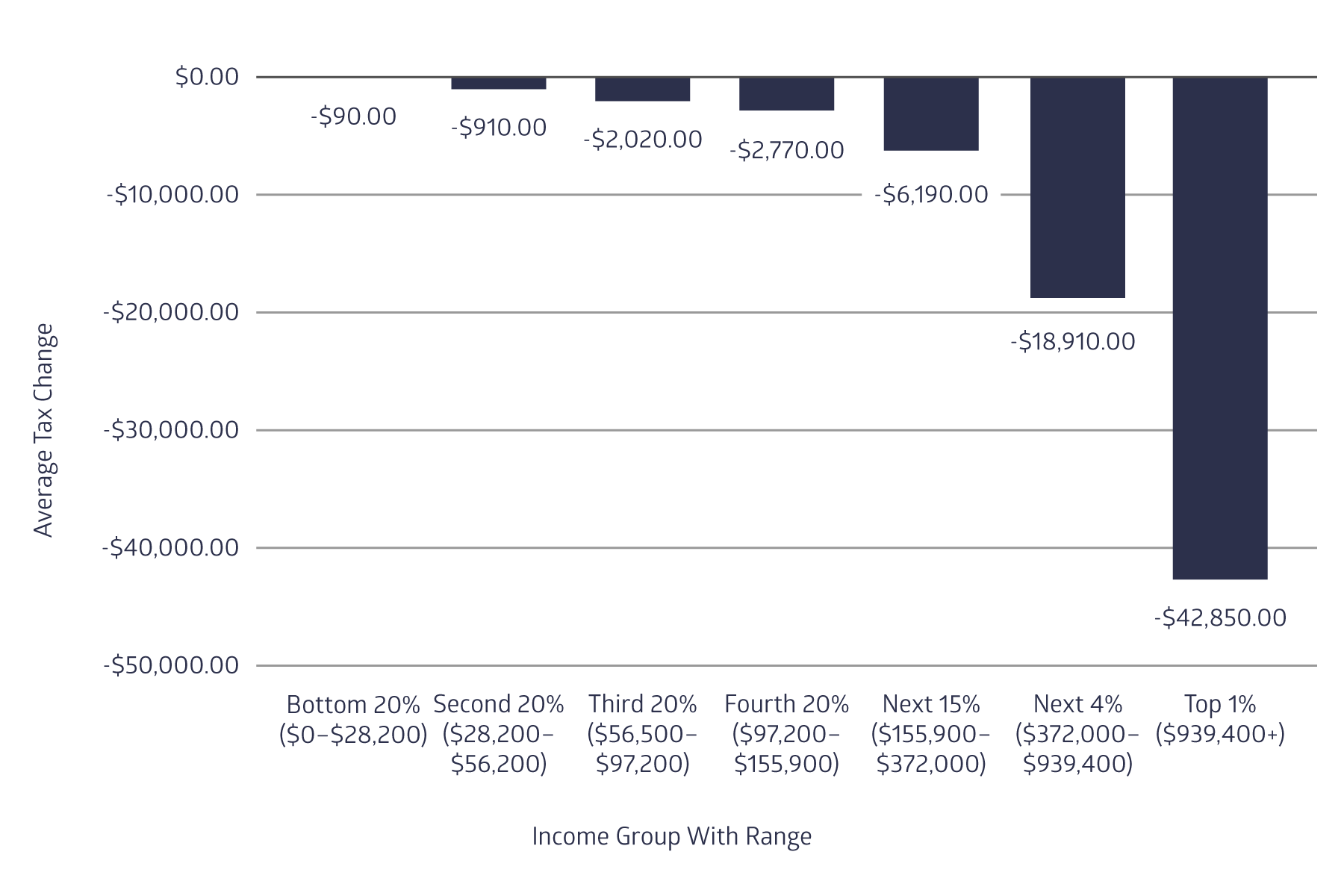
Figure 1. In Hawaiʻi, the top 1 percent will get a tax cut of almost $43,000 on average—about 476 times larger than the tax cut for the bottom 20 percent. Unfortunately, the small cuts for the bottom 80 percent will not make Hawaiʻi a more affordable place for them to live since price increases from tariffs will overtake these meager gains.
Source: ITEP analysis
Hawaiʻi still has the highest cost of living in the U.S., as reflected by the statistic that 40 percent of local families belong to the ALICE (Asset Constrained Income Limited, Employed) category. This means that almost half of the state’s population does not earn enough to make ends meet.
Key changes that are now permanent include:
The new law benefits high-income earners in states with low or no income taxes, as it permanently limits the State and Local Tax (SALT) deduction. This cap mainly affects wealthy individuals in states with higher taxes.
A higher maximum Child Tax Credit ($2,200, compared to $2,500 in the original House bill). However, the credit is structured in a way that will continue to deny its full value to millions of the lowest-income children.
Extended and expanded tax breaks for businesses. For example, a permanent 20 percent deduction for pass-through business income.
Other tax breaks for corporations.
ITEP’s model estimates the bill will reduce federal revenues by $568 billion in 2026.
Tax rate reductions and new deductions (standard and for business) are responsible for hundreds of billions in lost revenue. Business tax breaks (bonus depreciation, R&D expensing, expanded credits) account for another $165 billion.
Other changes include cuts to the Alternative Minimum Tax, estate tax, and expanded deductions for tips and overtime.
This only includes the direct costs of the tax cuts themselves. Cuts to medicaid, SNAP, and other safety net programs and their impact on the economy are not included in ITEP’s analysis.
With all of the uncertainty surrounding federal spending, the State of Hawaiʻi has an obligation to shore up its revenue through tax policies that make the wealthiest among us pay their fair share.
Lawmakers can decide to increase the corporate tax rate on multinational corporations that do not reinvest their profits in local communities. Another option is to close a tax loophole for wealthy investors by taxing capital gains at the same rate as ordinary income.