Tax fairness is popular and needed for Hawaiʻi’s future
State and national data clearly shows that, for decades, high-wage earners have prospered while incomes have stagnated for low- and middle-wage workers. As the wage gap expanded, changes in federal tax policy helped high earners hold on to a lot more of their wealth. How?
Since 1970, the top individual income tax rate for the wealthiest has been cut in half, declining from 72 percent to just 37 percent in 2020. Likewise, the top tax rate on long-term capital gains and for corporate income dropped by double digits. Federal estate tax now applies only to estates worth $6 million, and even then the rate has declined from 77 percent to just 40 percent. These changes help the rich accumulate wealth and pass it from one generation to the next.
Figure 1. Decreases in Federal Tax Rates, 1970–2020
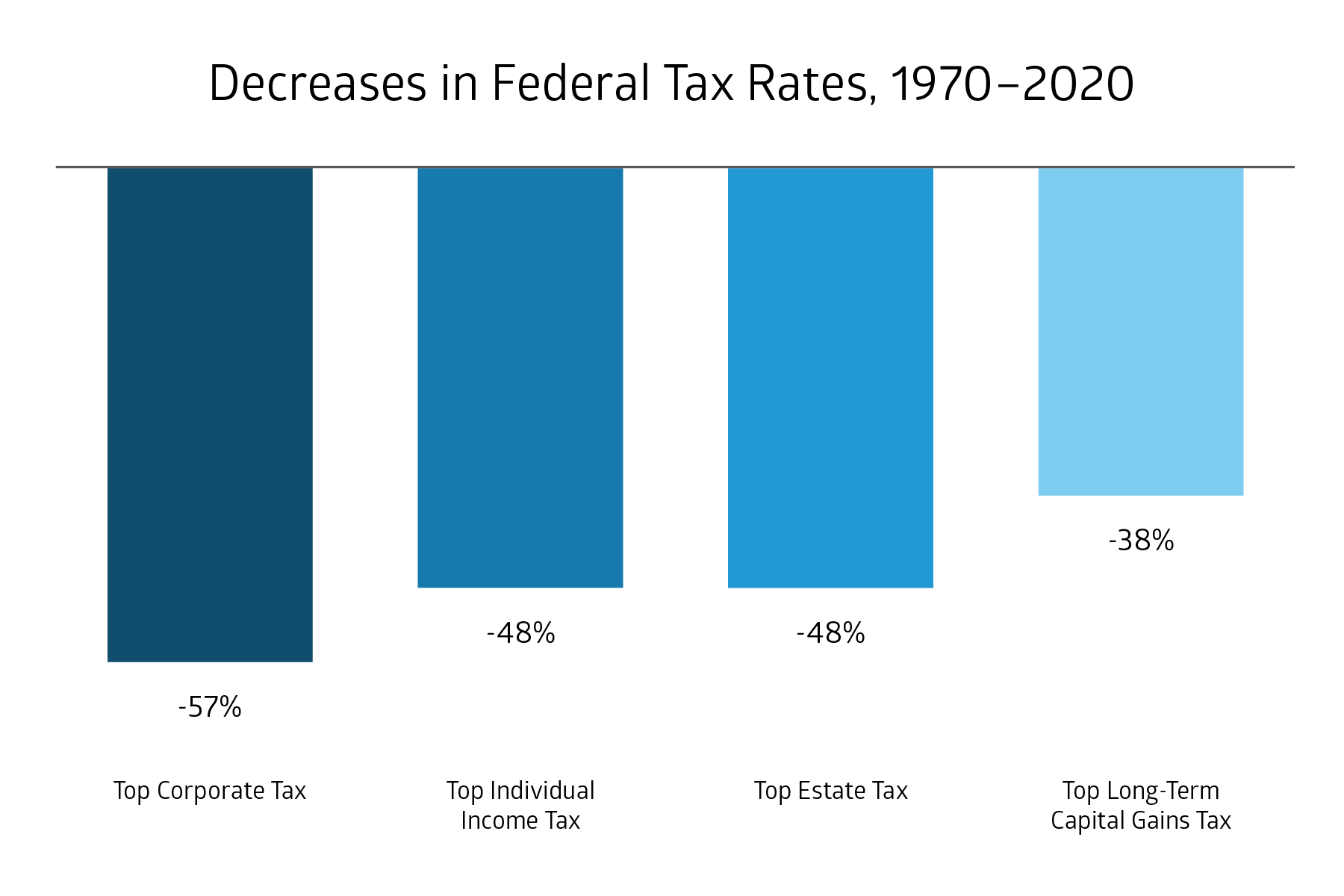
Figure 1. The rates at which different federal taxes that especially impact the wealthy have been reduced since 1970.
What does the public think about taxes on the wealthy and on corporations? Recent polling on President Biden’s proposed plan to increase selected taxes to pay for federal investments in infrastructure and jobs produced the following results (the ranges below reflect different polls reported since April 2021):
63–69 percent of respondents support raising taxes on families that make more than $400,000 per year. 53 percent of Republicans who earned less than $50,000 per year support increasing income taxes on high-earning households.
56–70 percent support raising corporate taxes.
72 percent of investors and 83 percent of business owners support the planned infrastructure investment “through corporate tax reform.”
65–74 percent favor closing tax loopholes for multinational corporations.
56 percent support ending tax breaks for the fossil fuel industry.
When asked about taxes in general, 80 percent said some wealthy people and some corporations are not paying their fair share, and that bothered them “a lot.” These attitudes have changed little over the years.
Driven by the COVID-19 recession, Hawaiʻi lawmakers considered a variety of tax reform measures during the 2021 legislative session. However, because the general fund deficit was erased by federal funding help, most of these proposals were tabled. That’s a shame because in addition to making Hawaiʻi’s tax system more fair, the tax reforms discussed would have supported essential long-term public investments in affordable housing and a much-needed expansion of public preschool. Judging by the polling numbers reported above, the policies would also have been well-received by the public.
What tax measures did the 2021 legislature pass?
House Bill 58 increases the tax imposed on the conveyance (or transfer) of high-value residential real estate. The increase applies to properties valued at $4 million or more. This is a good move in our current overheated housing market.
House Bill 485 increases taxes on rental vehicles. This was one of the tactics supported by respondents to a University of Hawaiʻi survey recently reported by the Star-Advertiser.
House Bill 862 authorizes each county to establish its own transient accommodations tax at a rate of up to 3 percent. It also directs the TAT imposed at the state level to go to the general fund instead of being distributed to counties and the Tourism Special Fund.
What tax measures were left on the table?
House Bill 133 would have increased the tax on long-term capital gains from 7.25 percent to 9 percent. This would have been a very progressive tax since the vast majority of benefits from long-term capital gains go to high-income taxpayers. The bill died in conference committee at the end of session.
A proposal that would have taxed the profits of Real Estate Investment Trusts (REITs) at rates similar to the state’s corporate income tax died. Although the tax wasn’t passed, House Bill 286 will allow the Department of Taxation to require REITs to report on revenues and assets every year. This will provide better information for future discussion about whether or not REITs should be taxed.
House Bill 445 would have made more of the assets of an estate subject to tax by reducing the allowable exemption. The bill was passed by the House but didn’t get a hearing in the Senate.
Senate Bill 56 would have increased the top marginal income tax rate on joint filers earning $400,000 or more. It also would have increased the tax rate on long-term capital gains and on corporate profits. This bill was approved by the Senate but didn’t get a hearing in the House. As reported above, all the increases included in this bill are popular with poll respondents.
Senate Bill 276 would also have increased the top marginal tax rate for the highest bracket. The bill was heard by the Senate Committee on Ways and Means but not passed.
Making Hawaiʻi a good place for people of all income levels to live requires ongoing investments in opportunity through infrastructure and housing development, and education from pre-K through college or vocational training. A fair and effective tax system is a critical part of building Hawaiʻi’s future. Legislators should be heartened to know that most taxpayers agree.