
The chilling effect: How federal cuts and immigration crackdowns threaten food security in Hawaiʻi
The mega budget bill that Congress recently passed (HR1) has shifted the landscape for immigrant families in Hawaiʻi. The bill contains a number of provisions that narrow who can access critical programs like SNAP and Medicaid, while simultaneously increasing immigration enforcement.
While the bill does eliminate eligibility for some categories of immigrants, it also fuels fear and confusion about who can safely apply for assistance. Many families face a “chilling effect,” avoiding benefits even when they or their children are eligible, out of fear of surveillance or deportation.
At the same time, local resources, including food banks and pantries, are under unprecedented strain.
Understanding who remains eligible, who is at risk, and how communities can step in is essential to protecting food security, health, and the well-being of Hawaiʻi’s diverse immigrant population.
Who Remains Eligible—and Who Will Be Harmed
HR1 narrows the categories of immigrants who can access essential benefits like SNAP. For Hawaiʻi, one bright spot is that COFA citizens remain eligible—after a hard-fought victory to restore their access in 2024. But at the same time, HR1 strips eligibility from many groups historically recognized as needing humanitarian protection, cutting them off from food assistance and healthcare despite their vulnerable circumstances.
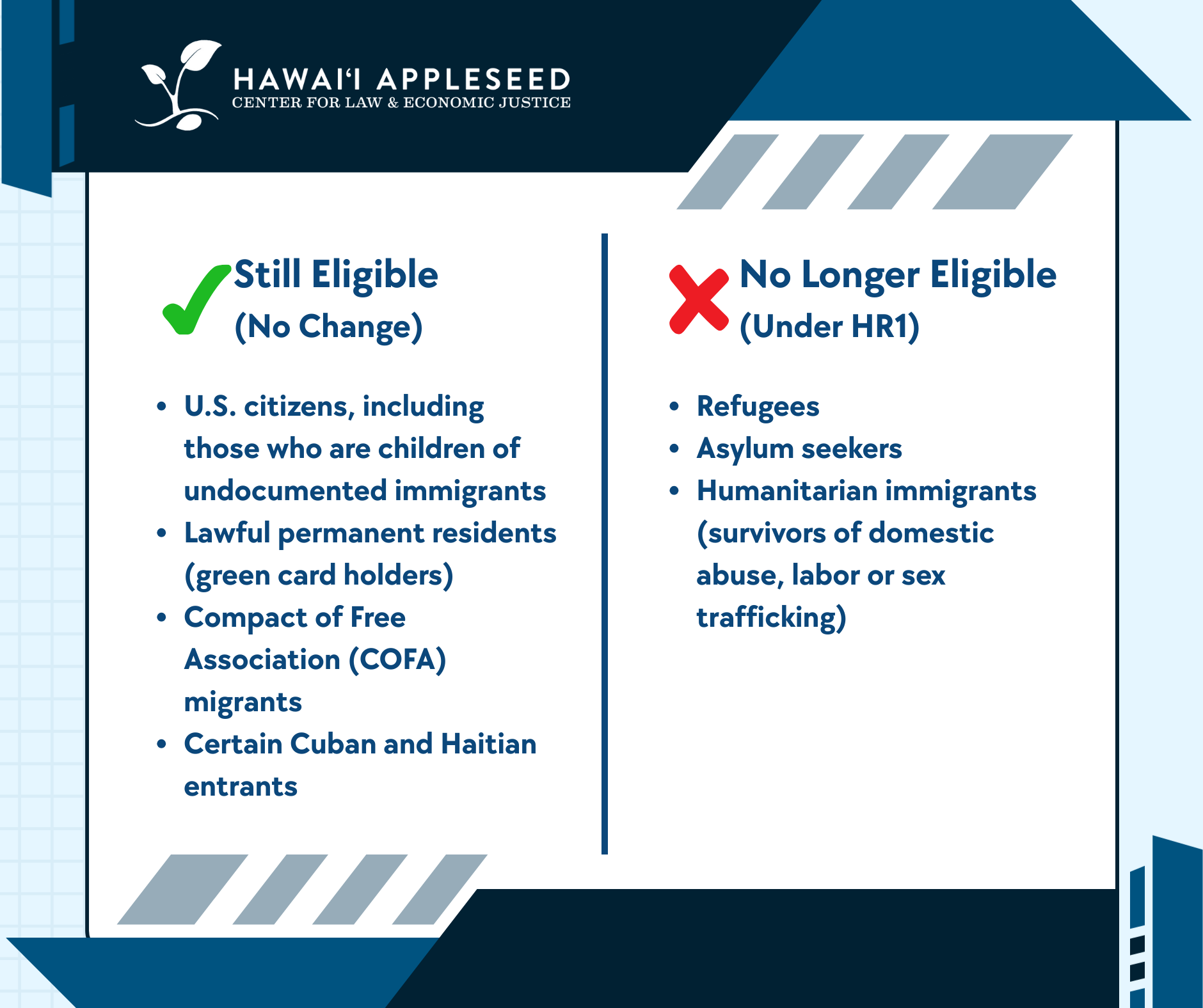
Still Eligible (No Change)
U.S. citizens, including those who are children of undocumented immigrants
Lawful permanent residents (green card holders)
Compact of Free Association (COFA) migrants
Certain Cuban and Haitian entrants
No Longer Eligible (Under HR1)
Refugees
Asylum seekers
Humanitarian immigrants (survivors of domestic abuse, labor or sex trafficking)
The Chilling Effect: What’s Real and What’s Rhetoric?
Other nutrition programs—such as Meals on Wheels for kūpuna and school meals for keiki—don’t have citizenship requirements. Yet many families who remain eligible hesitate to apply due to increased surveillance, harsh rhetoric, and fear of deportation. This “chilling effect” means that families often forgo benefits, even when their children or household members qualify.
The threat is not entirely imagined. HR1 provides over $165 billion to immigration enforcement (including ICE), and establishes an expedited deportation process, leaving families less time to legally defend themselves. Additionally, recent federal demands to access SNAP recipient data—though currently blocked by lawsuits—heighten fear of participation. Mixed-status families are particularly vulnerable: even if U.S.-citizen children qualify, parents who are undocumented may avoid programs to protect the household from exposure.
Immigrants Are Vital to Hawaiʻi’s Economy
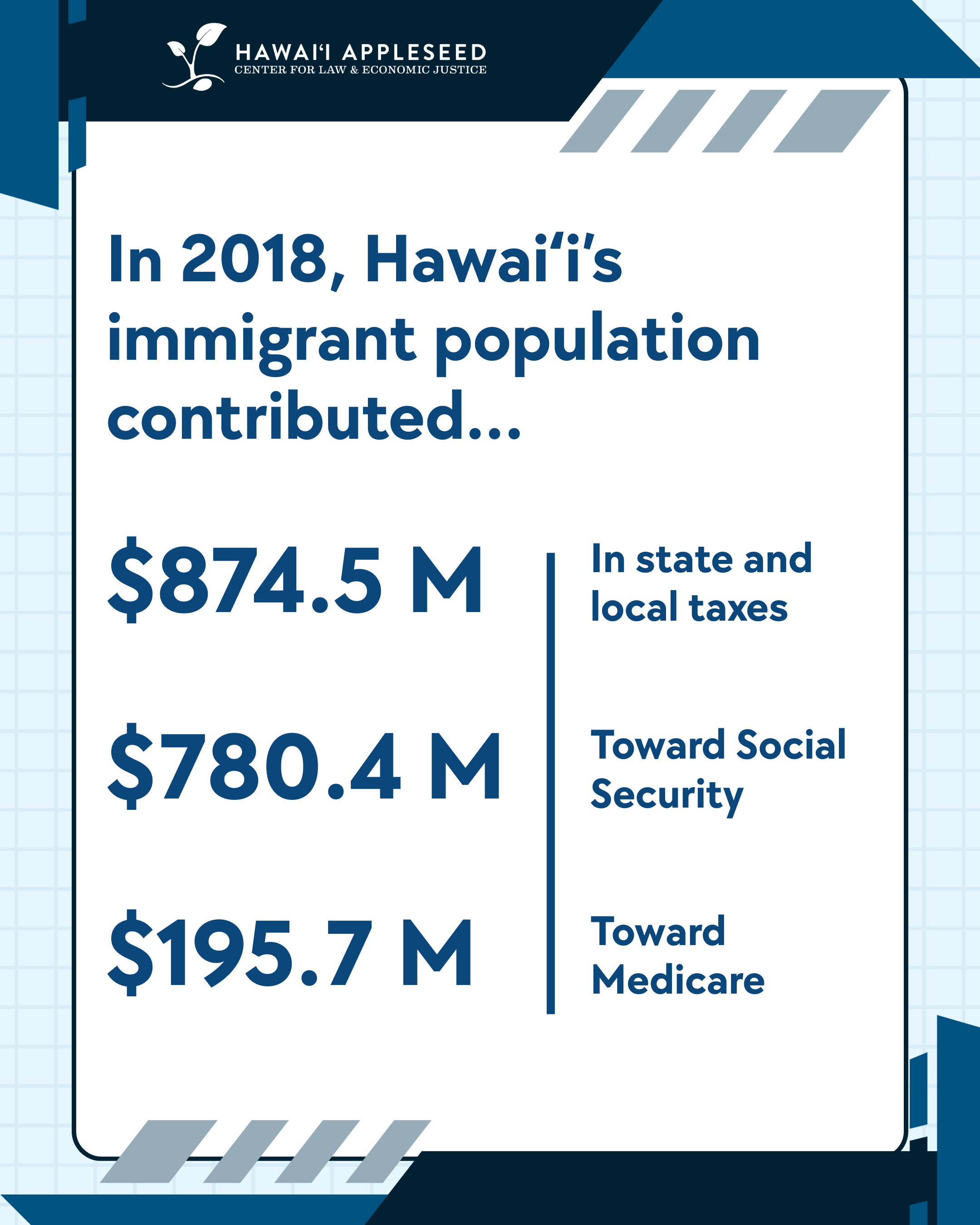
The sentiment behind these cuts overlook a fundamental truth: immigrants are an asset to Hawaiʻi’s economy, not a liability. In fact, in 2018, Hawaiʻi’s immigrant population contributed $874.5 million in state and local taxes, $780.4 million toward Social Security, and $195.7 million toward Medicare.
Only about 3 percent of Hawaiʻi’s overall immigrant population are classified as refugees (a little less than 8,000 people). However, these individuals—now one of the excluded populations in HR1—contributed nearly $34 million in state and local taxes and $58.5 million in federal taxes in 2018. On the whole, this group pays a larger share of their income in taxes than the state’s wealthiest 1 percent of earners.
The real issue isn’t immigrants; it’s a deliberate policy choice to shift resources away from food and healthcare and into enforcement and deportation.
Supporting Strained Local Resources: What We Can Do
Federal cuts and heightened fear have intensified strain on local support systems—particularly food banks and pantries, which remain accessible lifelines for immigrant families. Here are some ways Hawaiʻi can prepare.
Provide Support for Food Banks
In multiple communities, food banks and pantries are proactively welcoming immigrants, removing barriers and ensuring families can access food without fear. These preemptive efforts—such as targeted outreach, removing barriers, and providing language services—can make a real difference in reducing fear and ensuring families have access to food.
At the same time, these efforts are heavily resource-intensive, and Hawaiʻi’s emergency food system is already stretched thinner than ever. These SNAP cuts come at a precarious time, and food banks will need support—through donations, volunteering, advocacy, and funding support–to meet the increased need.
State and County Programs Can Offer Inclusive Support
Some states are experimenting with creative approaches to fill gaps left by federal restrictions. Six states currently provide state-funded nutrition assistance to some of the immigrants who are ineligible for the federal SNAP program. Oregon is also considering legislation to use state funds to extend food assistance to young immigrant children excluded under federal SNAP eligibility. These examples show it’s possible to complement federal programs with local action.
The Bottom Line
It’s important to note that most immigrants who are eligible for SNAP remain eligible. Clarifying this is essential to reducing the chilling effect. But even so, the bill’s cuts will leave deep harm—denying food aid to refugees and asylum-seekers, shrinking healthcare coverage, and investing instead in deportation machinery.
While federal policies continue to restrict access and sow confusion, local systems can—and should—step up. Food banks remain welcoming entry points, and state-led initiatives show it’s possible to fill the gaps. Community support can make a profound difference in reducing food insecurity and fear among immigrant families.