We need a visitor recreation fee to benefit Hawaiʻi
The Hawaiʻi Tourism Authority reported that the state welcomed over 10 million visitors in 2019, a 5.4 percent increase from the year before. Yet, as we welcomed a record number of tourists, the average daily visitor spending decreased by 1.5% to $195 per person. Even before the current pandemic, Hawaiʻi’s tourism industry was operating in an unsustainable cycle of needing more tourists every year just to sustain the same level of economic activity and tax revenue. As a result, public opinion of tourism among Hawaiʻi residents seems to have become less favorable. Last year, U.S. Representative Ed Case, a former hotel executive, said, “I think we have too many tourists. It’s a critical problem for us.” (Honolulu Civil Beat, July 10, 2019)
Offsetting Risk From a Tourism-Centric Economy
The COVID-19 pandemic has highlighted both our overall dependency on tourism, and the need to create a more sustainable and less exploitative version of tourism. According to the most recent report from the Hawaiʻi Council of Revenues, the state’s revenue is forecasted to decrease by 12 percent for the 2021 fiscal year. The resulting state budget shortfall is estimated to be $2.3 billion. Tourism is a global business, and we have no control over events or changing circumstances that might cut off the supply of visitors. It would make sense to factor that into our tourism policy, such as by collecting a visitor fee per tourist to help the state build up reserves to weather future global economic shock events.
If, after the sharp decline in tourism due to the attacks on September 11th, 2001, the State of Hawaiʻi had imposed a $100 fee per tourist, Hawaiʻi would have collected $14.2 billion in tourist fees to date. Even if Hawaiʻi had spent 75 percent of these funds, investing in communities, infrastructure and more, there would still have been $3.6 billion leftover to help us with our current COVID-19 crisis. Instead of considering pay cuts for teachers and facing intense pressure to restart tourism during a pandemic, Hawaiʻi could be funding retraining programs for laid off workers, investing heavily in healthcare and schools to keep people safe, and accelerating conservation efforts.
Mitigating the Impacts of Climate Change
One of the main attractions of Hawaiʻi is our unique and beautiful natural resources. A recreation fee can help offset the significant investment that will be needed in the upcoming years to protect our environment. Rising sea levels in Hawaiʻi are estimated to cause $19 billion in economic loss from chronic flooding of land and structures in exposure areas, including 550 cultural sites. Hawaiʻi’s environment, economy, and its culture are inextricably linked, and we must be proactive about setting aside funds to address the impacts of climate change.
A $100 recreation fee for all visitors coming to Hawaiʻi is a small price to pay for preserving the physical beauty and cultural significance of our islands, all while protecting the state from unprecedented economic disaster. Without this, tourism will continue to be an unsustainable source of income that negatively impacts our environment.
Hawaiʻi currently has a $360 million annual conservation budget deficit, and climate change is a looming threat to our islands. The ability to utilize visitor recreation fees to mitigate the effects of potential environmental catastrophes is crucial to our overall well-being and the health of the economy as well.
Would a $100 Per Visitor Fee Discourage Tourism?
It seems unlikely that a $100 fee would have a significant impact on how many people choose Hawaiʻi for their vacation. To begin with, there are many island nations which charge similar fees. A trip to Fiji requires tourists to submit an application for a visitor visa. Single-entry visas cost $66 and multiple-entry visas cost $121. Visiting the Galapagos will cost $100 per visit. The island of Palau also charges $100 per person. And last year, New Zealand started a $25 visitor fee. Hawaiʻi would be one of a growing number of island destinations that are requiring tourists to contribute more to local needs.
A $100 fee is actually a small percentage of a typical travel visit to Hawaiʻi. The Hawaiian Planner estimates that a trip for two to Hawaiʻi for 7 days and 6 nights would cost between $4,000 and $10,000. Charging a $100 fee per traveler would mean an increase in travel expenses of just 2–5 percent.
Why Charge a Recreation Fee and Not Just a Hawaiʻi Entrance Fee?
Countries, such as Palau, charge an airport fee for visitors arriving in the country. This approach, along with similar entrance fee proposals, would not be possible for Hawaiʻi to implement because of the U.S. Interstate Commerce Clause (ICC). As upheld in the 1867 U.S. Supreme Court case, Crandall v. Nevada, the ICC asserted that a state cannot impose taxes that interfere with a U.S. citizen’s right to move around freely within the union. Therefore, Hawaiʻi cannot charge residents from other states a fee simply for traveling to the state.
Foreign visitors from other countries also cannot be charged a fee because the federal government determines policies for foreign arrivals, in the same way that immigration policy is not decided at the state level.
Instead, a solution to address these legal barriers is to charge a visitor recreation fee. States do have the authority to charge non-residents higher fees for non-essential recreation activities such as visiting state parks or hunting.
Non-Resident Fees for Recreation are Already Common in Hawaiʻi
Kamaʻāina discounts are already offered at major Waikīkī resorts and other popular tourist attractions. For instance, locals with a state ID can enter Hanauma Bay for free, while tourists pay $7.50 to enter the park. And non-residents pay more when camping at state parks throughout the state. Hawaiʻi could decide to extend this approach to all of our beaches and state parks.
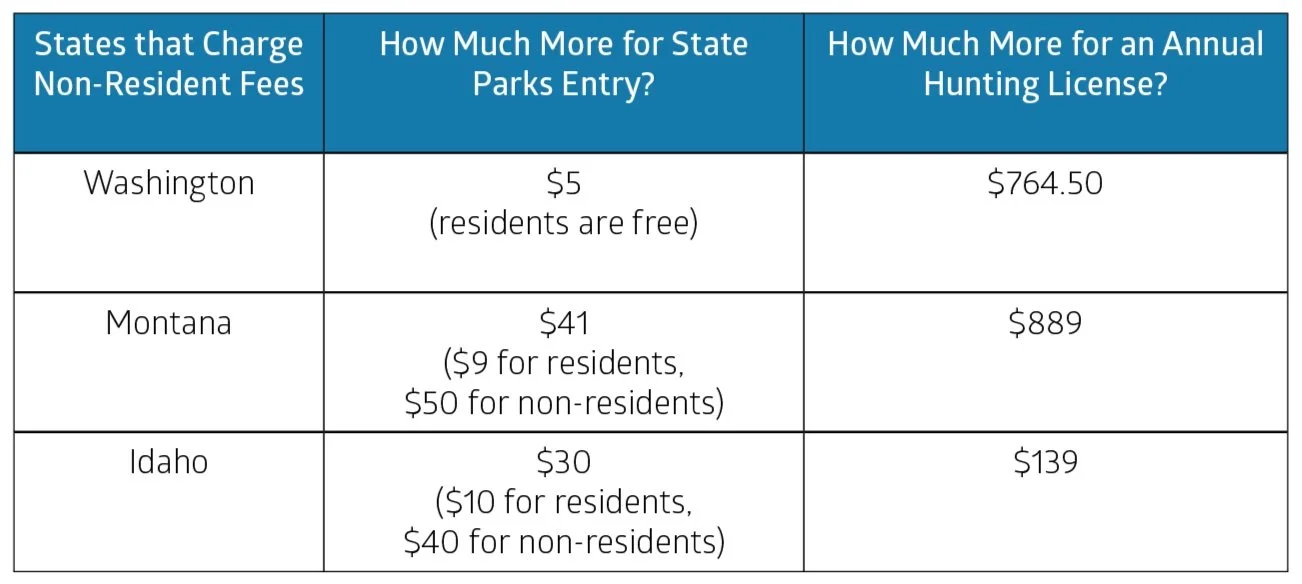
States such as Montana and Idaho already charge non-residents at least $30 more, annually, for accessing their state parks. Moreover, Washington State charges non-residents $5 when reserving yurts, cabins, marina slips and other amenities to offset the lack of sales tax visitors pay. Given the steady upward trend of visitors over the years, the ability to collect these revenues would allow the Department of Land and Natural Resources (DLNR) to be less reliant on the General Fund.
Toward Sustainable Tourism
Tourists come to Hawaiʻi to witness the isolated beauty of this archipelago, as well as to experience our unique mix of cultures, all of which emphasize the importance of hospitality and caring for guests. Far from being anti-tourism, implementing a visitor recreation fee would facilitate a more sustainable, enriching tourism experience. It will protect our environment and the natural resources that people come here to appreciate, while helping local residents and the frontline employees that work in the hospitality industry to thrive.
There are still many unknowns as to what this visitor recreation fee would look like. It could be modeled after the Alaska Permanent Fund, allowing a proportion of these funds to be invested and later disbursed to residents. Or, it could be used to simultaneously fund conservation efforts and other critical infrastructure for our islands.
We must consider how to best accomplish the various economic and environmental goals we set out for ourselves via the 2030 Aloha+ Challenge. Implementing the fee may require us to amend our State Constitution or to create an independent agency to oversee these revenues. But regardless of the effort required, we must take the opportunity presented by the pandemic to reevaluate our tourism policies to promote forward, sustainable-thinking for this important sector of the economy.