With record levels of unemployment and financial insecurity, Hawaiʻi residents are in dire need of fiscal relief through the CARES Act to fill gaps in the social safety net. Although the local counties have been given CARES funds to use at their discretion, the state government has retained control over the vast majority of the $1.25 billion pot intended for Hawaiʻi.
On June 19, 2020, the legislature announced a CARES spending plan that included—among other significant items—$100 million for rental assistance, $90 million for airport screening, and $100 million for personal protective equipment (PPE). These funds will certainly go a long way towards helping Hawaiʻi’s most vulnerable residents during the COVID-19 crisis, but this plan does not adequately address other key priorities.
Here’s a look at some significant differences between how Hawaiʻi has decided to spend its CARES money compared to other states.
Table 1. Hawaiʻi Government Spending on Food Security Compared to Other States
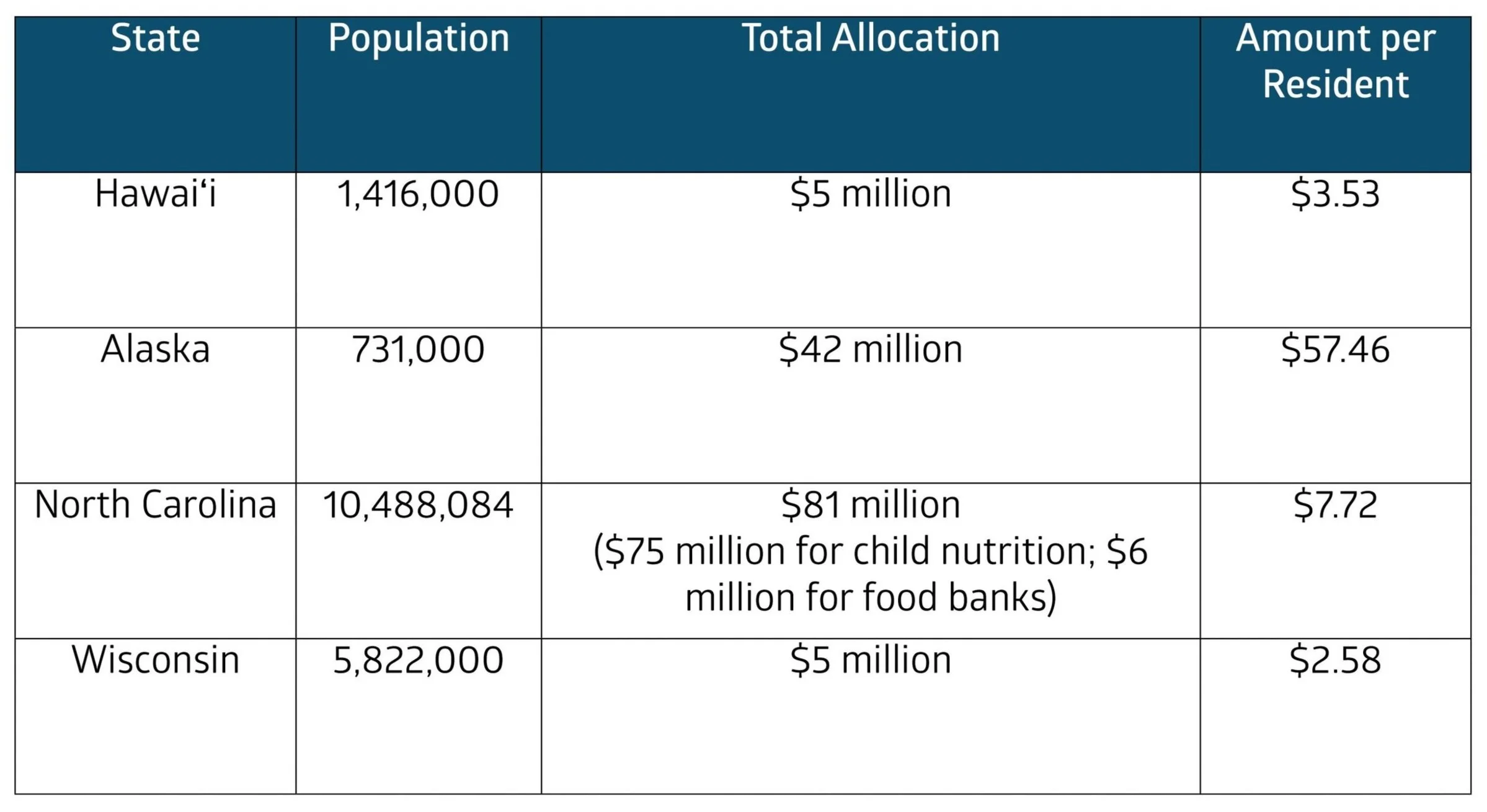
Table 1. Thus far, the State of Hawaiʻi has set aside a mere $5 million for food assistance compared to Wisconsin’s $15 million allocation. In addition, both Alaska and North Carolina have already earmarked sizable amounts ($42 million and $75 million, respectively) for their child nutrition programs.
Table 2. Hawaiʻi Government Spending on Child Care Compared to Other States
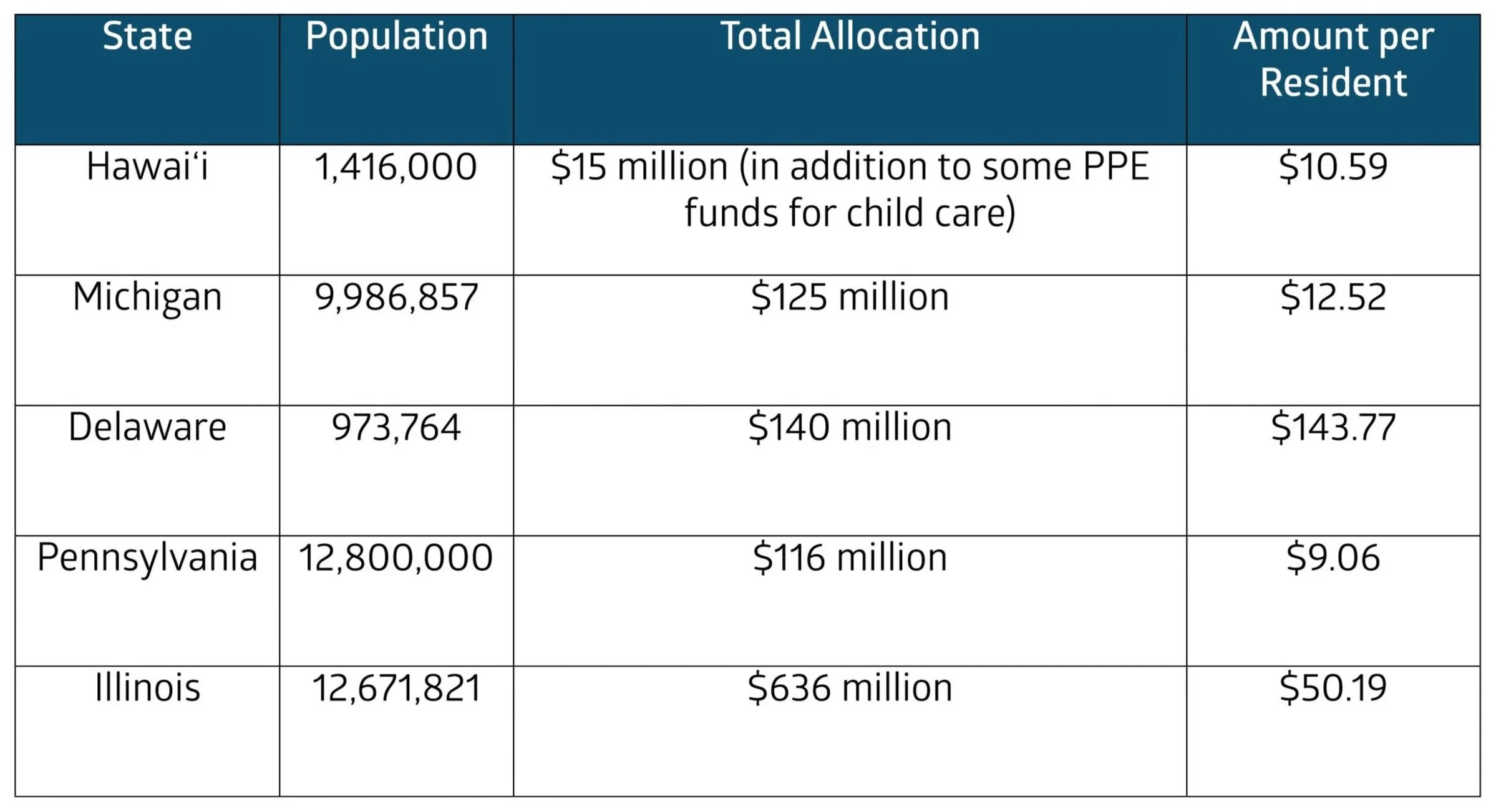
Table 2. Aside from an unspecified portion of the PPE funds, Hawaiʻi has dedicated $15 million to child care providers. Michigan has granted $125 million to reimburse child care providers, while Pennsylvania has allocated $116 million.
Table 3. Hawaiʻi Government Spending on K-12 Education Compared to Other States
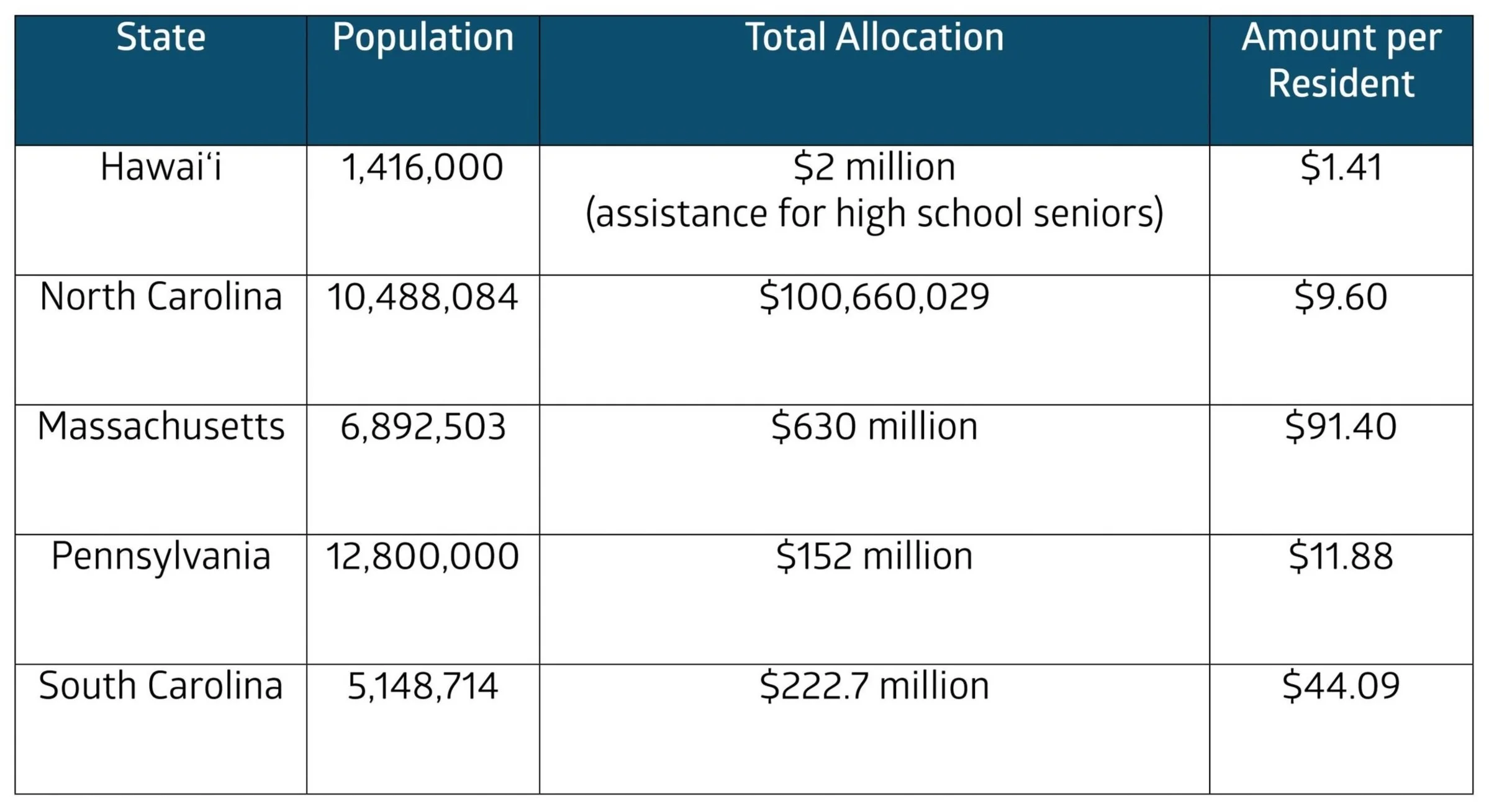
Table 3. These disparities are even more pronounced in spending on K-12 education-related costs.
Table 4. Hawaiʻi Government Spending on Small Business Assistance Compared to Other States
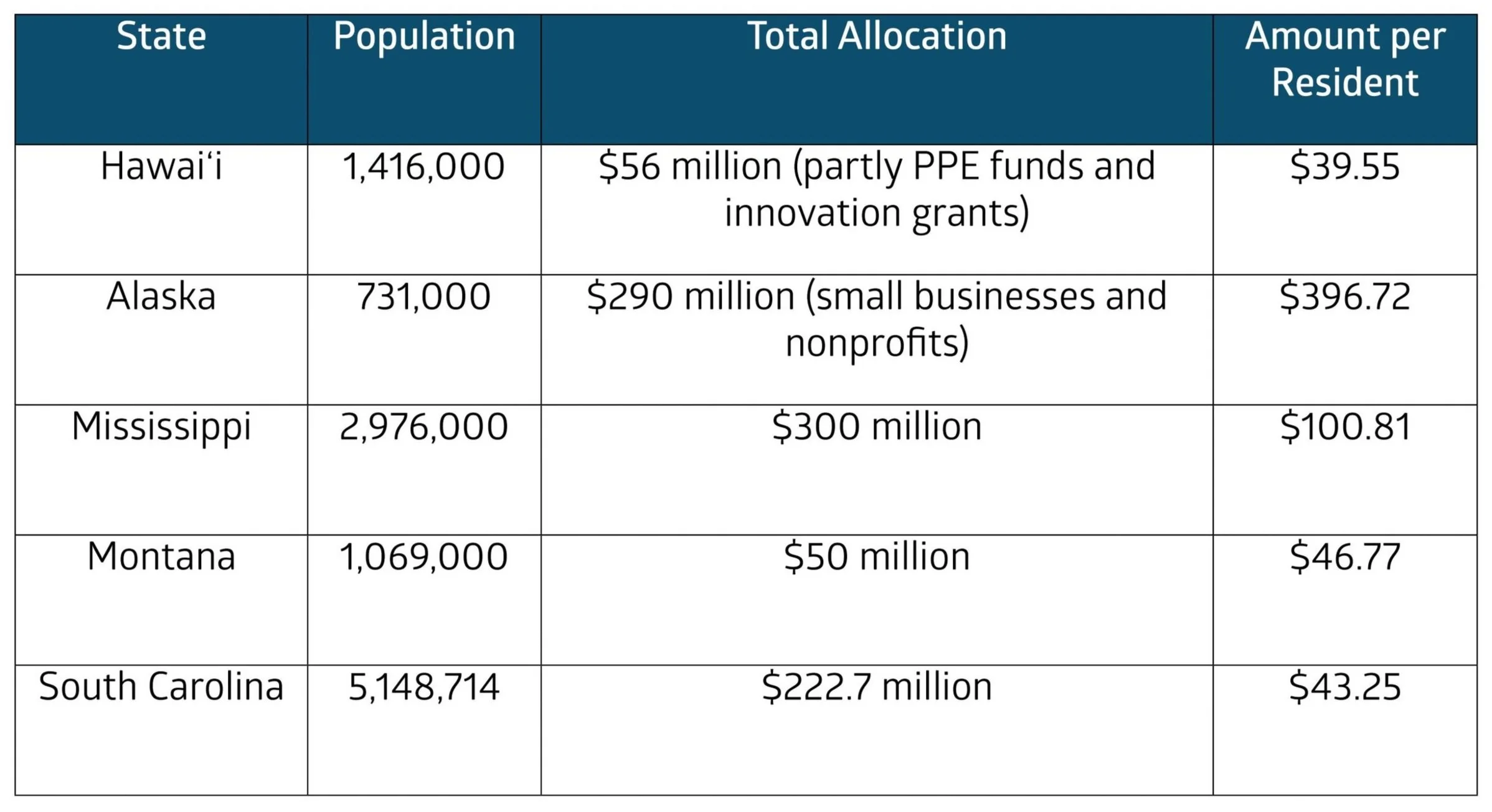
Table 4. Yet another category that Hawaiʻi falls short in is small business assistance. Unlike many other states, Hawaiʻi has decided to distribute PPE and innovation grants (for PPE development) in lieu of general grants for all businesses. Although a few local companies have received direct federal grants, little additional assistance is slated to come out of the state’s share of CARES funds.
Given the extreme hardship currently faced by tens of thousands of Hawaiʻi residents, these under-served areas clearly need more attention. It may be too late for the state legislature to appropriate more budgetary or CARES funds to fill these gaps, so it may fall to the counties to shore them up.
As estimated by the 2020 ALICE report, at least 35,000 additional households will be pushed into financial insecurity or poverty by the end of the year. To avoid this worst-case scenario, these CARES funding gaps must be addressed.