The 2026 legislative session is now in the rearview mirror. Some progress was made toward a fair tax system that collects more revenue from those at the top to fund our collective needs, but it won’t be enough to fill the widening gaps in our state budget.
Hawaiʻi is confronting a perfect storm of pressures—diminishing state revenue, looming federal cuts, and the mounting costs of climate disaster recovery—that threaten to unravel the programs working families depend on. To protect our local communities, the Legislature must take significant steps to boost Hawaiʻi’s revenue in 2027.
Three Major Sources of Budget Strain
There are three main forces that will continue to wear on Hawaiʻi’s budget in the years to come. Each of them alone would be cause for concern; together, they pose an existential threat to the state’s ability to fund core services and invest in our future.
The Ongoing Cost of Act 46 (2024): Hawaiʻi’s revenue picture is already compromised by the income tax cuts enacted through Act 46 of 2024. While Senate Bill 3125 (signed into law as Act 24) softened the blow by rolling back some of the tax cuts for the wealthy, the overall damage remains. Even with the changes made this year, Act 46 will still reduce state revenue by more than $1 billion annually by 2031—around a tenth of Hawaiʻi’s total tax revenue.
The Federal Cliff, H.R. 1: At the federal level, Hawaiʻi faces hundreds of millions in funding losses due to H.R. 1, the “One Big Beautiful Bill.” This legislation extends the 2017 Tax Cuts and Jobs Act, costing the federal government over $4.6 trillion. Medicaid and SNAP will bear the brunt, forcing Hawaiʻi to cover up to $700 million in annual costs. If the state is unable to do so, an estimated 19,000–38,000 Hawaiʻi residents could lose their Medicaid coverage, and thousands could be deprived of their SNAP benefits. These programs are a lifeline for working families and kūpuna; the state must find a way to preserve them.
Climate Disasters Are No Longer Hypothetical: The Kona Low storms of early 2026 caused at least $1 billion in damage across the islands, demonstrating that climate change-fueled extreme weather is already here. Flooding, landslides, and infrastructure failures disrupted communities and strained emergency services. These events are not anomalies. As sea levels rise and storm patterns intensify, Hawaiʻi will face increasingly frequent and costly disasters, requiring more revenue for recovery and adaptation.
Less Revenue Leads to Inevitable Cuts
When revenue falls, programs suffer, and this is plainly apparent in the budget approved by the Legislature in 2026.
Consider the Department of Hawaiian Home Lands (DHHL). The department received $185 million for fiscal year 2026, but that figure drops to $131 million in 2027. This reduction comes at a time when DHHL is already failing to meet its constitutional mandate. With over 29,000 Native Hawaiian beneficiaries on the homestead waiting list, the department faces an estimated $800 million shortfall.
The Legislature’s failure to pass a conveyance tax increase this year, which could have generated up to $60 million a year for DHHL alone, represents a profound missed opportunity.
Currently, Hawaiʻi spends roughly $300 million on its prison system, while DHHL receives just $185 million. We are investing more in jailing people—disproportionately Native Hawaiians, often for non-violent offenses—than in housing them. Redirecting even a fraction of this prison spending to DHHL would help honor the state’s obligations to Native Hawaiians and reduce houselessness at the same time. However, the Office on Homelessness and Housing Solutions faces a similar level of cuts, with funding dropping from $25 million to $18.6 million in 2027.
Individually, these cuts may appear minimal, but these programs are not luxuries; they are the infrastructure of a compassionate society. When we cut housing, we see more families on the streets. When we cut healthcare, we see more untreated conditions. The human cost is real and compounds over time.
A Path Forward: Revenue Options for 2027
Next year, the Legislature will have another opportunity to course-correct our state tax system. But these efforts will only succeed if lawmakers meaningfully raise taxes on the wealthy. The 2027 legislative session will be decisive.
Figure 1: Average Projected Tax Increase From Taxing Capital Gains at the Same Rate as Ordinary Income, by Income Group.
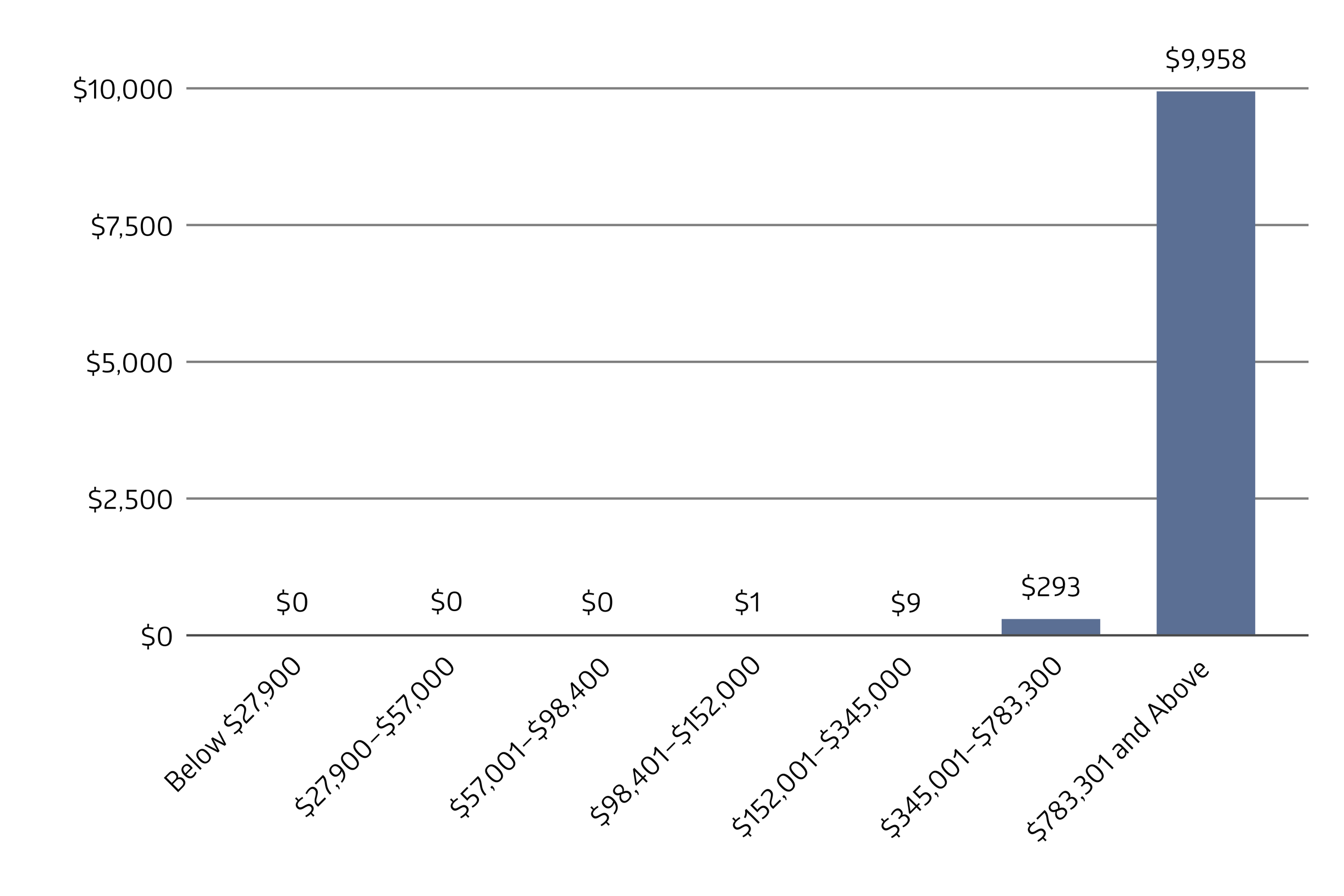
Figure 1. For Hawaiʻi households making up to $345,000 per year, the average expected increase in tax liability that would result from the state taxing capital gains at the same rate as ordinary income would be negligible. Households making up to $783,300 would still only see an average tax increase of $293. Only households making above that amount, $783,301 or more, would see a significant increase in tax liability—an average of close to $10,000.
Raising the Capital Gains Tax: Currently, Hawaiʻi taxes long-term capital gains—profits from stocks, bonds, and other investments—at a maximum rate of 7.25 percent, significantly lower than the top income tax rate of 11 percent. This creates a glaring loophole: those who earn income through work pay more than those who earn income from wealth.
More than 70 percent of capital gains accrue to taxpayers earning over $400,000. Taxing capital gains at the same rate as ordinary income would generate at least $85 million annually, with 88 percent of the new revenue coming from the top 1 percent of earners. As such, this proposed increase is squarely targeted at those who can afford to pay more.
Modernizing the Conveyance Tax: The conveyance tax, paid when residential properties change hands, is an effective tools for capturing revenue from Hawaiʻi’s real estate market. However, the tax rates haven’t been updated since 2009, even as out-of-state buyers continue to drive up property prices.
House Bill 2049, which failed to advance this session, proposed switching the conveyance tax to a marginal rate structure that would lower taxes for many residents while raising rates on high-value investment properties. All told, it would have provided up to $300 million a year for the General Fund, Dwelling Unit Revolving Fund, Rental Housing Revolving Fund and DHHL.
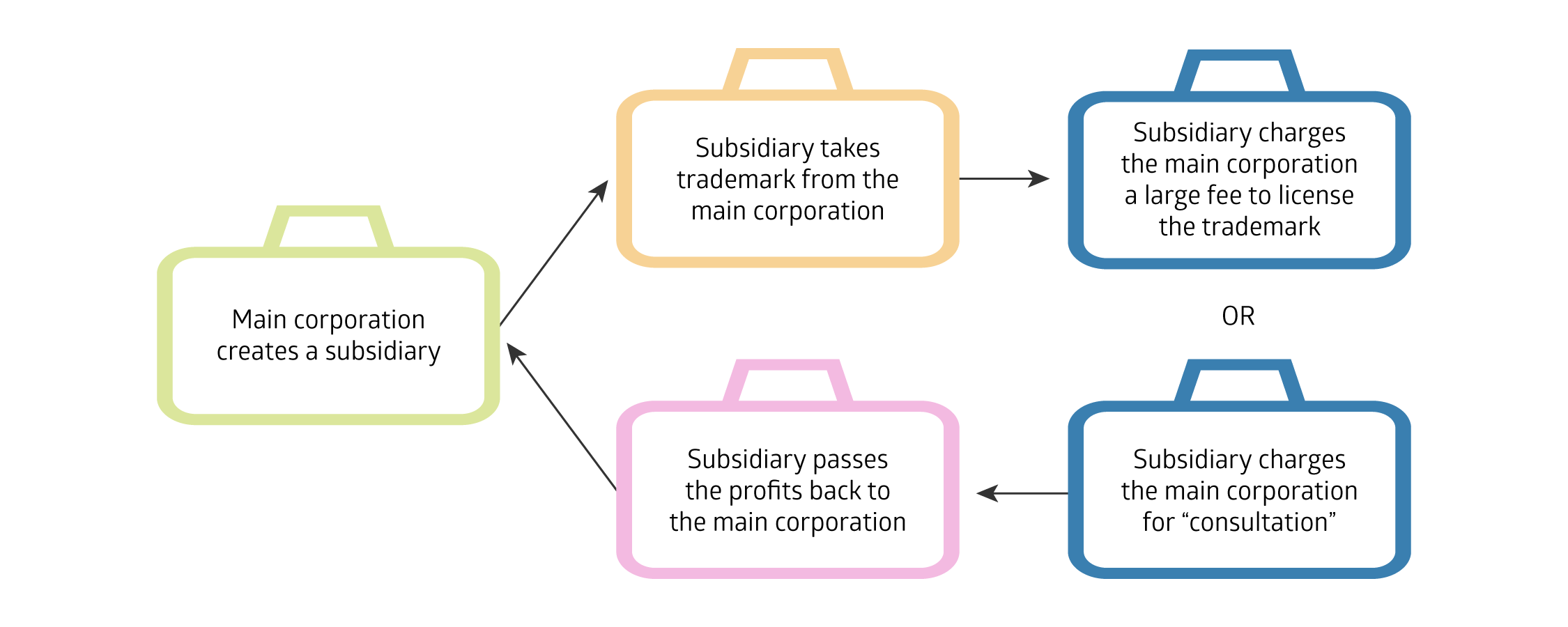
Closing Corporate Loopholes: Multinational corporations continue to exploit tax loopholes that allow them to move profits out of Hawaiʻi and avoid paying taxes to the state. Implementing Worldwide Combined Reporting would ensure that corporations pay their fair share in taxes, just as small businesses and working families already do.
Figure 2: The Process By Which U.S.-Based Multinational Corporations Use Subsidiaries to Evade U.S. Taxes.
Act 46, H.R. 1, and the growing costs of climate change will have a direct impact on Hawaiʻi’s people. If we don’t act, we’ll see more families priced out of their homes, more children going hungry, more Native Hawaiians waiting decades for land, and more communities devastated by preventable disasters.
The revenue options are available, and the moral imperative is clear. Now we need the political will. The 2027 session must be defined by bold actions to protect Hawaiʻi’s working families, honor our obligations, and build a resilient future for generations to come.