

Hawaiʻi’s serious mental health care needs take a top spot in Governor Green’s 2025 supplemental budget
In addition to funding Lahaina's recovery, the governor proposes increases to much-needed funding for the state's unmet mental health care needs.

Focusing in on people-first policy for the 2024 legislative session
Hawaiʻi Appleseed announces its legislative priorities for the 2024 session.

Keiki poverty more than doubled last year without the expanded Child Tax Credit
Hawaiʻi lawmakers have an obvious solution at their disposal, if they are willing to act on it.

Lawmakers still need to equitably raise revenue to meet Hawaiʻi’s needs
On tax policy, state legislators made progress in 2023 with tax relief, but left smart, revenue-raising policy initiatives on the table for next session.

Legislative agenda 2023: tax reforms to boost incomes and fund investments in our future
Top of the list of immediate challenges for Hawaiʻi is to find a way to prevent our people from being overwhelmed by the high and rising cost of living in the islands.
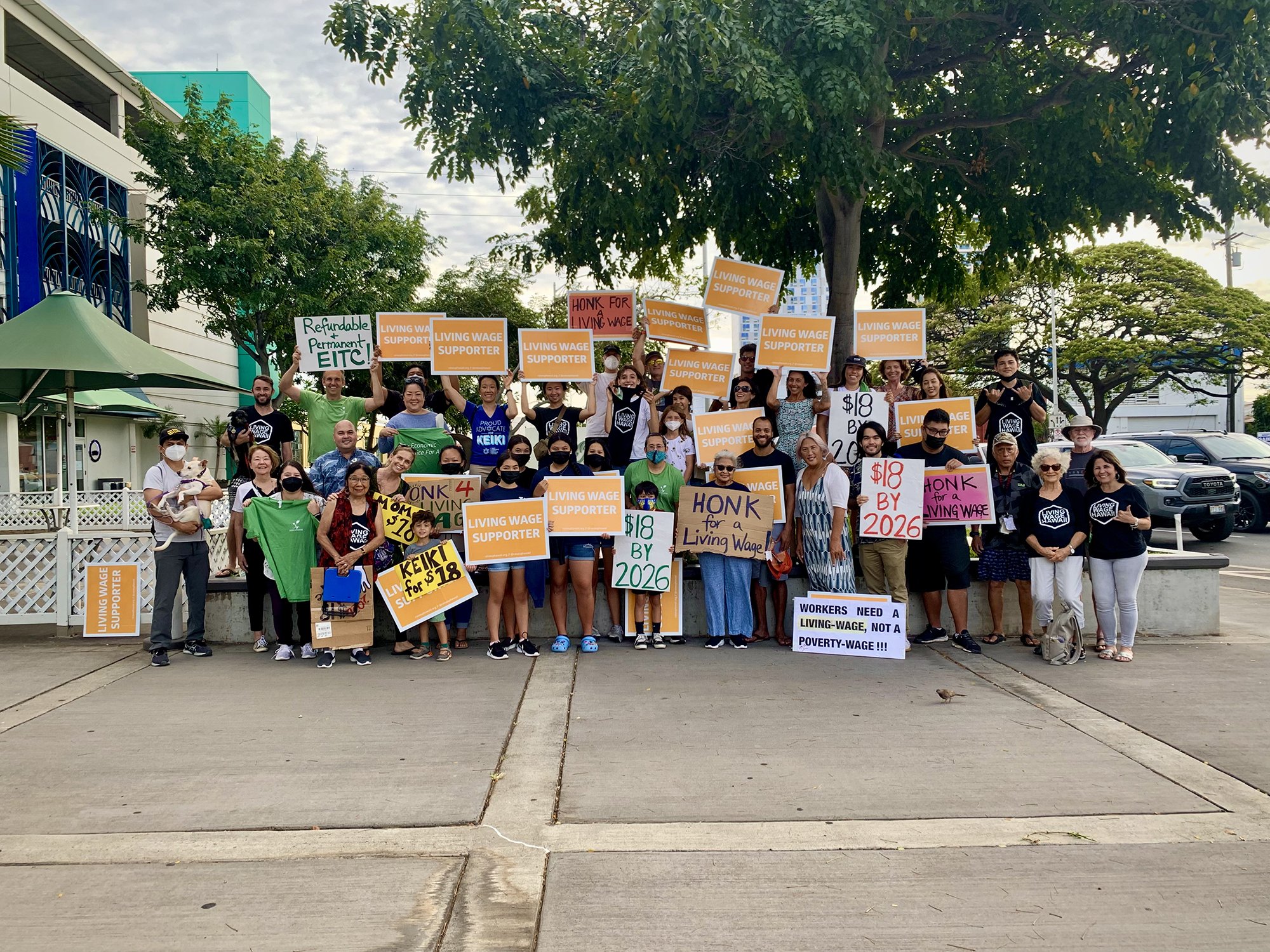
What made the 2022 Hawaiʻi legislative session a win for working families?
After multiple years with little progress on policy to help working families survive Hawaiʻi’s highest-in-the-nation cost of living, several factors came together to deliver a banner year in 2022.

A Hawaiʻi Child Tax Credit would keep thousands of keiki out of poverty
After the expiration of the expanded federal Child Tax Credit, poverty rates spiked—it’s time for Hawaiʻi lawmakers to step up and fill the gap.

Hawaiʻi inequality is on the rise—wealth taxes can help fix the problem
Hawaiʻi is one of the most unequal states in the nation for wealth distribution, but tax policy changes can help capture more wealth at the top to invest back into communities.

Opportunities for Hawaiʻi to maximize its budget investments
Maintaining government spending on public programs, Hawaiʻi’s workforce, and contractors for the state keeps money circulating throughout the economy as people pay for housing, food and other services.

How Hawaiʻi is funding its $24 billion FY23 budget
The legislature not only decides where money is spent, but also makes many of the decisions about who pays how much to support the budget.

How the state plans to spend its $24 billion FY23 budget
The budget determines how our collective resources will be distributed to pay for programs and investments that support public needs. The funding decisions made in the budget demonstrate where our collective values lie.

Honolulu council should take time, consider whether Bill 45 is a good investment
While the stated purpose of Bill 45 is to promote economic growth, there is no way to show that providing the additional incentives in Bill 45 would be a cost-effective use of the city’s funds.

Highlights of the Hawaiʻi 2023 Supplemental Budget
After two pandemic-constrained years, surprisingly strong finances have enabled legislators to make unprecedented investments in long-underfunded areas.
2022 legislative session: A big win for working families; but more must be done
Legislators adopted two priority economic justice policies to deliver a significant household income boost to hundreds of thousands of Hawaiʻi workers.

Hawaiʻi’s missed opportunity to invest in working families
The legislature chose to prioritize protecting businesses from tax increases, rather than investing in working families who were struggling long before the onset of the pandemic.

The House’s budget proposal for the coming year
Buoyed by increasing tax collections and continued federal relief funds, the state House sent the Senate an amended budget that proposes to increase the executive budget by $1.3 billion.

Hawaiʻi should eliminate its tipped sub-minimum wage
Research shows that employers frequently exploit tip credit provisions to pay their employees beneath the legal minimum wage. As a result, tipped workers tend to earn lower, less consistent wages than non-tipped workers, and they are more likely to experience poverty.

Now is the right time to expand Hawaiʻi’s Earned Income Tax Credit
In 2021, 12 states and D.C. recognized the devastating effects of the pandemic recession and improved their EITCs to support their working families. Hawaiʻi should join them.

Expanding economic opportunity with the Hawaiʻi EITC
Expanding the state Earned Income Tax Credit to make it refundable would put more money back in the pockets of Hawaiʻi's working families, strengthening the local economy.

Put more money in working people’s pockets and reduce housing costs
This legislative session, Hawaiʻi Appleseed is pushing hard to implement a significant minimum wage increase, expand successful tax credits for low-income families, and lay the groundwork for housing policy that will mean no one in Hawaiʻi is left unsheltered because of poverty.