Wins for food access and low-income families at the 2025 legislative session
Every family in Hawaiʻi deserves access to nourishing, affordable, and culturally meaningful food. Such access is a basic human necessity, and fulfilling this need has cascading benefits for all of society. Food equity also means fair wages, fair prices, indigenous stewardship of land, and community control over food systems.
Hawaiʻi Appleseed supports the Hawaiʻi Hunger Action Network, a statewide collective of partners working to end hunger. This session, the Network prioritized legislation in three key areas to advance food equity and support Hawaiʻi’s low income families. Here is a look at how these priorities fared now that the 2025 session is complete.
Expansion of School Meals
Senate Bill (SB) 1300 marks a meaningful step forward in the campaign for universal free school meals. This bill reduces barriers for families and helps ensure that keiki can learn without worrying about hunger by incrementally expanding access to school breakfast and lunch.
The first step will make school meals free for those in the reduced price category this coming 2025–26 school year. By School Year (SY) 2026–27, all keiki from households with incomes below 300 percent of the Federal Poverty Level (FPL) will become eligible for free meals. Once fully implemented, this change will more than double the cutoff for those children eligible for free meals.
With SB1300, hardworking families who are considered Asset Limited, Income Constrained, Employed (ALICE) will be able to reduce their food costs, easing pressure on their tight household budgets.
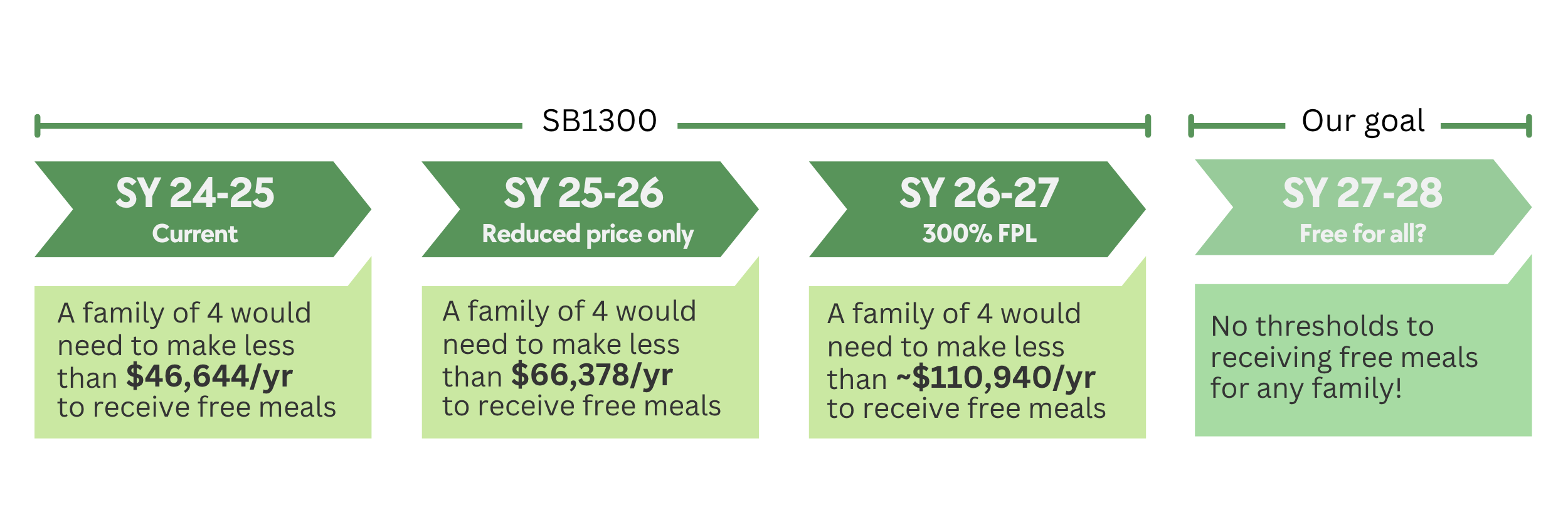
Note: The eligibility income thresholds come from the Hawaiʻi Department of Education (DOE) website and the National Poverty Guidelines for 2025.
In addition to expanding access, SB1300 also addresses the stigma that students from households with low incomes often face in the cafeteria when it comes to school meals. The bill puts into statute that no child can be denied a meal due to a negative balance—ending the harmful practice of taking away lunch from keiki simply because they can’t pay. Starting this year, Hawaiʻi will finally join 20 other states in protecting students from being denied a meal solely for inability to pay.
The legislature also passed Senate Concurrent Resolution (SCR) 134/Senate Resolution (SR) 113, which urges the Hawaiʻi Department of Education to provide a detailed report on the true cost of producing school meals. This transparency will be essential to ensure accountability and prevent unnecessary price increases that could burden Hawaiʻi’s families.
Supplemental Nutrition Assistance Program (SNAP) Funding
SB960 provides critical funding to strengthen one of Hawaiʻi’s most important safety net programs: the Supplemental Nutrition Assistance Program (SNAP). With a history of long application backlogs and staffing shortages at the SNAP office, many families have struggled to get the help they need.
The bill allocates $1.1 million per year for increased staffing and initiatives at the Hawaiʻi Department of Human Services (DHS) to improve SNAP participation. Strengthening the workforce behind SNAP will be essential to ensure that thousands of families who rely on this critical program are able to put food on the table.
The legislature also passed House Concurrent Resolution (HCR) 146/House Resolution (HR) 140, which requests that DHS apply for and implement a federal waiver that would make it easier for kupuna to access SNAP. The Elderly Simplified Application Project (ESAP) waiver is already in place in 23 states, eliminating some of the barriers to applying for seniors and people with disabilities.
Farm to Families (now titled Farm to Foodbank)
House Bill (HB) 300, the operating budget for the state’s executive branch, directs $500,000 per year for the next two years to Hawaiʻi’s Farm to Foodbank program—an initiative that supports both local farmers and families facing food insecurity. This funding will be used to purchase fresh, local, and culturally relevant food directly from Hawaiʻi farmers to distribute to households that need it most.
The original vehicle for this policy proposal, HB428, asked for around $2 million to support the program. However, despite strong support across four committee hearings, the bill did not make it through the conference committee phase of the legislative process. Still, the funding of Farm to Foodbank through the Hawaiʻi Department of Labor and Industrial Relations (DLIR) Office of Community Services (OCS) is a win for farmers and families alike, and shows that investing in our food system is a shared priority across the state.
Looking Ahead
The 2025 legislative session made it clear: we can no longer stand by while Hawaiʻi’s food insecurity rates skyrocket. While there’s still more work to be done, this year’s wins have laid the groundwork for a future in which food access is treated as a right, not a privilege.
Incremental steps to expand free school meals could lay the foundation for a universal free school meals program that ensures all students can focus on learning without the distraction of hunger.
Momentum is building at the local level, too. Maui County’s proposal to allocate $2 million to its own Farm to Families program is a reminder of the role counties can play to support food security in conjunction with state initiatives.
The collective efforts of community members, coalition organizations and policymakers are moving Hawaiʻi in the right direction, making accessing fresh, healthy food a little easier so more of Hawaiʻi’s families can meet their basic needs with dignity.