Keeping Hawaiʻi’s affordable housing units affordable
Hawaiʻi’s housing crisis isn’t news. According to the 2019 Hawaiʻi Housing Planning Study prepared by the Hawaiʻi Housing Finance and Development Corporation (HHFDC), the state needs approximately 50,000 new units by 2025 to accommodate demand. Of those, almost half of the units will be needed for people who earn 80 percent or less of the area median income (AMI).
The inadequate supply of affordable housing and the high costs of living are often associated with Hawaiʻi’s downward population trend, particularly for younger individuals looking for better housing options and work opportunities in other states. Meeting the state’s demand for housing that is affordable to average income earners would likely help put a dent in out-migration.
Table 1. Projected Housing Demand, 2020–2025, by Housing Type and Income Level
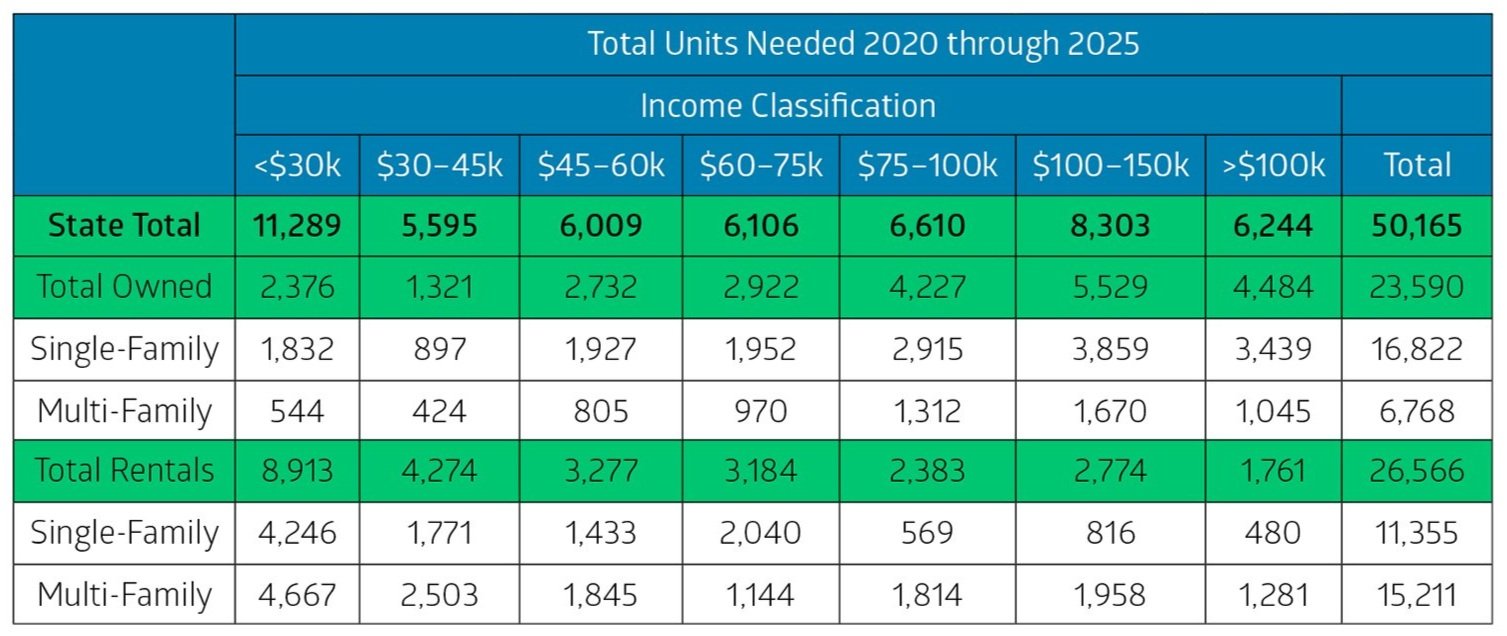
Table 1. This table is a recreation of a table from HHFDC’s 2019 report on housing demand by type and income. It shows that lower-income households have a disproportionately high need for housing. In fact, more than one in three households in need have annual incomes of less than $45,000.
While Hawaiʻi has created more affordable units in the past decades, progress has been slow. Analysis of projects built in Kakaʻako from the 1990s to 2000s shows that it takes years to get from the initial approval of the application to the completion of construction, not including the time it takes for developers to secure financing.
Although the state estimates that 26,000 new rental units will be needed for those making under 80 percent AMI in the next five years, fewer than 3,600 new affordable rental apartments were publicly-funded between 2016 and 2020. During the same period, there were 1,103 affordable for-sale homes created in Kakaʻako under the Hawaiʻi Community Development Authority (HCDA) inclusionary zoning policy. And there is no reason to expect a quickening in the pace of development aimed at meeting this demand in coming years.
Preserving Affordability
Not only are we not building enough affordable homes to begin with, but we are also failing to maintain the affordability of many of the for-sale homes which were created. This is because our housing policies on for-sale homes allow their affordability to expire in just a few years. Most affordable for-sale projects in Hawaiʻi are developed with a limited term during which the home must be kept affordable. These affordability periods range from 2–10 years for “for-sale” homes and 15–65 years for rentals. While almost all rental units have had their affordability periods renewed or extended, for-sale units have not. Instead, at the end of their affordability period they can be sold at market rate.
New projects such as Ke Kilohana and ʻAʻaliʻi have affordability terms of only two and five years, respectively. Because of these short affordability periods, typically only the initial buyers get the benefit of affordability before they sell their units at market rates. Incredibly, that means that affordable for-sale homes, subsidized by taxpayer infrastructure investment and height and density bonuses, are no longer affordable after as little as two years. Figure 1 shows how quickly the percentage of affordable for-sale homes built in Kakaʻako are disappearing.
Figure 1. Percentage of Reserved Units in Kakaʻako
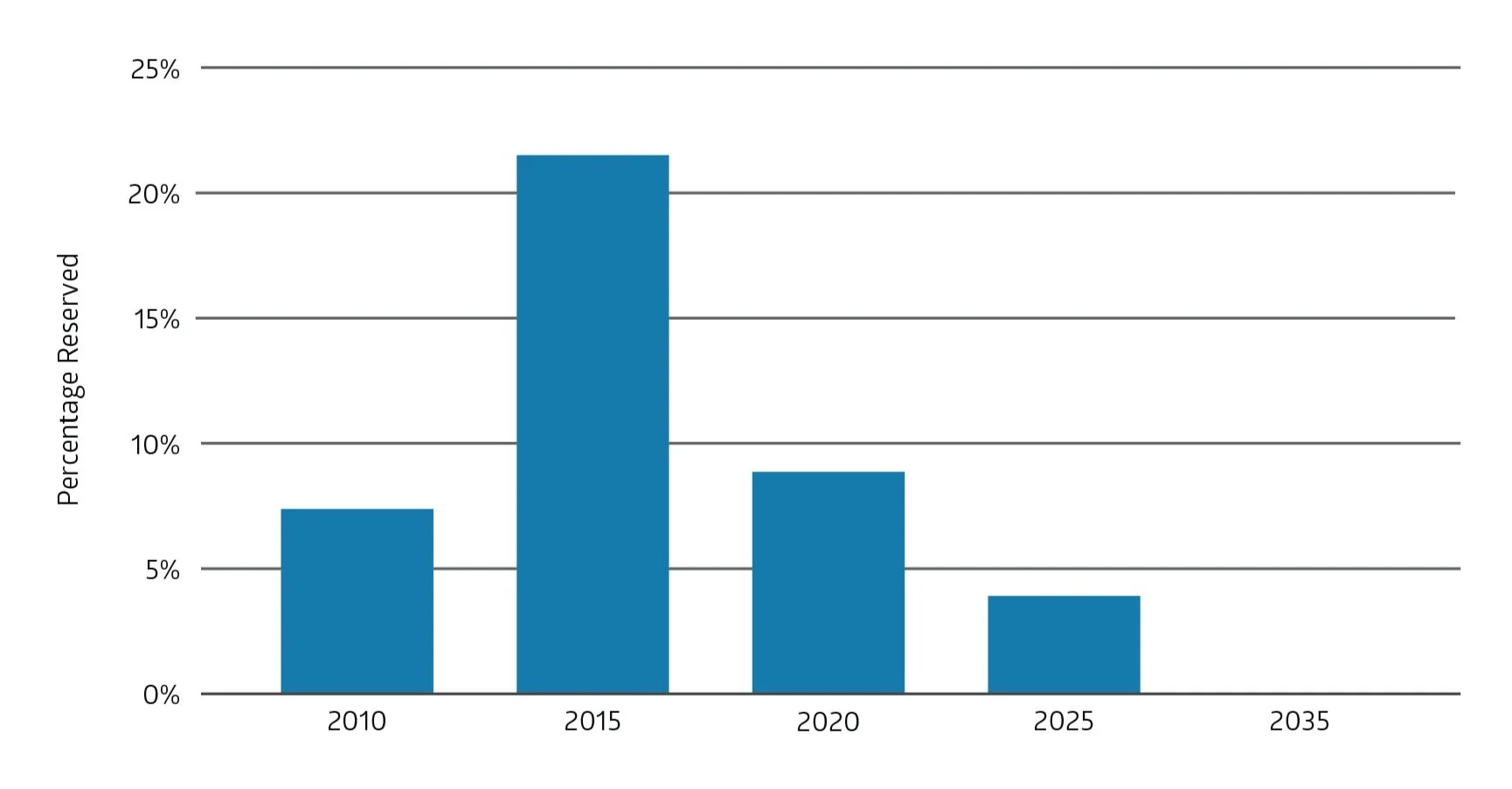
Figure 1. When the affordability period expires, for-sale homes built to meet affordability standards can be sold at market rates. Between 2015 and 2020, more than half of the affordable for-sale homes built in Kakaʻako are no longer under their affordability period and will be sold at market rate.
The need to keep affordable homes affordable for longer terms has been flagged by policymakers. In 2019, the Maui council voted against the Polanui Gardens and Makila Rural-East projects on the grounds that, given the financial incentives offered to the developers for creating affordable for-sale homes, a 10-year affordability period was insufficient. The council determined that the homes should remain affordable for at least 30 years.
The need to establish longer-term protections for affordable housing is reinforced by the real challenges we face in building more units in Hawaiʻi. Opposition to the recently proposed Kawainui project in Kailua demonstrates the many difficulties affordable projects face in gaining approval beyond permitting and financing. Given both the pushback to and limited annual funding for developing new projects, it is important to preserve the current affordable housing stock we have.
A Better Resale Policy
What should happen when a “for-sale” affordable home is sold? It’s good policy to provide lower-income households the same opportunities to build wealth as more affluent ones. However, it is also important to keep the home affordable for the next buyer.
Other cities address this by requiring that affordable homes be sold at a price that is still affordable to buyers with incomes in the same percentage of AMI as the original purchaser instead of at market rate. This allows for a reasonable amount of equity to be built-up for the original owner, while also guaranteeing the home remains affordable for subsequent owners.
Figure 2 shows the differences between a restricted price resale and a market-rate resale. In the example, the initial buyer purchased the condominium at a price affordable for a household at 80 percent of the AMI. The unit is sold 10 years later at a price that is still affordable to someone at 80 percent AMI. Due to inflation in area median income over 10 years, the reset sales price still gives the seller a $77,000 share of the equity—an advantage they wouldn’t realize if they were renters. With no restrictions the original buyer would be able to sell the unit at the market rate, reaping a windfall of $134,000, while the state permanently loses an affordable housing unit.
Figure 2. Equity Gains from Restricted vs Market Rate Resale on a Honolulu Condo Purchased in 2004 and Sold in 2014
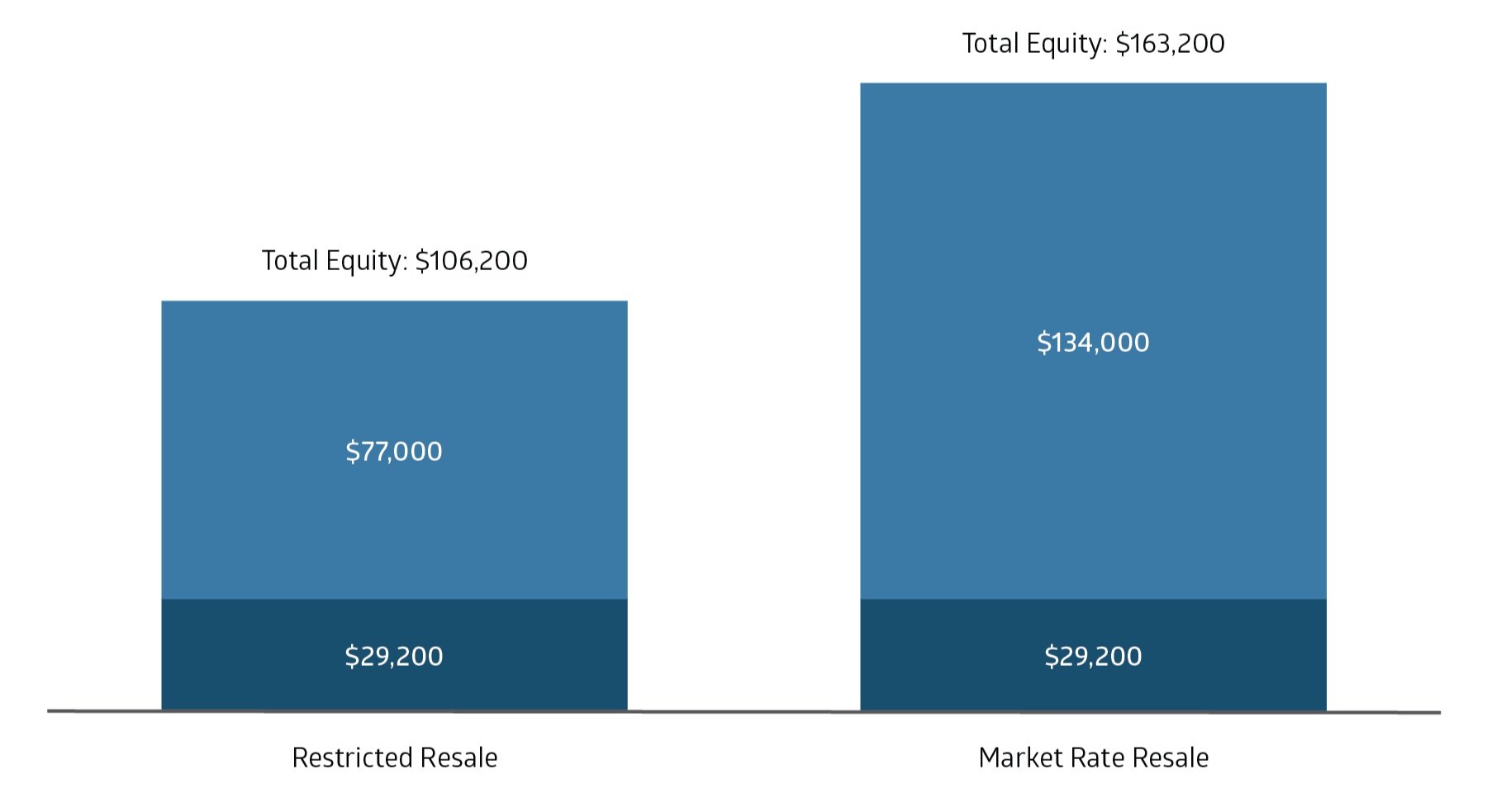
Figure 2. Restricting the resale price of affordable units still offers the original buyer an opportunity to build equity, but keeps the unit affordable for the next buyer. Hawaiʻi’s typically short affordable resale periods offer the original buyer a big profit at the expense of the state’s investment in affordable housing options.
Fortunately, the goals of building wealth for lower-income families while simultaneously maintaining affordability are not necessarily incompatible with one another. Both can be achieved when restrictions are placed on resale to ensure future affordability while allowing the seller to keep part of the accumulated equity. This balance is of paramount importance. Our collective investment does not result in an increased inventory of affordable homes if sales prices are not regulated to ensure affordability for a much longer period of time.