What the Kawainui project tells us about Hawaiʻi’s affordable housing problems
The fight raging over a proposed affordable housing development in Kailua is a textbook example of the difficulties of building new affordable housing in established neighborhoods. The proposed Kawainui Apartments would include 68 affordable rentals, and four market rate rentals on a lot currently occupied by seven rental homes that were built more than 55 years ago.
The lot is located on a busy street with a gas station, a tattoo parlor and an auto parts store across the street; not a particularly quiet or scenic part of Kailua. Still, the proposal has generated an unprecedented level of controversy for a building that is four stories tall and fits on less than 1 acre of land. Some 2,800 people have weighed-in on this one housing project. For every affordable rental unit created by this project, 42 people commented either for or against.
More than 1,850 people signed at least one online petition opposing the affordable housing development.
A total of 922 people submitted individual testimony against the project, while 625 people submitted testimony in favor, for a public hearing on September 8, 2020.
Professionally-made signs have gone up all over Kailua urging people to oppose the project.
Affordable housing advocates secured support from a range of organizations, including Hawaiʻi Appleseed Center for Law & Economic Justice, Faith Action, Young Progressives Demanding Action, Partners In Care, Hawaiʻi Health & Harm Reduction Center, Family Promise of Hawaiʻi, RYSE, Hawaiʻi Youth Climate Strike, Hoohuli Youth, Drug Policy Forum of Hawaii, Hawaii Health and Harm Reduction Center, Pacific Resource Partnership, AHED Foundation, Hawaii Alliance on Prisons, Life of the Land and Family Promise of Hawaii.
This level of intense reaction against development of any kind has halted affordable housing development in Kailua for the past 30 years. During those decades, multiple affordable developments have been proposed and rejected, all for the same primary reasons cited against Kawainui:
It will cause too much traffic.
There is not enough parking.
It will change the character of the neighborhood.
Meanwhile Kailua has become increasingly unaffordable to the people who actually work there. The average 2-bedroom home price is roughly $739,000, and the average 2-bedroom rental is $2,800 per month. People who work at the gas station across the street from the proposed project, or at the Zippy’s, Walgreen’s or Hardware Hawai‘i a few blocks away, must move farther and farther away from where they work or risk becoming increasingly housing cost-burdened.
The go-ahead for the project will require an affirmative vote by at least five Honolulu City Council members during the upcoming Honolulu City Council meeting on September 28, 2020. If affordable housing supporters are unable to secure these five votes, it could be a long time before another affordable project is proposed for Kailua. Not many housing developers are willing to go through this level of controversy just to build a few dozen homes.
A Better Way
Our short supply of housing, coupled with resistance from already established neighborhoods, is why our planners and public servants must include affordable housing in the plan for our neighborhoods right from the beginning, and why it is critical that we ensure that housing is preserved as affordable over the long-term.
This is what cities like Vienna, Austria, Helsinki, Finland, and Singapore have done. As a result, these desirable, expensive cities do not have housing crises.
Map 1. Mix of Public and Private Housing in Jätkäsaari, Helsinki
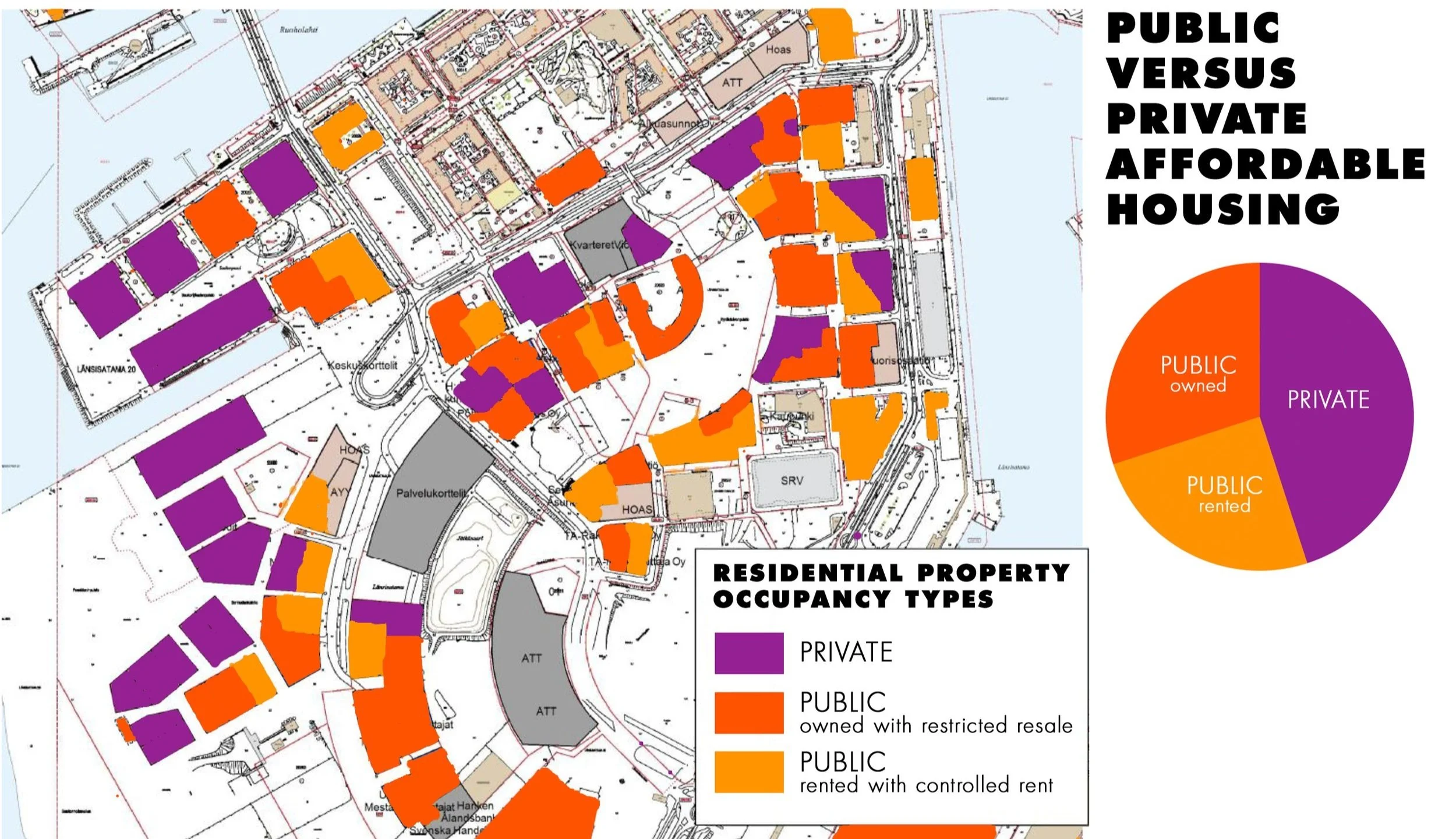
In Jätkäsaari, a neighborhood in Helsinki, Finland, public affordable housing comprises more than half of the total residential buildings, all intermixed with private market housing (Map 1). From the beginning, this neighborhood will have housing that is affordable to students and grocery store clerks, and yet is equally attractive to high-wage earners. About 55 percent of this housing is a combination of affordable rentals (25 percent) and affordable owner-occupied housing (30 percent) with regulated sales prices.
Another key strategy here is that housing sold as affordable remains affordable. In the Helsinki plan, the resale price is regulated for the affordable owner-occupied housing to keep it that way. The owner still pays on their mortgage and will earn a profit when they sell the house—it just wonʻt be as large a profit as private market housing. However, this will keep the home affordable for the next buyer, something far more valuable to the prosperity of the community.
That isn’t what we’ve seen happen in Hawaiʻi at all. We don’t build enough affordable owner-occupied housing to begin with, but we also don’t ensure that it remains affordable for the life of the house or condo. This has to change if Hawaiʻi’s working people are to have housing they can afford. Otherwise, our limited supply of private market housing will remain unaffordable to all but more affluent residents and investors.
Also important to note, the United States builds and keeps very little housing in the public sector. Nationwide, 96 percent of U.S. housing is in the private market. This is another reason for the growing nationwide affordable housing crisis and persistent houselessness across the country.
The lessons are clear: We need to develop more affordable housing, and it needs to be part of the community development plan from the outset. Affordable housing needs to be integrated with market-priced housing, and we must maintain the supply of affordable housing even in owner-occupied units. We can do this; we’ve seen it in expensive cities around the world. And it will make Hawaiʻi a better place for everyone.