March 8 was International Women’s Day, a day that calls us to stand up for equality between women and men. One area with a glaring and persistent lack of parity is how much we pay for work performed by women compared to that of men.
Notably, despite the general correlation between income and education, women in Hawaiʻi are more likely than men to have earned a bachelor’s degree or higher. The wage gap doesn’t just affect current earnings—lower pay also translates into less income for women in retirement.
Inequality in pay between women and men is exacerbated by the roles that women more frequently take on as unpaid family caregivers. During the past year, while the pandemic recession was damaging the economy, women were more likely to lose work hours as they coped with childcare closures and homeschooling. In Hawaiʻi, where women make up just under 49 percent of the workforce, they submitted 54 percent of all unemployment claims in 2020.
To honor Hawaiʻi’s working women and the families that depend on them, we’re highlighting some of the areas where we can and must do better.
Figure 1. Women’s Wages as a Percentage of Men’s, Hawaiʻi and U.S., 2009–2019

Figure 1. In 2019, women made 85.1 percent of wages paid to men. This is a better record than the U.S. as a whole, but we can do better. In fact, we have: the gap was as low as 92.8 percent in 2014.
Figure 2. U.S. Median Retirement Income, Men vs Women
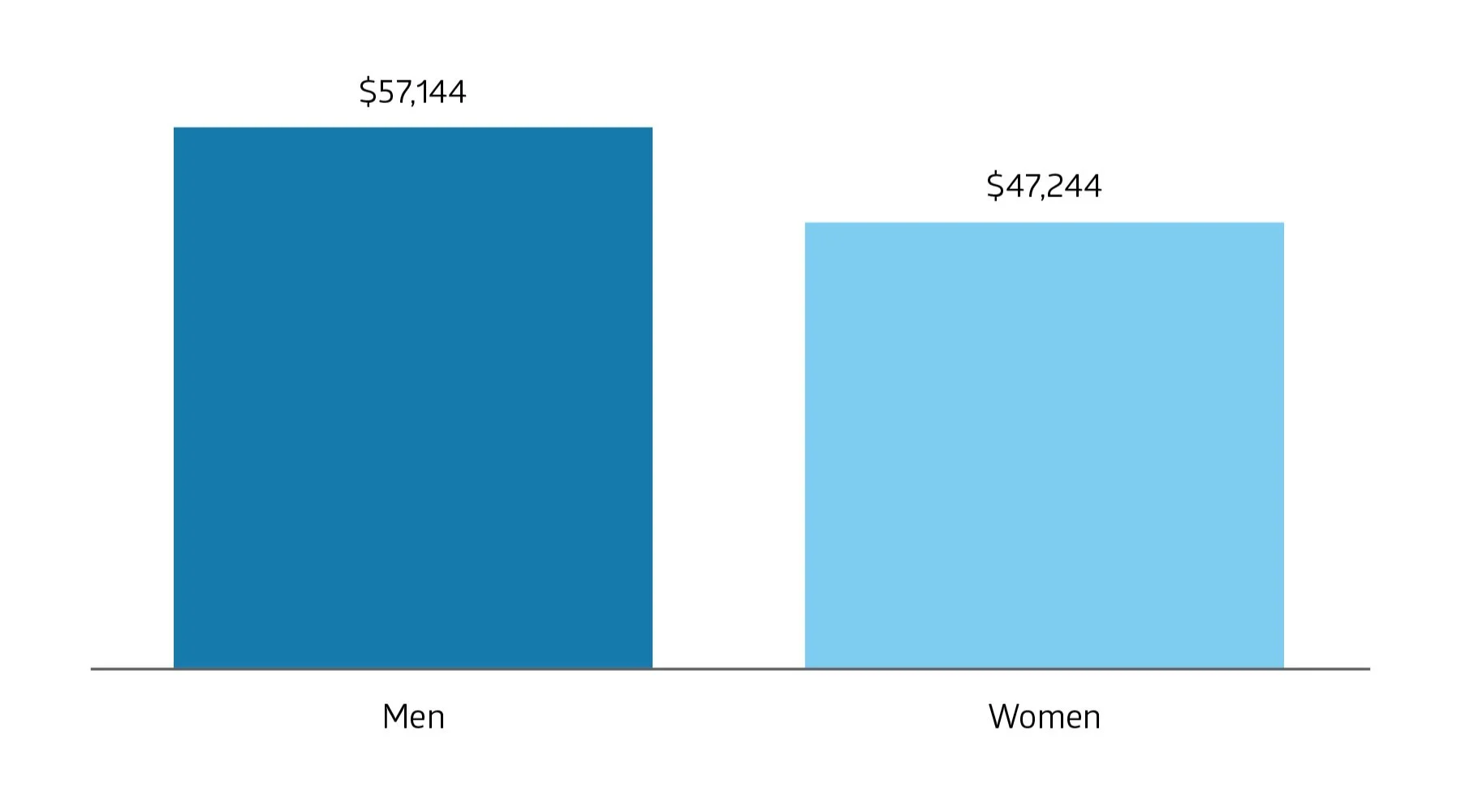
Figure 2. Social Security Income and pension contributions are calculated based on earnings over a lifetime. Unsurprisingly, men’s higher wages translate into a retirement payment gap, too, where women’s median earnings are only 83 percent of men’s.
Figure 3. Women’s Median Earnings Compared with Men’s, Disaggregated, 2019
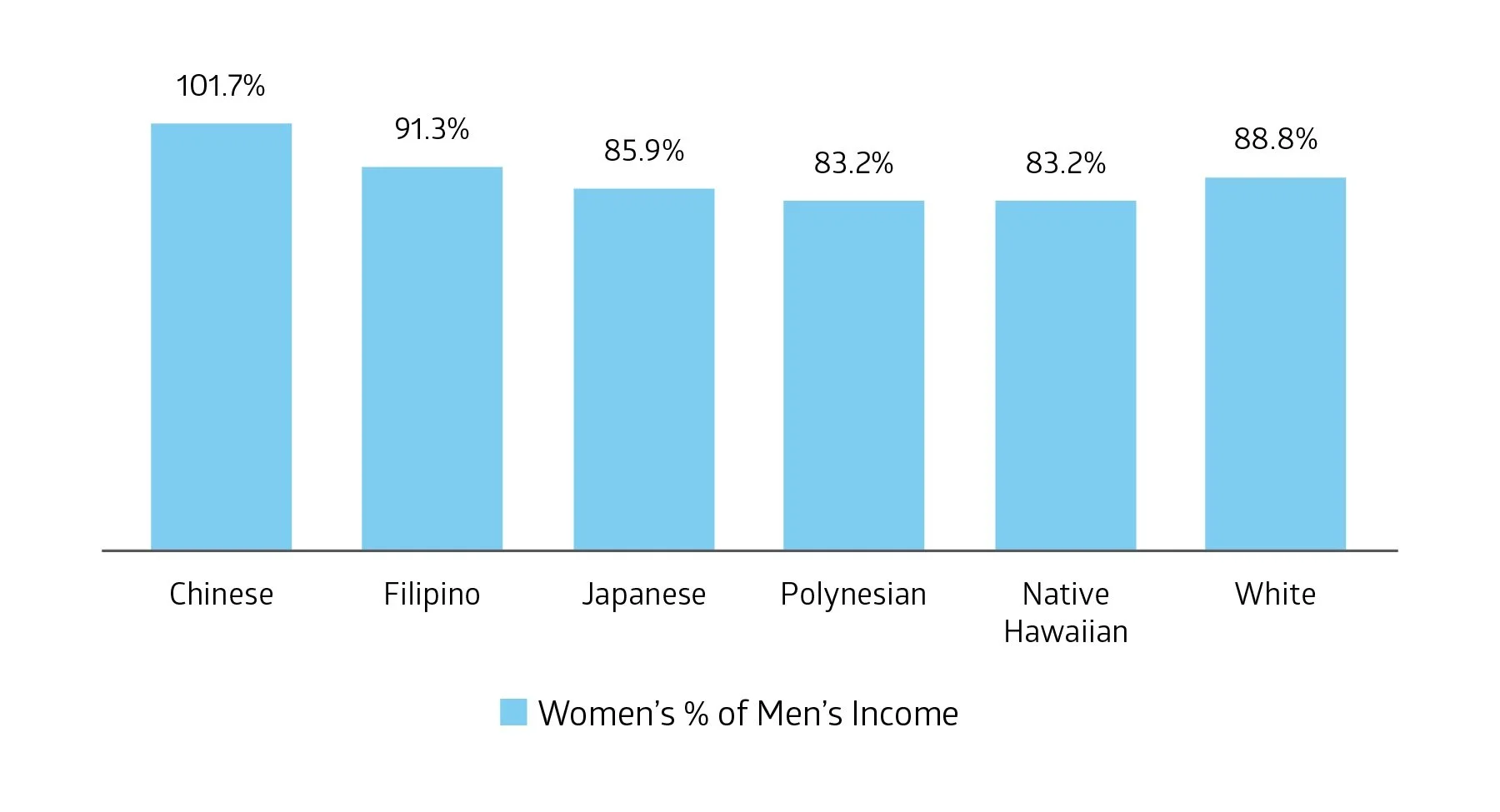
Figure 3. Differences in wages between women and men in Hawaiʻi differ by ethnic group. In 2019, Chinese women earned slightly more than men, but women in all other groups were paid less.
Figure 4. Median Income, Women Working Full-Time, Year-Round, 2019
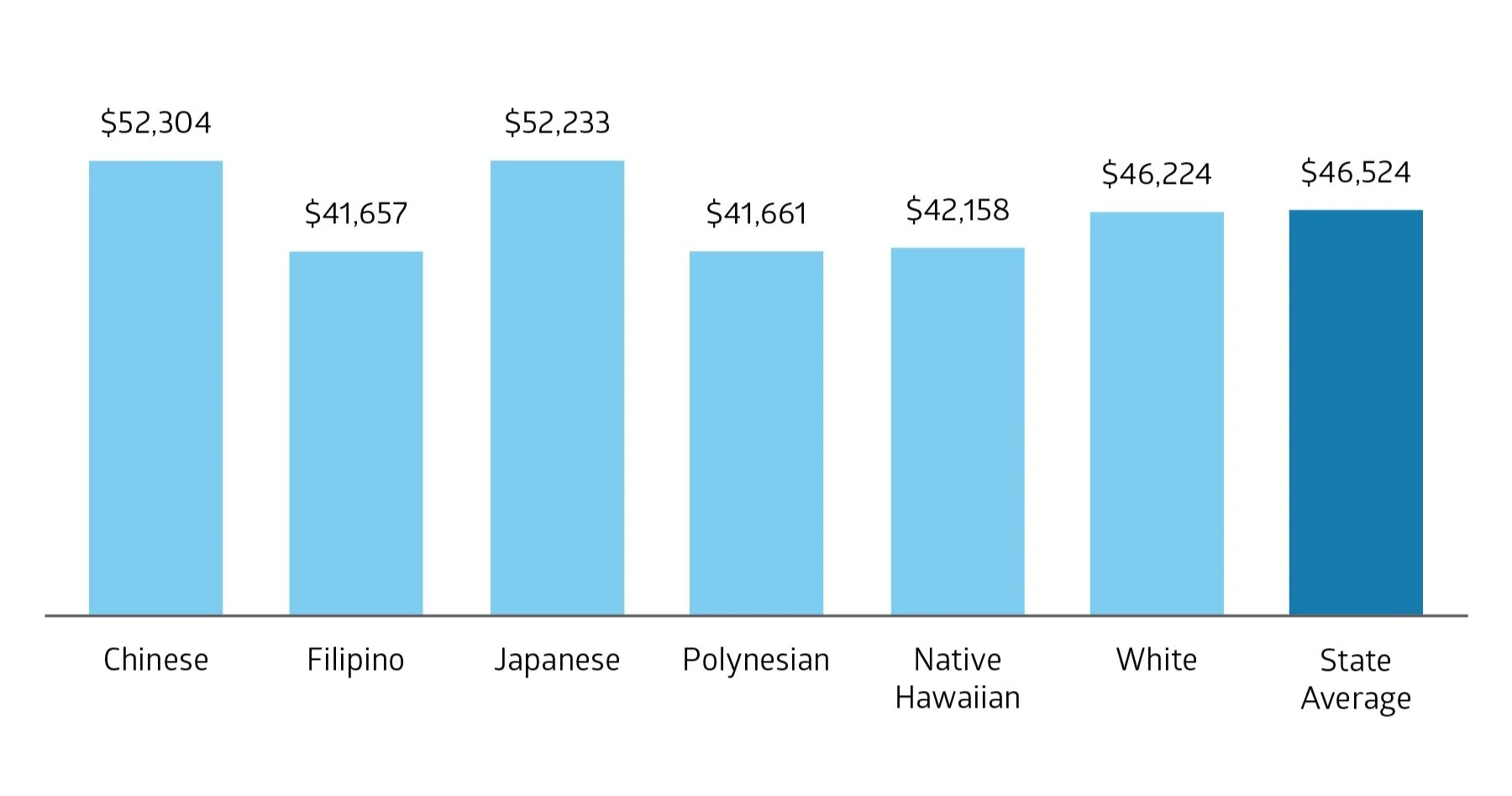
Figure 4. Racial inequity is also reflected in pay variations among women. Chinese and Japanese women were paid over $10,000 per year more than Native Hawaiian women in 2019.
Figure 5. Women Are Better Educated then Men
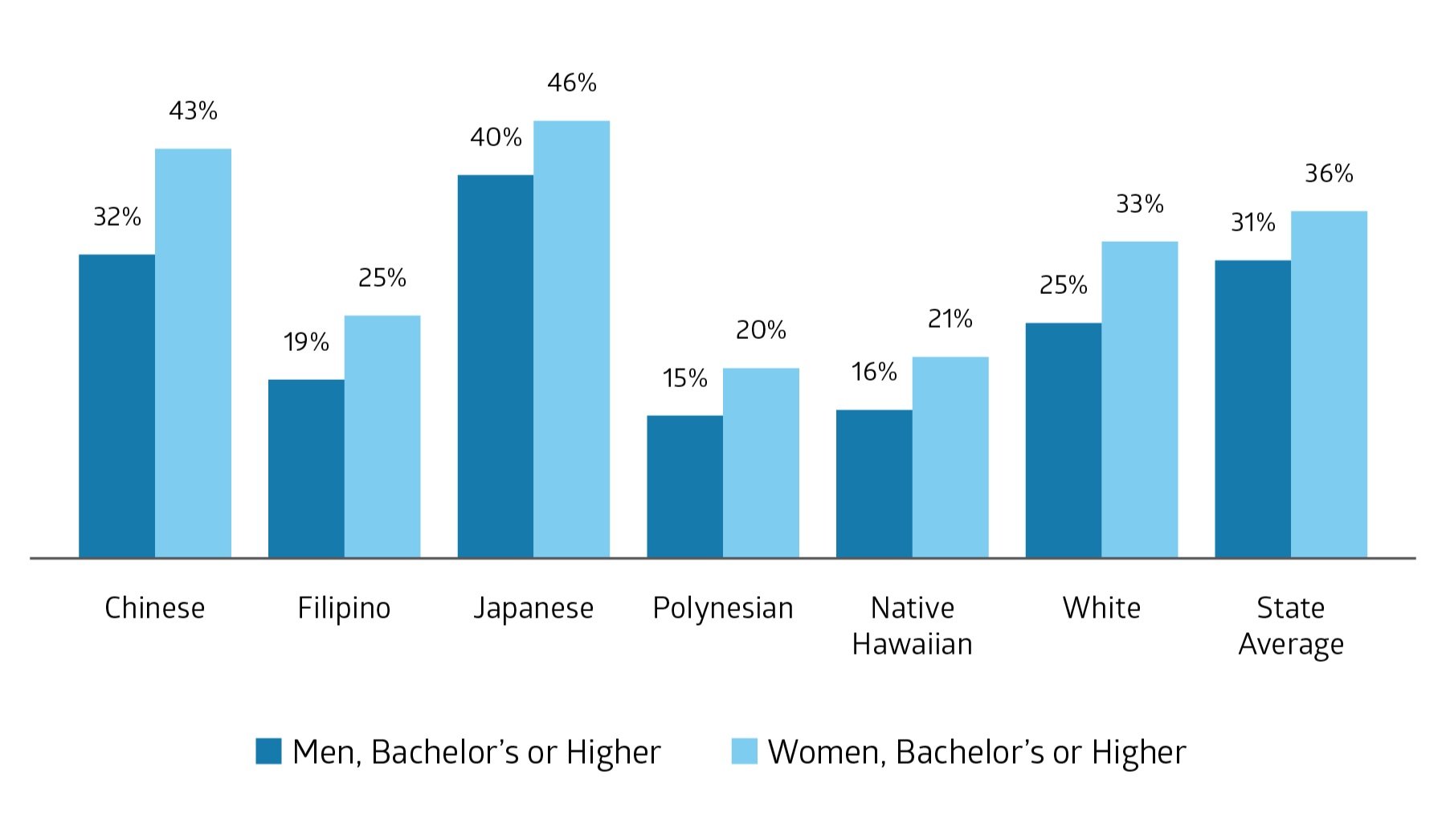
Figure 5. In general, higher education levels predict larger incomes. However, despite being paid less than men, women of all race and ethnic groups in Hawaiʻi are more likely than men to have earned at least a bachelor’s degree. The education surplus is greatest between Chinese women and men. Chinese women are also the only group whose median earnings averaged more than men’s, although the difference is only 2 percent.
Figure 6. Industry Job Dominance and Wage Gaps
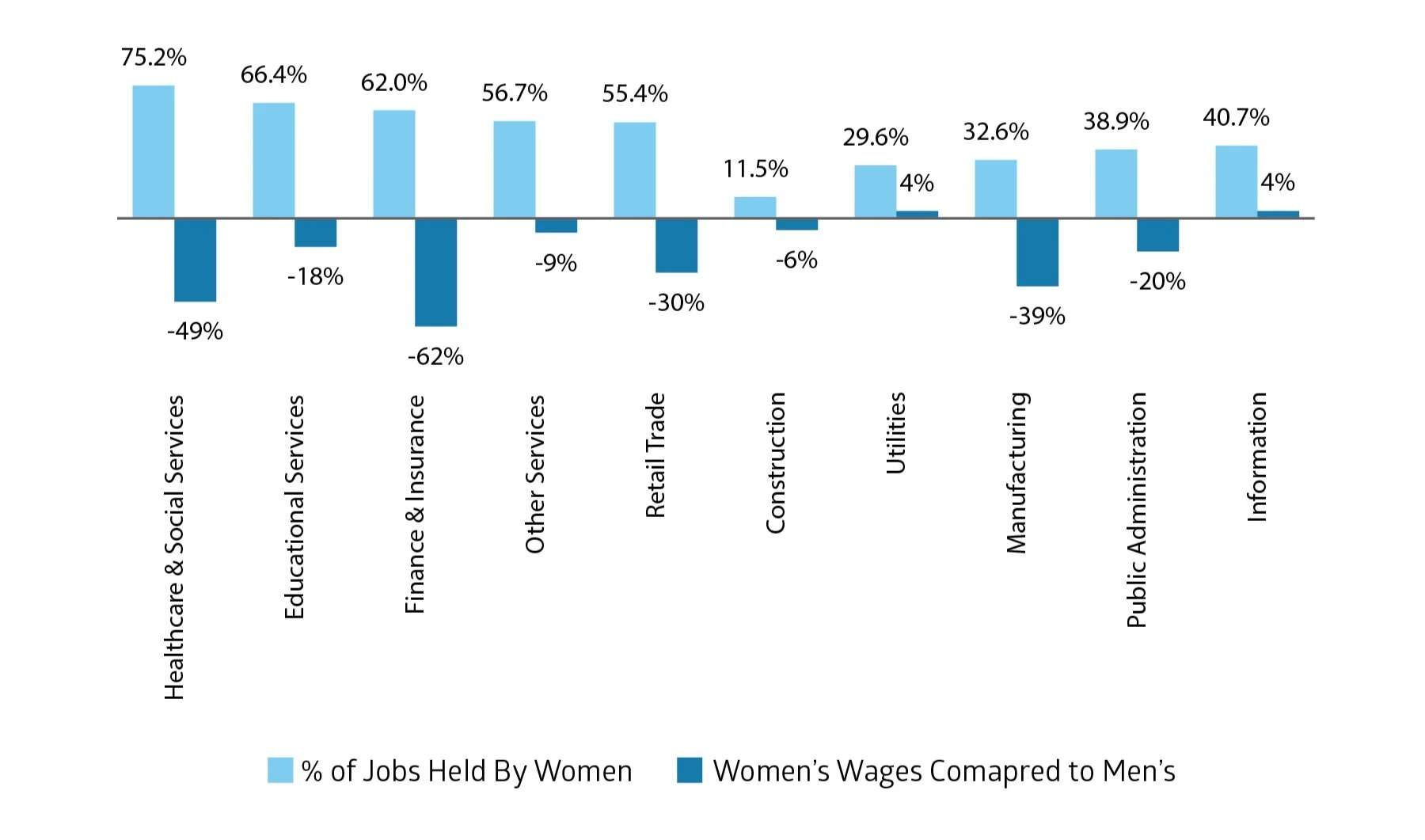
Figure 6. The percentage of jobs held in female-dominated and male-dominated industries and the wage gap for each. The five female-dominated industries are healthcare and social services, educational services, finance and insurance, other services, and retail trade. The five male-dominated industries are construction, utilities, manufacturing, public administration, and information. In two of the male-dominated industries, utilities and information, women earn slightly more than men. However, those sectors together make up just 2 percent of all jobs in Hawaiʻi.
In total, men make up 51.5 percent of the workforce and women 48.5 percent. In the five industries in which women make up the majority (ranging from 55.4 percent in retail trade to 75.2 percent in healthcare and social services), the wage gap between men and women was the largest. In these industries women were paid as much as 62 percent less than men. In the five industries where men made up the greatest percentage of the workforce, the wage gaps were generally smaller.
Figure 7. Industry Job Dominance and Wage Parity
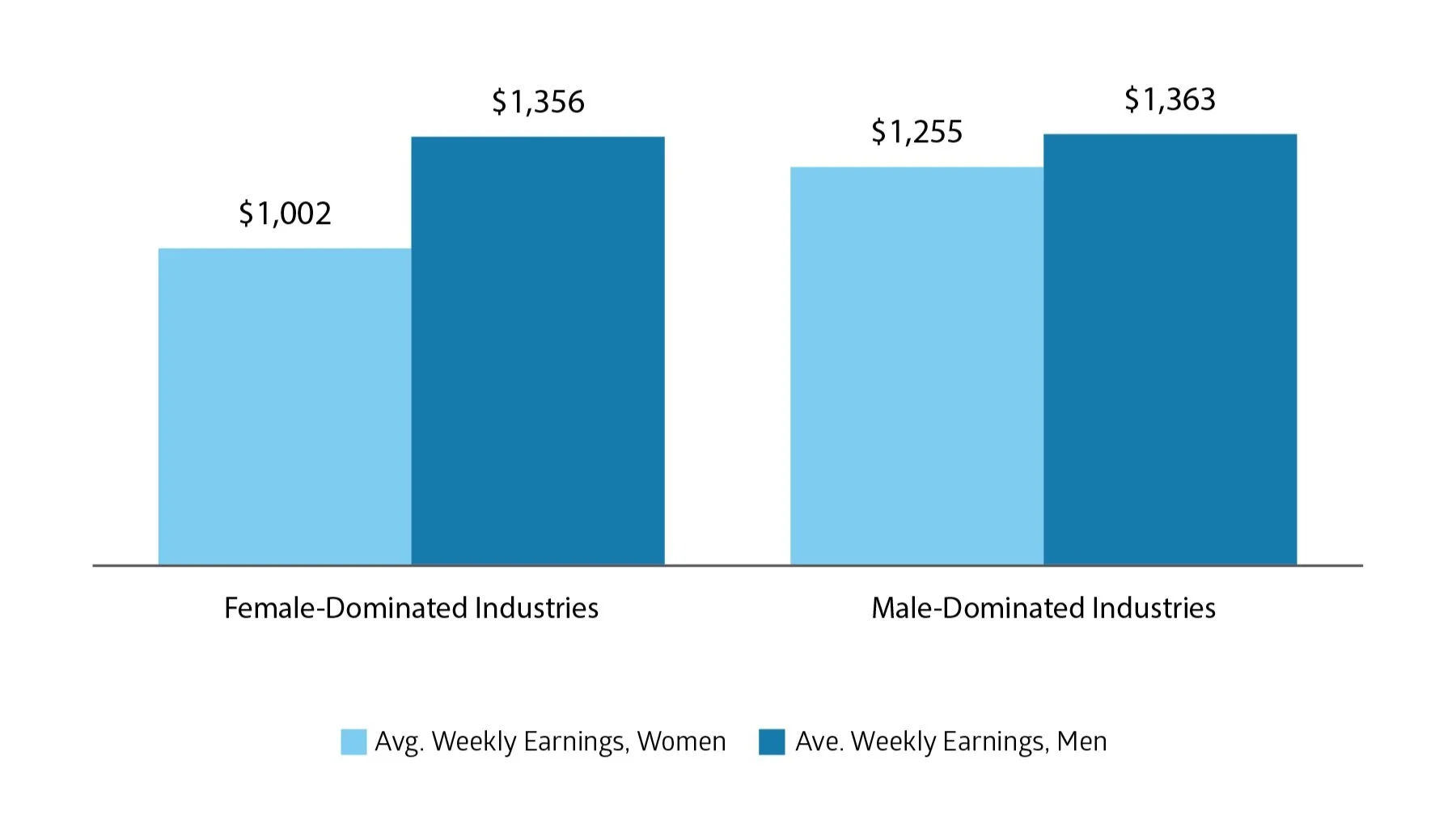
Figure 7. On average women earned $18,400 less per year than men in the five female-dominated industries. The wage gap was $5,600 in male-dominated industries.
Figure 8. 2020 Unemployment Claims Compared to 2019 Employment, Men vs Women
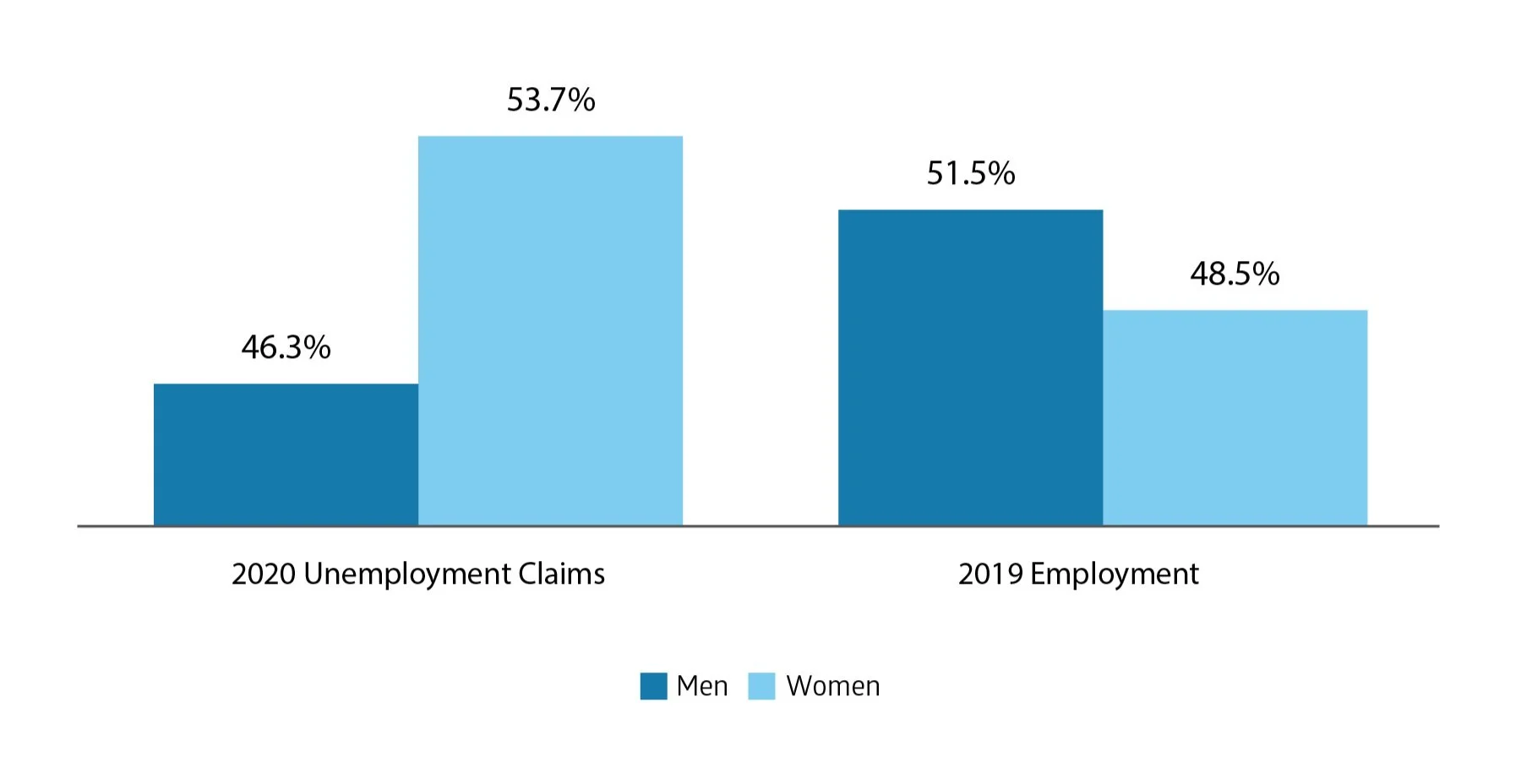
Figure 8. Women made up 48.5 percent of the workforce (2015-2019 average), but filed 53.7 percent of unemployment claims in 2020. Since women typically take on more childcare responsibilities, the unemployment differential may reflect the disruption in childcare and K-12 education caused by the pandemic.
Figure 9. Unemployment Claims by Industry Dominance, Women vs Men, Hawaiʻi, 2020

Figure 9. Nonetheless, it appears that more of the jobs typically held by women disappeared since significantly more unemployment claims were filed for workers in industries dominated by female workers than those dominated by male workers.
Achieving income parity for all women will be a complex undertaking involving reassessing the value of women’s work, including family caregiving. But the rewards of work equity are great. Paying women what they’re worth would add to the self-sufficiency of most households, support children, and allow women to retire with greater economic security.