

Community partnership will serve free meals to keiki during school closure
Five sites will be open on Prince Kūhiō Day when Department of Education sites will be closed.

Appleseed COVID-19 response will focus on assisting state in managing social safety net programs
During this crisis, Appleseed’s concern lies with the working families and children of Hawaiʻi.

State research confirms economic benefit of minimum wage hikes
The Department of Business, Economic Development and Tourism’s latest report demonstrates that a living wage is not only possible, it is economically desirable.

Making the Earned Income Tax Credit a cornerstone of Hawaiʻi antipoverty policy
Lawmakers should strengthen the signature working families tax credit to better help those who need it most.

Hawaiʻi’s racial pay gap has gotten worse since 2000
For decades, white Hawaiʻi residents have seen higher median wages than people of color. When racial and ethnic categories are broken down, the disparities are even more pronounced.

Trump’s Public Charge rule could cost Hawaiʻi tens of millions in revenue
The financial cost of the rule change is in addition to the harm done to the health and resilience of immigrant families through the “chilling” effect on benefits-use that has already been documented in Hawaiʻi.

Automatic voter registration boosts participation, especially among minorities
States that have adopted automatic voter registration have seen their voter rolls increase dramatically, as well as become more diverse.

Too many Hawaiʻi seniors are still going hungry
Although Hawaiʻi has made strides to address hunger in recent years, thousands of seniors are still at risk of experiencing hunger across the islands.

No cause for panic: Hawaiʻi’s economy is OK
A quarter of slow growth is no reason for lawmakers to forgo important economic justice measures like raising the minimum wage.

How well do our elected legislative bodies reflect the general public?
Diversity in legislative bodies helps promote ideas that, by their nature, are more representative of the common good.

Hawaiʻi workers need four more work weeks a year to cover rent since 1985
Many of the cities with the highest rents also pay the highest average salaries, but Honolulu is not among them.

Despite rising incomes, housing is still out of reach for many in Hawaiʻi
Even for those who have lived here their entire lives—whose community ties go back generations—Hawaiʻi offers no easy path to affordable home ownership.

Adjusted for cost of living, Hawaiʻi’s wages are the lowest in the country
Hawaiʻi is almost a fifth more expensive than the rest of the country overall and more than twice as expensive in rents alone, which means our wages don’t really go that far.

To empower indigenous peoples, decolonize data
Too often, indigenous populations have no control over the data that describes them, creating a disconnect between on-the-ground needs and top-down policy proposals.

Whole Foods Market’s 5% Community Giving Day will expand access to meals for children
For keiki who rely on free and reduced-price school meals to get a healthy start, Whole Foods Market’s donation to Hawaiʻi Appleseed’s school meal expansion efforts will have life-altering implications.
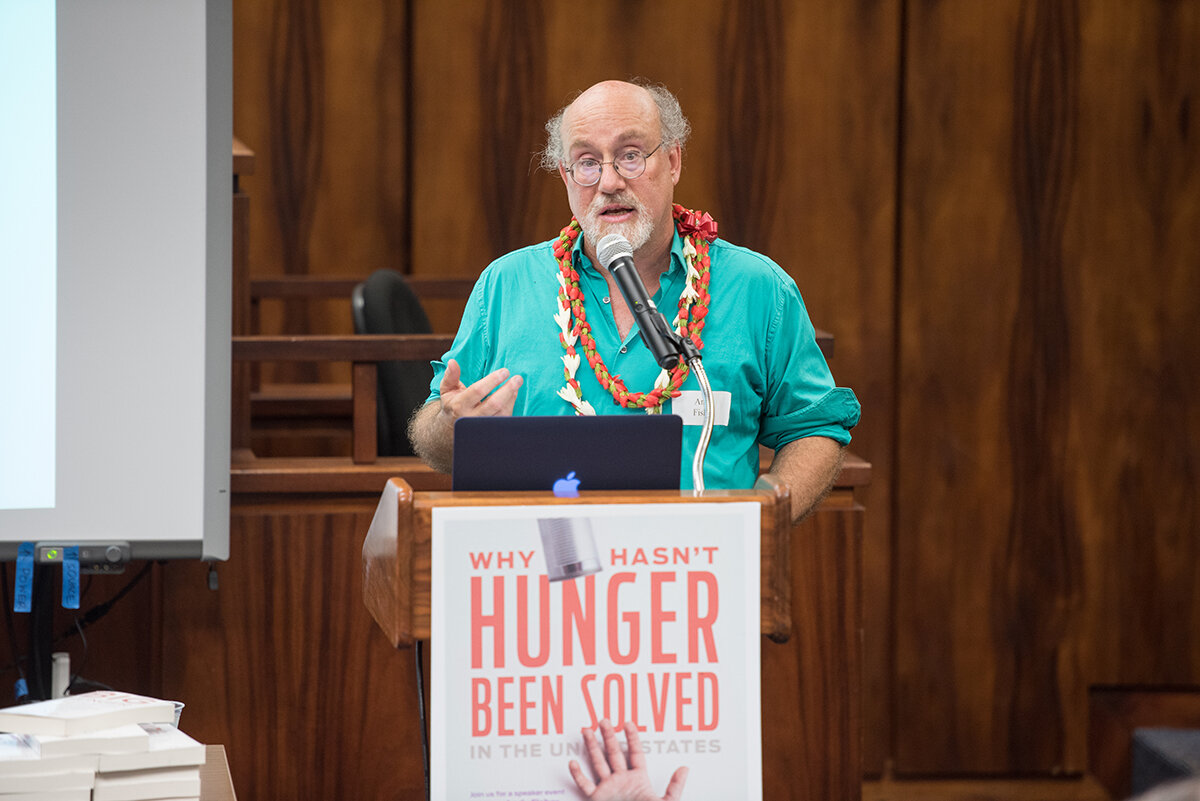
“Occupy Hunger,” urges food justice advocate Andy Fisher
Our current system of addressing hunger in the U.S. overlooks the root causes of food insecurity—inadequate wages and community disinvestment.

Inequality on the rise in Hawaiʻi and the United States
Public policies based on the concept of “trickle down” economic, like the Trump Administration’s Tax Cuts & Jobs Act of 2017, have exacerbated these problems over the past four decades.

The true cost of Trump’s tax cuts
The TCJA will enrich top earners without providing significant benefits for anyone else, widening the income and wealth gaps while dramatically increasing the federal deficit and endangering programs for people living in poverty.

Protecting SNAP benefits for Hawaiʻi’s working families and seniors
The Trump Administration is floating a proposed rule change that would take away food assistance benefits from struggling families.

50 years in the fight for equal justice
Victor Geminiani, founding director of Hawaiʻi Appleseed and career advocate for low-income and underserved communities, will retire on August 31, 2019.