It’s no secret that Hawaiʻi has had a high cost of living—especially rents—for many years. However, the stress of making ends meet has become more acute for a greater number of people in recent years.
Housing in Hawaiʻi, in particular, is much more expensive now than it was in 1985. Between escalating rents and sluggish wage growth, low- and median-wage workers have to work nearly four additional weeks every year to cover housing costs. High-wage workers needed to work only an extra day and a half.
Table 1. Weekly Hours Worked for Rent Only, in 2018 Dollars
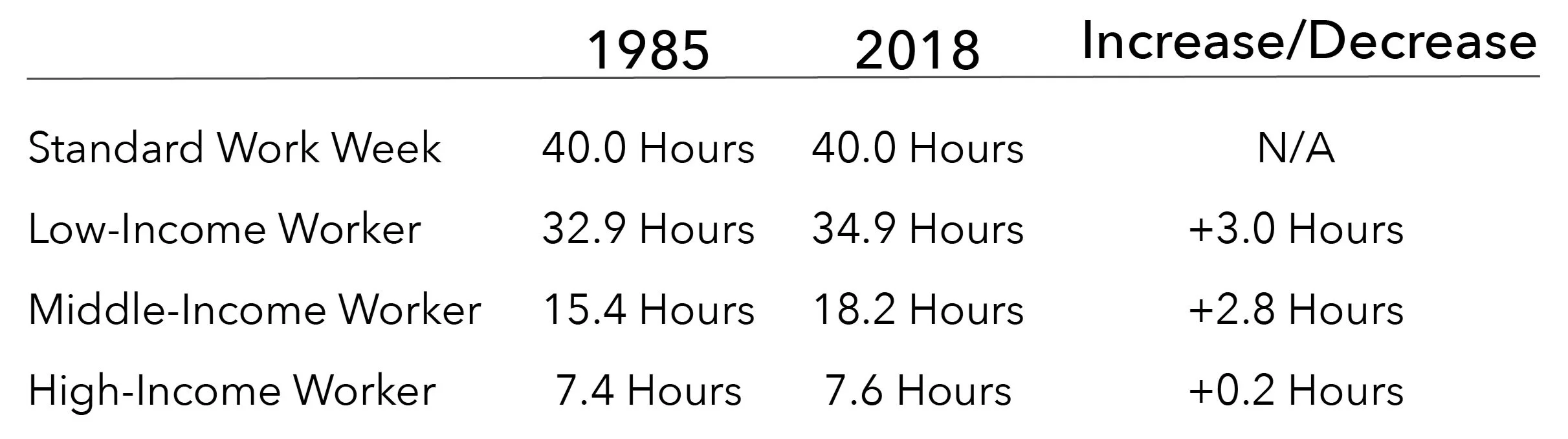
Table 1. The average number of hours per week workers have to pay just to cover rent. The calculations reflect changes in both wages and costs.
Figure 1. One Bedroom Fair Market Rent as a Percent of Wages, in 2018 Dollars
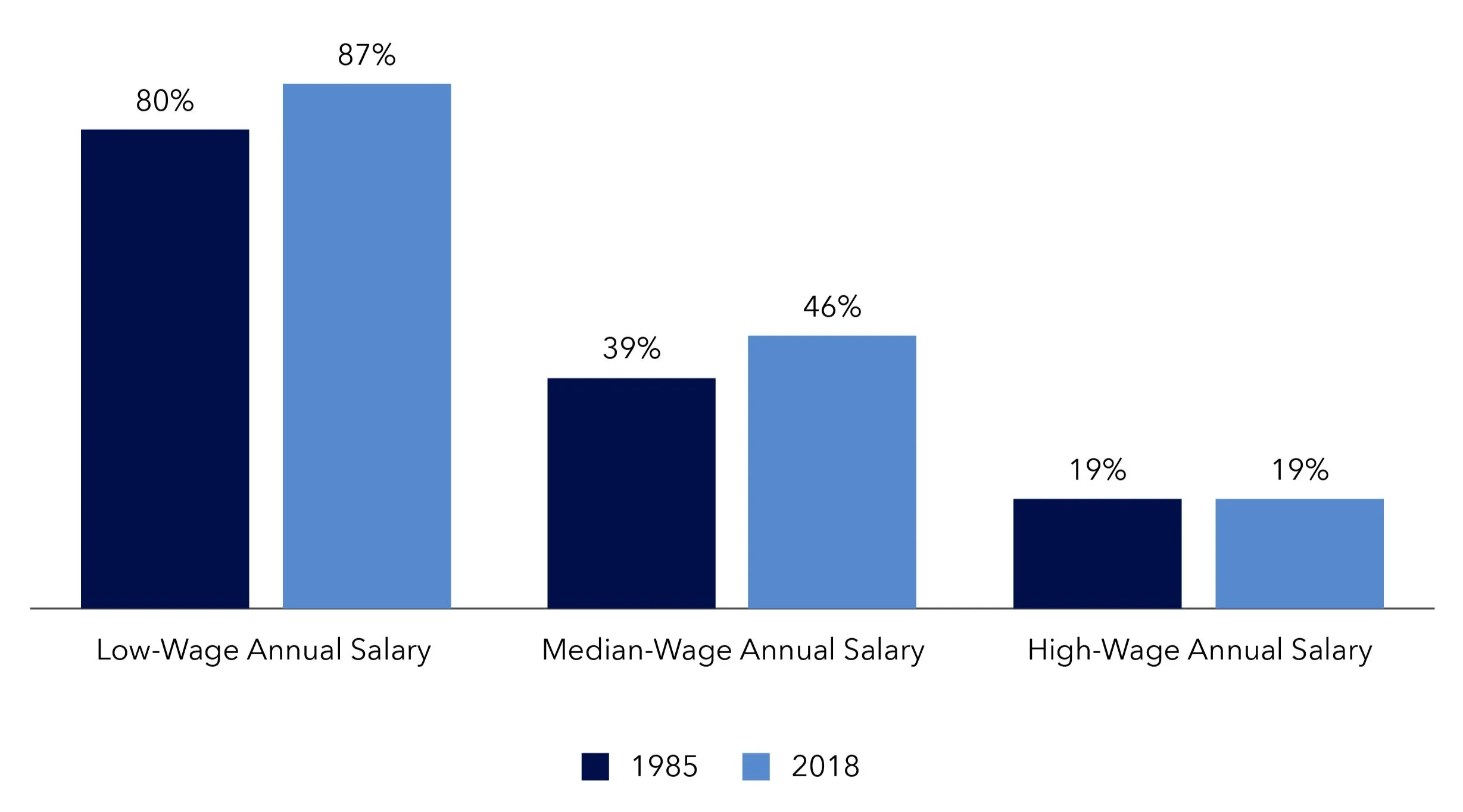
Figure 1. Another way to look at the wage-rent equation is to see what percent of annual wages would go toward rent. In 1985, the rent for a one bedroom market rate apartment would take 80 percent of a low-wage worker’s salary. That percentage had grown to 87 percent by 2018. Median-wage workers would face a similar percentage increase. High-wage workers could allocate the same percentage toward rent in 1985 and 2018 because their wages increased as much as rent did.
Rents have been a larger burden in Hawaiʻi than in other parts of the U.S. for a long time. In 1970, Honolulu’s rents were the third highest in the country, and they were the 5th highest in 1985. Residential rents have risen even more dramatically in some other cities. As a result, Honolulu has now dropped to the 11th highest cost rental market. However, many of the cities with the highest rents also pay the highest average salaries. Honolulu is not among them.