For decades, white Hawaiʻi residents have seen higher median wages than people of color. This racial and ethic wage gap mirrors the situation nationally. Less well known is that even greater disparities exist nationally in the benefits paid to whites and minorities, which is widening faster than the wage gap. Ignoring the benefits gap has led to an underestimation of income inequality levels. While the gender pay gap narrowed slightly nationally between 2000 and 2017, due largely to wage increases for white women, there has been no progress on closing the racial pay gap since 2000.
Figure 1. Hawaiʻi Hourly Wage by Ethnicity, 1980–2015
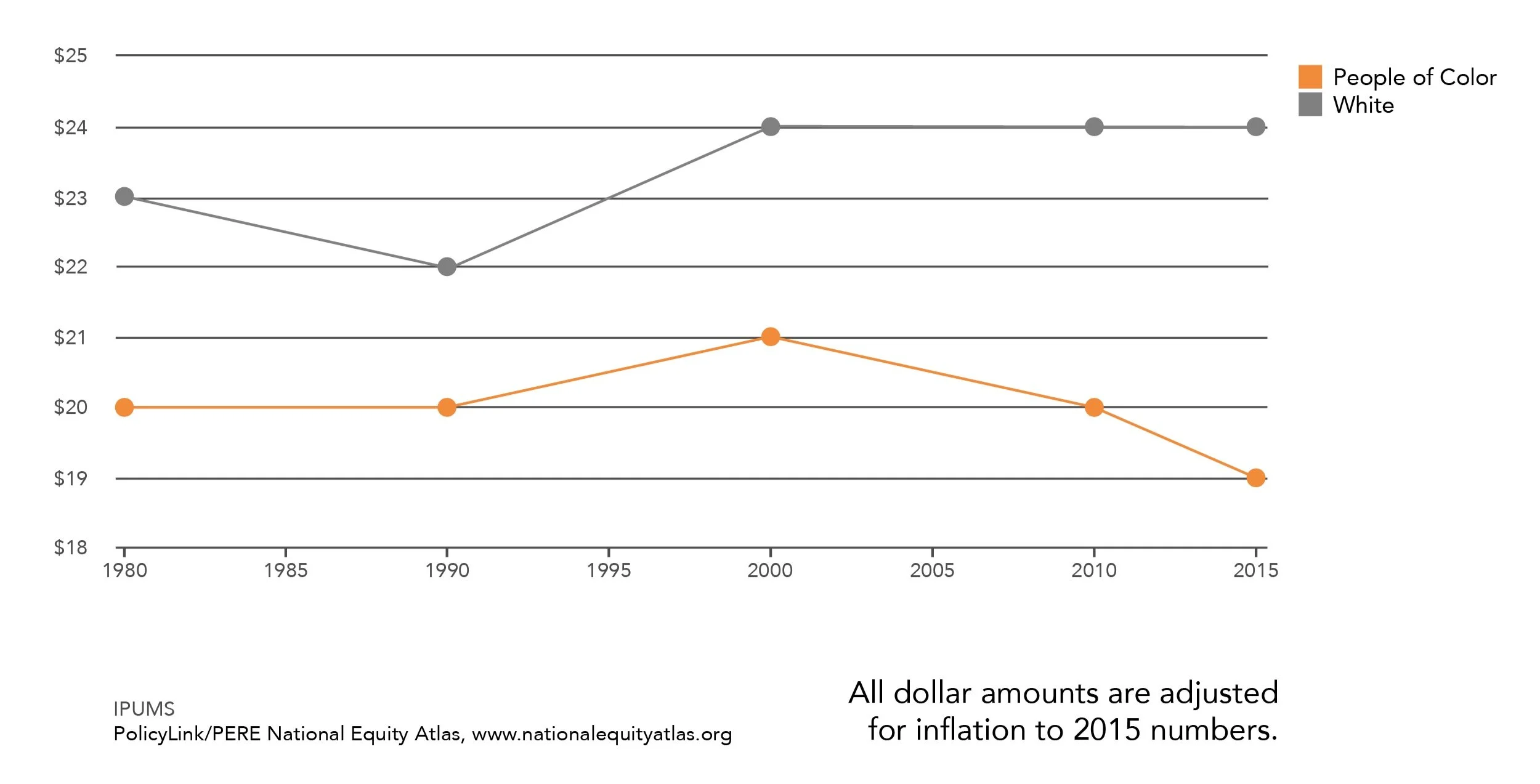
According to the National Equity Atlas, in 2015 Hawaiʻi’s white workers had a median wage of $23 an hour and Asian and Pacific Islander residents (including Native Hawaiians) had a median wage of $19 an hour. When racial and ethnic categories are broken down for Hawaiʻi, the disparities are even more pronounced. Filipinos and Samoans had a median wage of $17, and workers in the category of Other Pacific Islanders had a median wage of only $11 an hour.
Public policy discussions on how to address the racial and ethnic pay gap have focused on the obvious need to broaden access to education and to “good” jobs. Broadening this approach, the Institute for Women’s Policy Research has detailed eight policies for an equitable economy that “boost the economy and work for everyone.” Among their recommendations:
Address persistent pay inequalities through local equal pay task forces;
End pay secrecy practices;
Increase the minimum wage;
Invest in the caregiving infrastructure;
Provide access to affordable and quality child care;
Make postsecondary education more affordable; and
Work to ensure STEM programs attract more women and people of color.