Adjusted for cost of living, Hawaiʻi’s wages are the lowest in the country
Earnings for low- to middle-wage jobs have been stagnant since the 1980s across the U.S. The news is even worse for Hawaiʻi, though, as our state has the highest cost of living in the country.
The U.S. Bureau of Economic Analysis calculates Regional Price Parities (RPPs), which measure buying power in each state relative to the U.S. average. Excluding the District of Columbia, Hawaiʻi has had the highest “all items” RPP in the nation since 2008. The 2017 figures show that Hawaiʻi is 18.5 percent more expensive than the rest of the country overall; and in rents alone, Hawaiʻi is a whopping 56.4 percent more expensive.
Figure 1. Change in Regional Price Parity (RPP)-Adjusted Wages, 2010–2018, U.S. vs Hawaiʻi
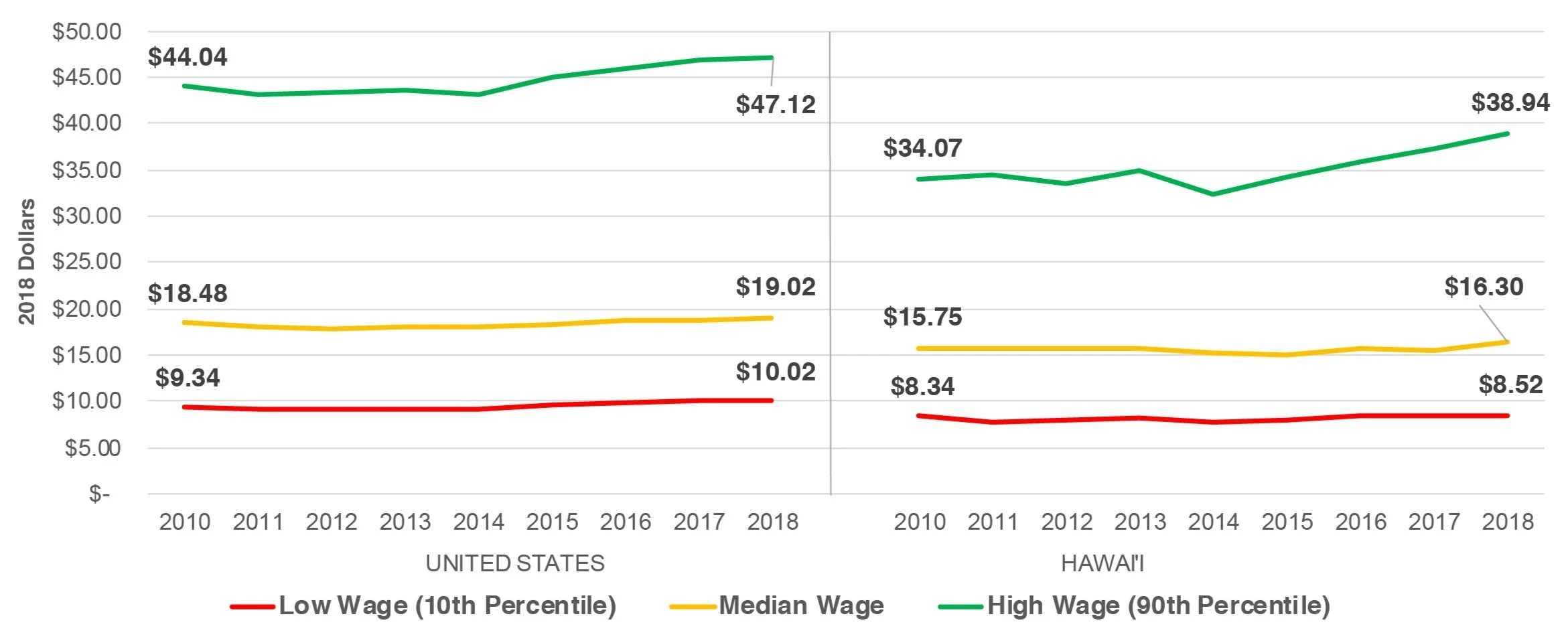
Figure 1. If we adjust Hawaiʻi wages to show real buying power, our median wages compare poorly with the rest of the country. In all other states, consumers have significantly more purchasing power.
Figure 2. RPP-Adjusted Median Wages, 2017, Hawaiʻi vs Next Five Lowest States
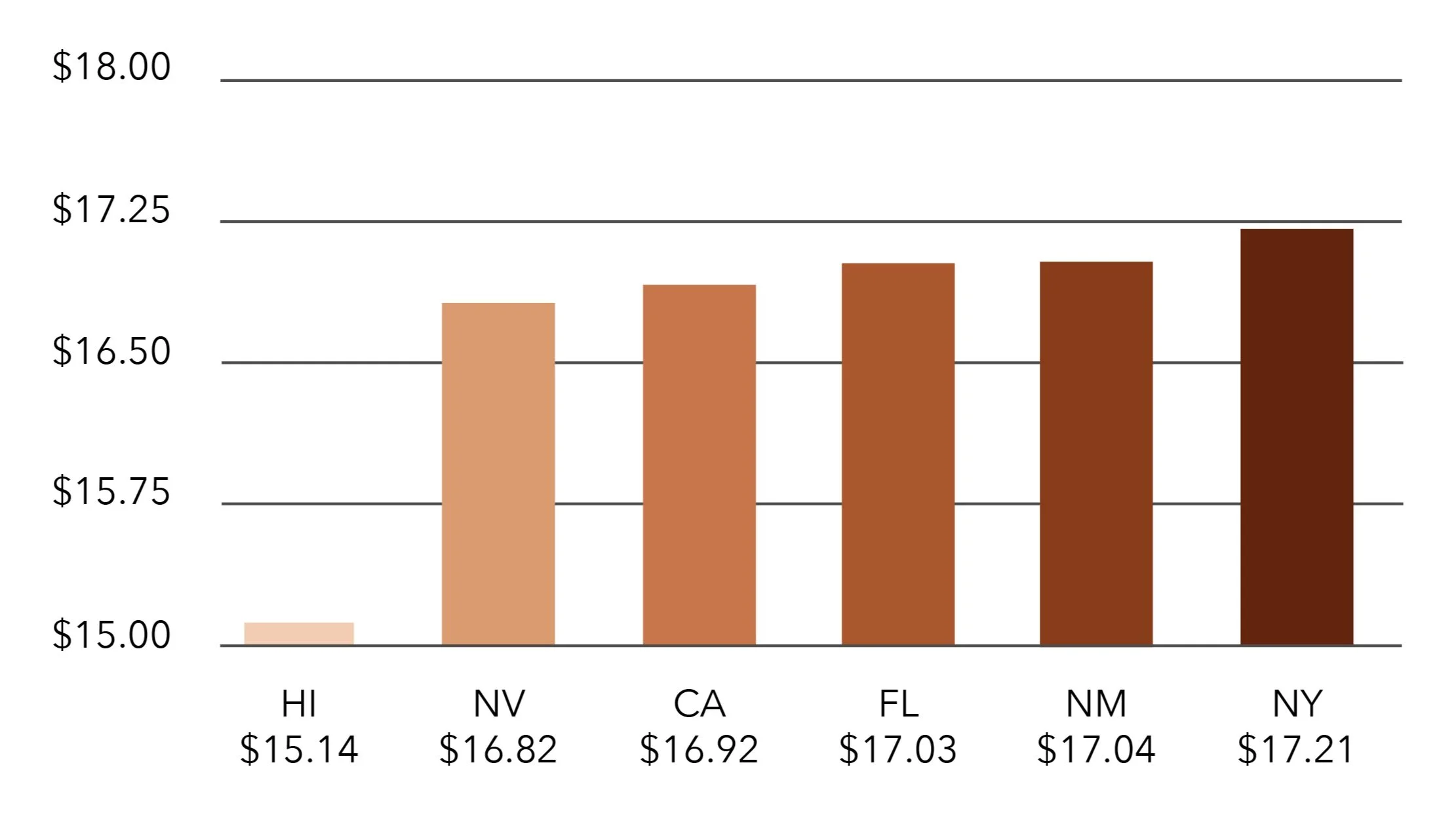
Figure 2. The RPP-adjusted median wage in Hawaiʻi is generally $1.50–$2.00 lower than even the second-lowest state for each year studied. Not only is the median wage in Hawaiʻi the lowest in the country, there isn’t even a close second.