New census data confirms the benefits of investing in safety net programs
This week, the Census Bureau published its 2025 data on poverty, income, and health insurance—the data we use to measure how households in Hawaiʻi and the rest of the United States are faring. The new data highlights the anti-poverty effects of programs like the Child Tax Credit, SNAP and Medicaid. At the same time, it’s a reminder of what working families stand to lose with H.R.1.
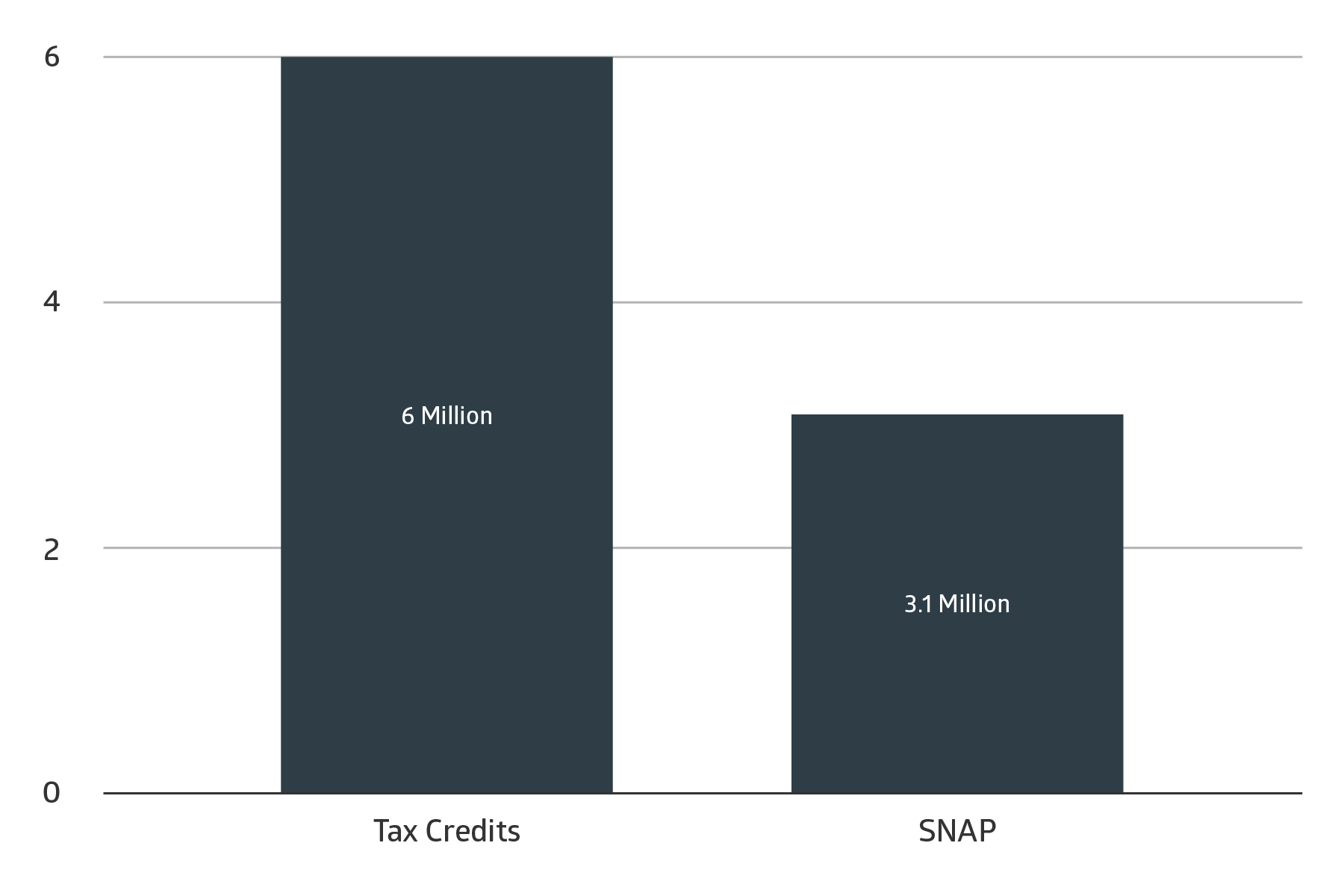
In 2025, “refundable” tax credits lifted 6 million people above the poverty line, while SNAP lifted more than 3 million people—including 1.2 million children—out of poverty. In addition, Medicaid and Affordable Care Act coverage kept the nation’s uninsured rate down at 7.9 percent, which is near a historic low.
Figure 1. Millions Lifted Above the Poverty Line in 2025
Refundable vs Non-Refundable Tax Credits
Non-refundable tax credits can only reduce a household’s tax liability to zero; any leftover credit amount is lost. Refundable credits roll any leftover amount into a tax refund on top of the reduced liability.
Although these programs are highly effective, the data confirms that more investments are needed. Around 44 million households in the U.S. were still beneath the poverty line last year, and 27 million households had no health coverage at all.
Income inequality also widened. Households at the top 90th percentile reported take-home income that was over 10 times what households at the bottom 10th percentile had.
At the same time, the current Child Tax Credit is “non-refundable,” which means that the lowest-income families—those who need the credit the most—are unable to access its full benefit. Some 19 million households didn’t earn enough income to make use of the entire credit for which they qualified. The reduced impact of the credit at this income level means it was less effective at narrowing the inequality gap than it could have been.
Trouble on the Horizon
It’s important to remember that most of this 2025 census data was collected before H.R.1 took effect. That law made the largest cuts to SNAP and Medicaid in either program’s history, and it failed to extend the Affordable Care Act’s premium tax credit enhancements. For that reason, the 2025 census data may act as a baseline, but it does not capture the future impacts of H.R.1.
The Congressional Budget Office projects roughly 15 million more people will be uninsured by 2034 because of H.R.1 and other policy changes.
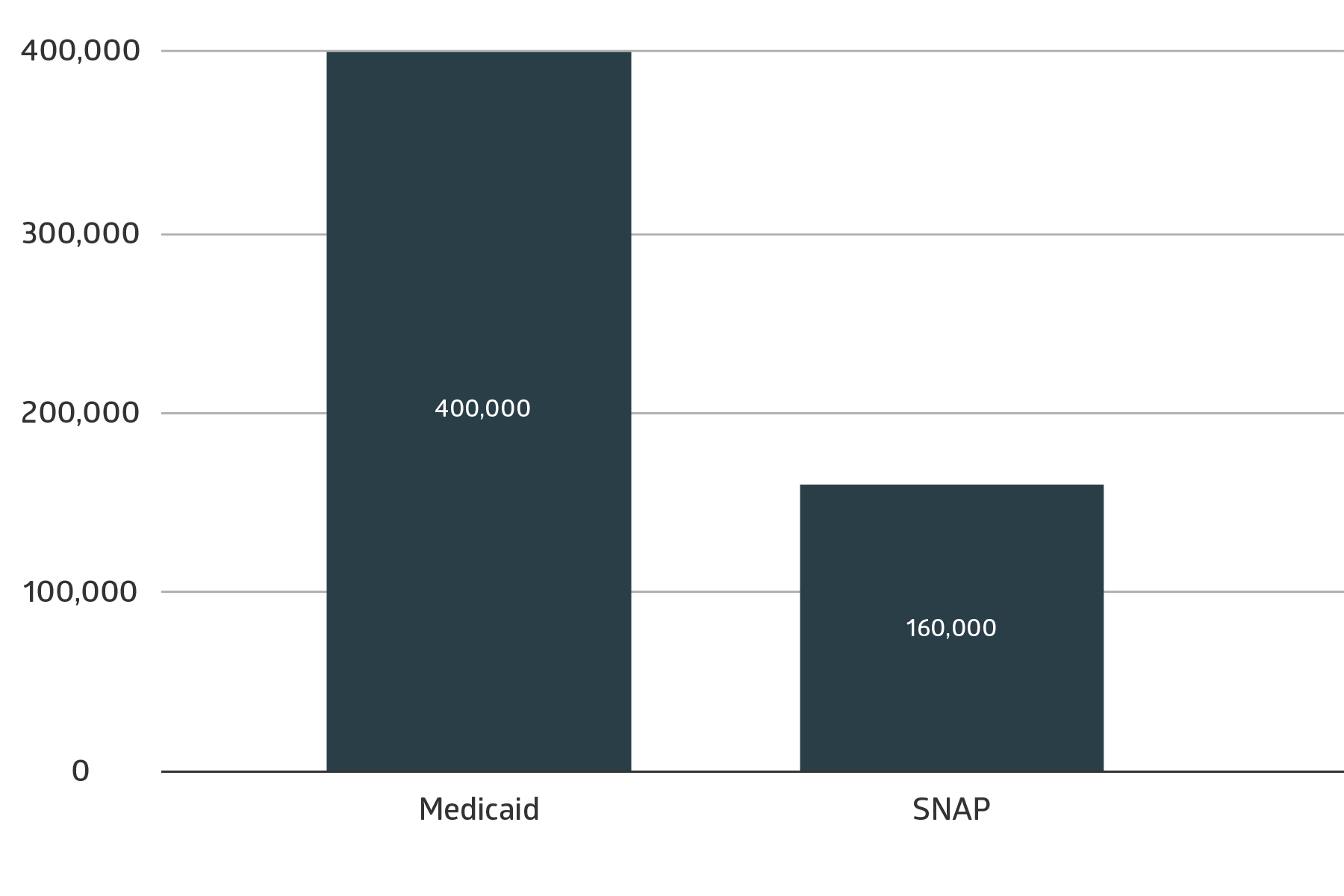
Hawaiʻi has much at stake with both its Medicaid and SNAP programs. Medicaid covers more than 405,000 people across the state, relying on $2.2 billion a year in federal funding. Similarly, more than 158,000 Hawaiʻi residents depend on SNAP to put food on the table.
However, new work-hour requirements and administrative roadblocks will push many eligible kūpuna and working families out of these programs at the end of this year. And starting in 2027, states will have to provide more of their own funding to fill the gaps left by the federal government.
Figure 2. Enrollment in Hawaiʻi’s Medicaid and SNAP Programs
The Census Bureau’s Eroding Capacity
Last year, we wrote about the Census Bureau losing critical staff and funding. Since then, the agency has laid off a fifth of its full-time positions and a third of its senior staff. This has forced the Bureau to delay or discontinue certain data sets. For example, it no longer collects data on food insecurity—while SNAP is undergoing major cuts at the federal level.
In the near future, this will make it significantly harder for the state and policy advocates to assess the well-being of Hawaiʻi’s families.
The Census Bureau’s data is invaluable, and it informs policymaking at the state and federal levels. Accordingly, the federal government has a responsibility to ensure that the Census is accurate and properly administered. It is this data that is the foundation for the argument that we need a fair tax system to invest in our shared future.
Hawaiʻi must preserve Medicaid and SNAP as a lifeline for local residents, which will almost certainly require the state to raise taxes on the ultra-wealthy.