The bus could be free for everyone—here’s how we pay for it
What would it take to make the bus free for everyone in Hawaiʻi—not just our keiki, but every resident who needs a ride?
That’s the question at the heart of our newest report, “Funding Free Transit: Cost Estimates and Revenue Options for Universal Fare-Free Bus Transit in Hawaiʻi,” scheduled to be released in October. It picks up where our “Keiki Ride Free” report left off and asks the next logical question: what would universal fare-free bus transit actually cost, and how should the state pay for it?
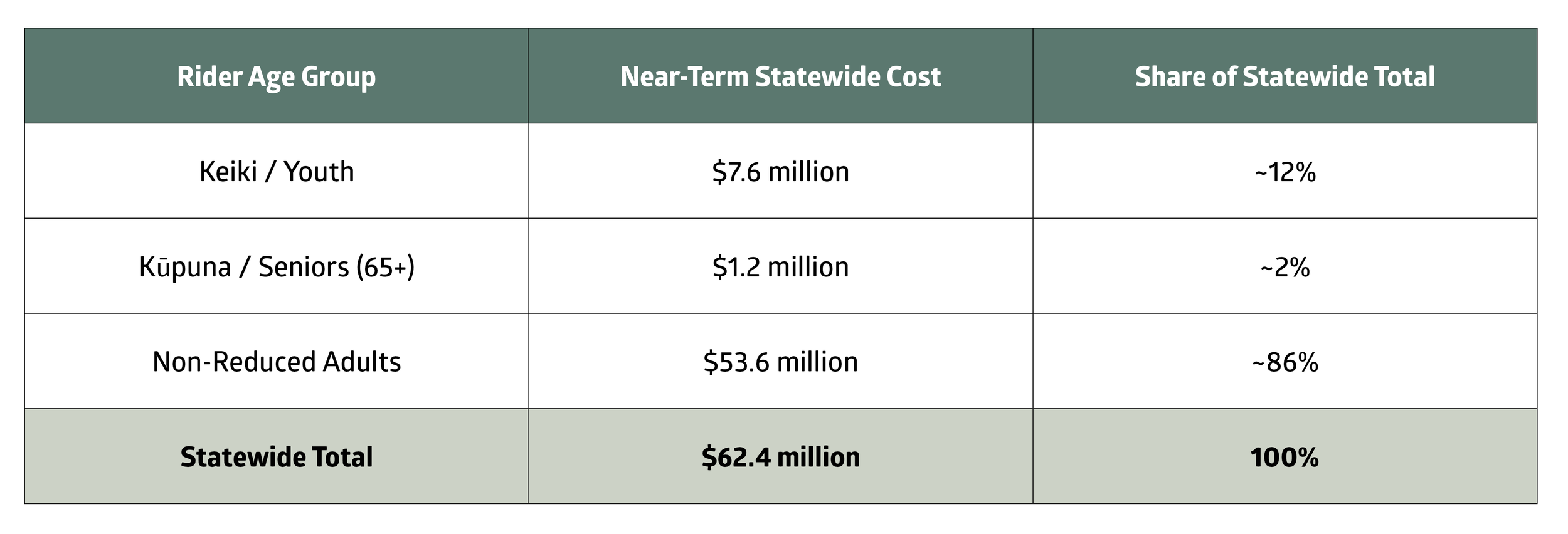
Here’s the short answer: a universal fare-free bus transit system would cost about $62.4 million a year to make up for estimated lost fare revenue. It could be funded through a combination of sources that include the barrel tax, Clean Fuel Standard revenue, a share of the State Highway Fund, and the Green Fee.
It’s important to note that while this may seem like a lot of money, it actually represents a small percent of the state’s capital transportation spending. The full report breaks down the cost by county and by rider age group, and weighs the advantages and tradeoffs of each funding source.
Table 1. Estimated Annual Fare Revenue Loss Under Universal Fare-Free Bus Transit, by County
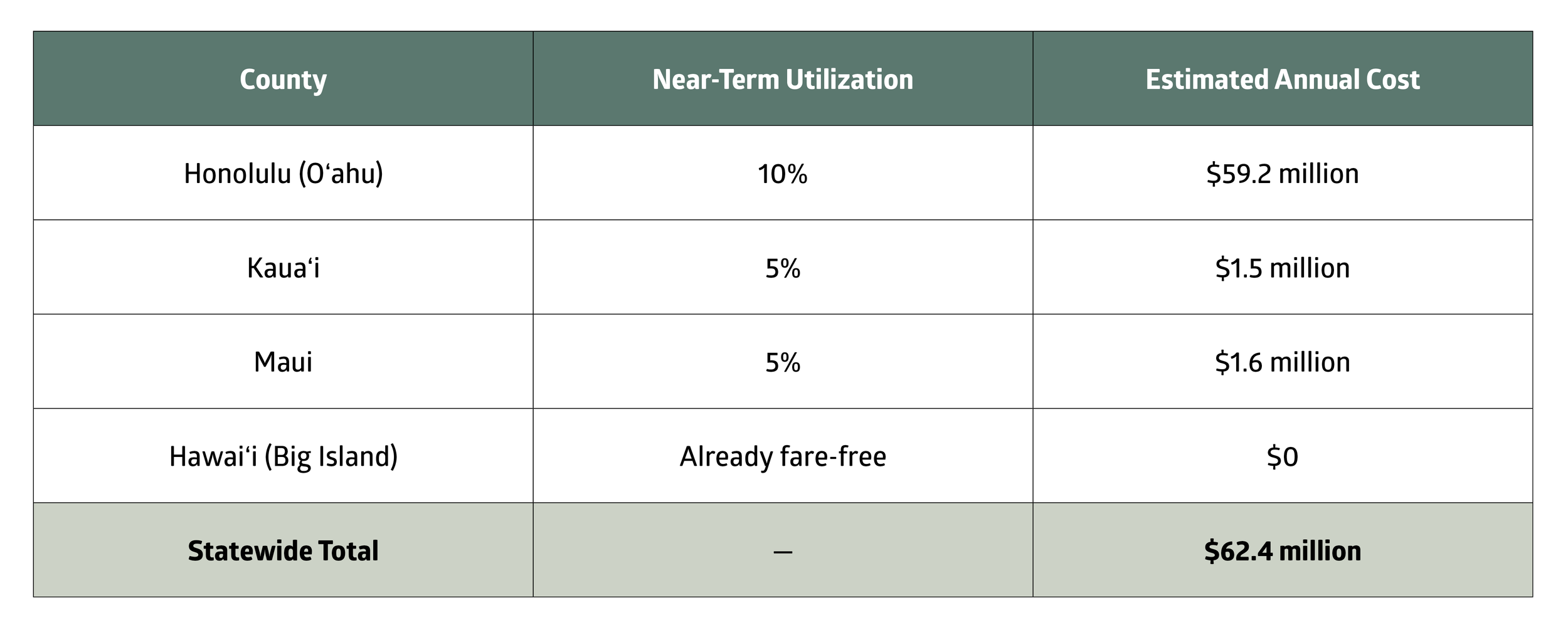
Table 2. Estimated Near-Term Cost by Rider Group, Statewide
Why Universal Is The Goal
Keiki Ride Free is meant to be the first, most achievable step toward something bigger: a Hawaiʻi where getting on the bus is free, safe, and reliable, no matter who you are, how old you are, where you’re coming from or where you’re going to.
Hawaiʻi County already shows us this is possible, with its Hele-On bus service fare-free for every rider since 2022. Maui County has been building toward the same goal, extending fare-free rides to income-eligible households, youth, seniors, students, and county employees. That means the remaining gap between all of Hawaiʻi and universal fare-free transit is actually smaller than most people assume. This report puts a number on it.
It’s worth being specific about why a free-for-everyone program would be more impactful than free-for-some.
A targeted program—one limited to riders of certain incomes, abilities, or areas—requires a whole system to determine who qualifies. These steps (handling applications, documentation, income verification, re-certification, and more) cost money to administer, and every one of those steps is a point where eligible riders can fall through the cracks.
A universal program skips all of that. With no pass, no enrollment, and no means-testing, you simply board the bus and go. It’s as easy as that.
But the bigger issue isn’t just administrative. It’s about upholding the idea that our bus transit is a public good for all to use and benefit from, not just a fallback for those who can’t afford a car.
An income-restricted program frames public transit as a low-income resource, a safety net you qualify for if your family falls under a certain threshold. A universal fare-free transit program treats it as something else entirely: a normal part of everyday life in Hawaiʻi.
It’s the freedom for a teenager to get to practice or an after-school job without needing a ride. It’s one less car making traffic worse every morning. It’s people who will never have to worry about whether they could afford to access all life has to offer—because it was never a question in the first place.
Universal programs consistently show us how this plays out in ridership numbers. In Albuquerque, New Mexico, fixed-route ridership grew nearly 50 percent in the first year of its fare-free for all program. In Alexandria, Virginia, daily ridership nearly doubled. Programs that only serve a defined, variable subset of riders don’t come close to producing gains like that.
Looking Ahead to 2027
Keiki Ride Free remains our transportation equity priority heading into the 2027 legislative session. It has a smaller price tag, access to a number of feasible funding mechanisms, and the strong momentum of community support already built earlier this year. It’s the version of this fare-free transit policy that’s ready to move on now, and the most achievable first step toward the universal system described above.
Starting with keiki also gets the next generation of riders in the habit of taking the bus, and builds the ridership, public support, and track record we need to expand free transit to everyone.
While Keiki Ride Free is our priority, we want to be clear that this is not the end goal. Eventually, we want to see every county bus system in Hawaiʻi fare-free for every rider. We want to see this access paired with service improvements like more frequent, reliable, and connected routes, so that a free ride is also a ride people can count on. Keiki Ride Free is how we start building toward that future.
The forthcoming report is our attempt to show the Legislature that the bigger goal isn’t just aspirational—we have cost estimates, a number of potential funding sources, and proof that the concept works and is well-within reach.
Keep an eye out for the “Funding Free Transit: Cost Estimates and Revenue Options for Universal Fare-Free Bus Transit in Hawaiʻi” report, coming this month!