Have you ever wondered just how much wealth the top 1 percent in Hawaiʻi actually holds? How about the top 0.1 percent? We’re analyzing the data to go into an upcoming report that will examine the vast amount of wealth flowing to the islands’ richest households.
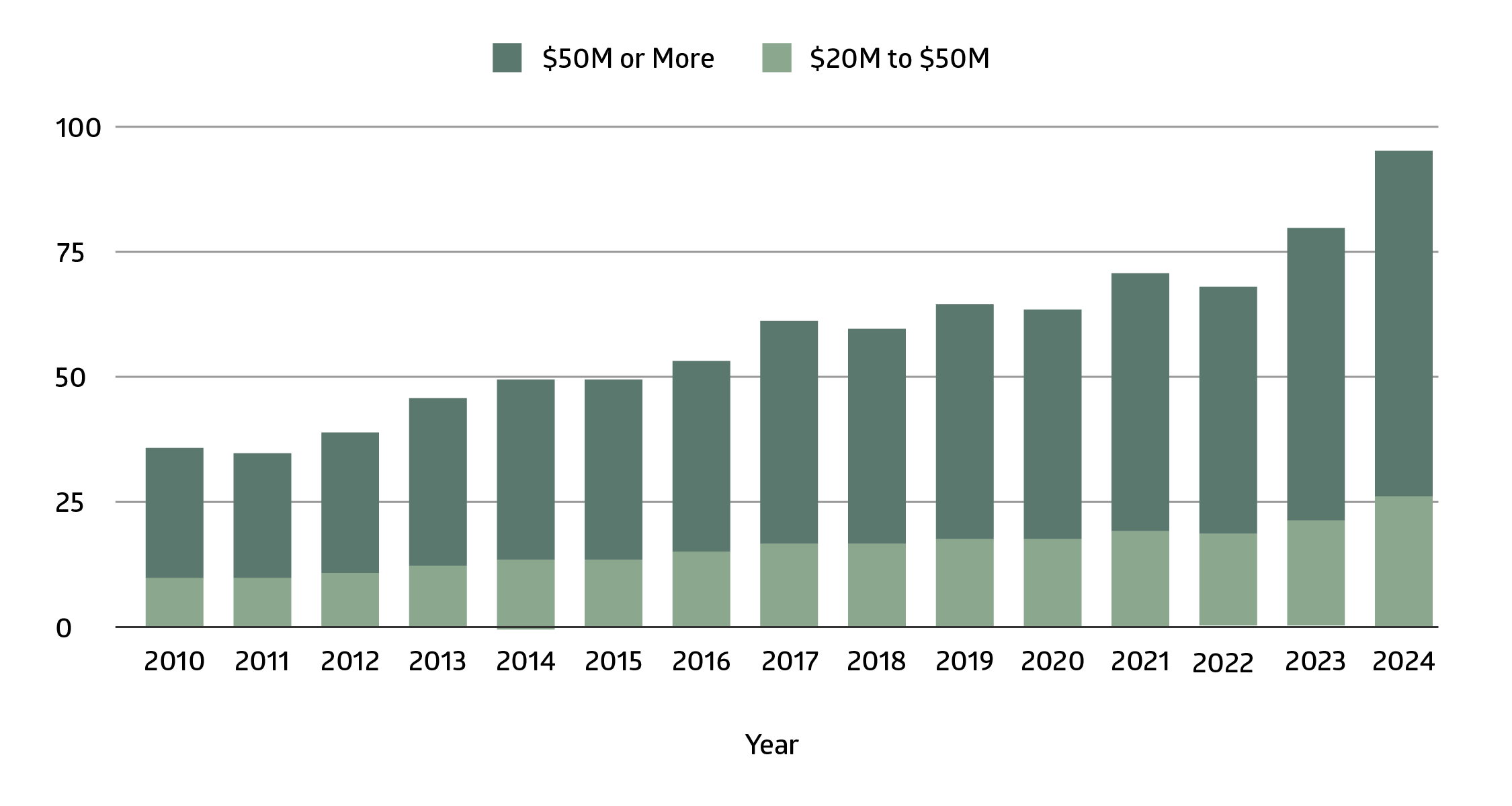
Hawaiʻi has 1,245 residents worth at least $20 million, and together they hold an estimated $95.6 billion in real estate, stocks, and other investments, according to Altrata (Wealth-X) data prepared for the Institute for Policy Studies.
That sum is about nine times the $10.57 billion in total taxes collected by the state in 2024.
This comes at a time where the state is confronting a number of fiscal challenges, including the hundreds of millions in damages caused by this year’s storms, and a looming loss in federal funding for programs like SNAP and Medicaid.
A wealth tax targeted at these could raise a substantial amount of revenue, allowing Hawaiʻi to preserve its current programs and services while making new investments in working families.
Figure 1. Wealth Held by Hawaiʻi Residents Worth $20 Million or More ($ billions)
Source: Altrata (Wealth-X) market-sizing data for Hawaiʻi (Nov. 9, 2025); Hawaiʻi Appleseed analysis.
Note: The two different colored bands do not overlap, meaning that together they show all 1,245 residents worth at least $20 million in 2024.
While the number of millionaires is growing rapidly, working families are still struggling to survive. About 44 percent of Hawaiʻi households live below the ALICE Threshold, which means they cannot consistently cover basic living expenses. This stands in stark contrast to the amount of wealth that is being accumulated by the top 1 percent since 2010 alone.
In 2010, Hawaiʻi had 466 residents worth $20 million or more, holding $35.6 billion.
By 2024, that number had risen to 1,245, and their combined wealth had grown to $95.6 billion.
Some of Hawaiʻi’s millionaires are middle-class, since the average home can be worth more $1 million. Those who have at least $20 million account for less than 0.1 percent of the state’s population. They have been able to freely build this wealth due to a tax system that privileges wealth.
How to Fix a Rigged Tax Code That Benefits Millionaires
In Hawaiʻi, the state taxes some assets like capital gains and estates, while the counties tax real property. However, neither the state nor the counties tax net worth—which is the total value of everything a person owns, subtracted by their debt.
Overall, the ultra-wealthy spend a lower portion of their income on taxes compared to the rest of the population. For example, the lowest-income 20 percent of households pay $14.10 in state and local taxes out of every $100 they earn, compared to $10.10 for the top 1 percent.
This is because our tax system carves out breaks that favor the ultra-wealthy. Hawaiʻi taxes capital gains—profits from selling assets such as stocks, bonds, and real estate—at 7.25 percent, compared to a top rate of 13 percent on income from work. About 77 percent of those gains go to filers earning more than $400,000 a year.
The conveyance tax offers another example: Larry Ellison purchased most of Lānaʻi in 2012 without paying a cent of conveyance tax, owing to the controlling interest loophole.
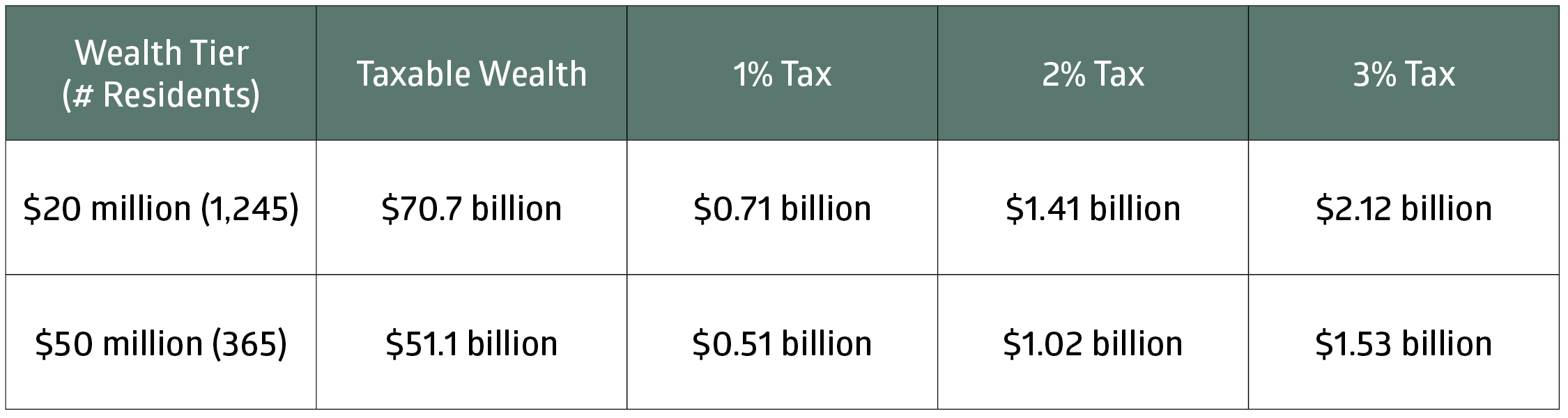
One way the state could level the playing field is through a wealth tax. A 2 percent annual tax on net worth above $50 million could raise nearly $710 million in one year alone.
Table 1. Annual Revenue Estimates for a Hawaiʻi Wealth Tax
Source: Altrata (Wealth-X); Hawaiʻi Appleseed analysis.
Note: Tax applies only to wealth above each threshold.
A wealth tax could be the most powerful tool at the state’s disposal to reduce inequality and invest resources into local communities. As this idea continues to gain traction across the United States, Hawaiʻi has the opportunity to become one of the first states to directly tax the fortunes of the ultra-wealthy.